
Quick answer: If your partner keeps interrupting you, address the pattern when you are not already arguing. Describe what happens, explain its impact, and ask for one concrete rule: let each person finish a thought before responding. During difficult conversations, use short turns, reflect back what you heard, and pause if either person starts competing for the floor. The goal is not perfect silence. It is enough space for both people to be understood.
You begin explaining why a comment bothered you. Halfway through the first sentence, your partner corrects a detail. You try again, but they answer the point they think you are about to make. Soon you are both talking faster, neither of you is listening, and the original issue has vanished.
Being interrupted once is ordinary. Repeated interruption feels different. The interrupted partner may leave conversations feeling invisible, while the interrupting partner may believe they are simply responding quickly or preventing a misunderstanding. Intent matters, but so does impact. A better conversation starts when you stop arguing over whether the interruption “counts” and agree on a fair way to take turns.
Why repeated interruptions hurt a relationship
Interruptions do more than break a sentence. They can change the emotional meaning of a conversation. The person who keeps losing the floor may think, “My version does not matter,” or, “I have to speak louder to be heard.” The other partner may experience the rising volume as proof that the discussion is becoming hostile. Both people then react to the pattern instead of the subject.
You start preparing a defense instead of listening
When you expect to be cut off, you may rehearse your next line while your partner speaks. You might rush, add every supporting detail at once, or refuse to pause because you worry you will not get another chance. The conversation becomes a contest for airtime.
This can overlap with the pursuer-distancer cycle. One partner presses harder to complete the conversation, while the other withdraws, talks over them, or tries to end the discomfort quickly. The roles can switch depending on the topic.
The issue gets replaced by an argument about communication
You may begin with a practical question about weekend plans and end up fighting about who never listens. That does not mean the communication problem is imaginary. It means two conversations have become tangled: the original decision and the way you are speaking to each other.
Separate them when possible. First say, “I want to finish the scheduling decision. Then I want us to talk about how often we interrupt each other.” Solving both at once is harder, especially when emotions are already high.
Why might your partner interrupt you?
People interrupt for different reasons. Some are excited and assume overlapping speech shows engagement. Some fear they will forget their thought. Others jump in when they hear something they believe is inaccurate. Stress, family communication habits, differences in conversational style, or difficulty regulating attention can also contribute.
None of these possibilities can be diagnosed from the behavior alone. Avoid assigning a condition or motive to your partner. Ask what happens for them in the moment:
“When you interrupt, are you worried you will forget your point, do you think I am misunderstanding you, or is something else happening?”
The answer helps you choose a practical solution. A person who fears forgetting can write down two words and return to them. A person who interrupts to correct every detail may need to practice hearing the full meaning before debating the facts.
How to talk about being interrupted without starting another fight
Raise the issue outside the conversation in which it just happened. If both of you are already frustrated, “Stop interrupting me” may sound like another move in the argument. Choose a calmer moment and use one recent example rather than a lifetime summary.
Try this structure:
- Observation: “Last night, I was interrupted three times while explaining what happened with my family.”
- Impact: “I lost my train of thought and felt as if my side did not have room.”
- Request: “Can we let each other finish a full thought before responding?”
Avoid “You never let me speak” or “You only care about winning.” Those statements invite a fight about character and memory. A recent example plus a specific request gives you something you can actually test.

A practical turn-taking plan for couples
You do not need to make every conversation formal. Use structure when a subject repeatedly turns into overlapping speech.
1. Agree on a short signal
Choose a neutral phrase such as “Let me finish this thought” or “I want to hear you, and I am not done yet.” The signal should stop the interruption without shaming the person who interrupted.
A physical cue can also work—a raised finger or open palm—but agree on it first. An unexplained gesture can feel dismissive.
2. Keep each turn brief
Taking turns does not mean delivering a ten-minute speech. Start with one or two minutes per person. Say the central point, one example, and what you need. Long monologues make it harder for the listener to hold questions and easier for resentment to build.
3. Reflect before replying
Before presenting your side, summarize what you heard:
“You are saying that when I answered before you finished, you felt dismissed, and you want me to wait even when I think I know your point. Did I get that right?”
The speaker can correct the summary without adding five new issues. Once they feel accurately heard, switch roles. Reflection is not agreement. It proves that the message arrived before the debate began.
4. Write down the thought you are afraid of losing
Keep a notepad nearby during planned conversations. If a response appears while your partner is speaking, write a keyword instead of saying it. This small step reduces the pressure to jump in immediately.
5. Repair the interruption in real time
The most useful response after interrupting is short:
“I cut you off. Please finish.”
Do not follow it with “but I already know what you are going to say.” Stop, listen, and return to your point afterward. If the interruption was part of a hurtful exchange, a more complete apology after the argument may be needed.
6. Use a timed pause when listening breaks down
If both people keep talking over each other, pause for 20 to 30 minutes and choose a return time. A pause is not permission to abandon the subject. Say, “We are competing to be heard. Let’s stop and come back at 7:30.”
During the break, settle your body rather than building a stronger case. Walk, breathe, drink water, or write down the one point you most want your partner to understand.
What the interrupted partner can do in the moment
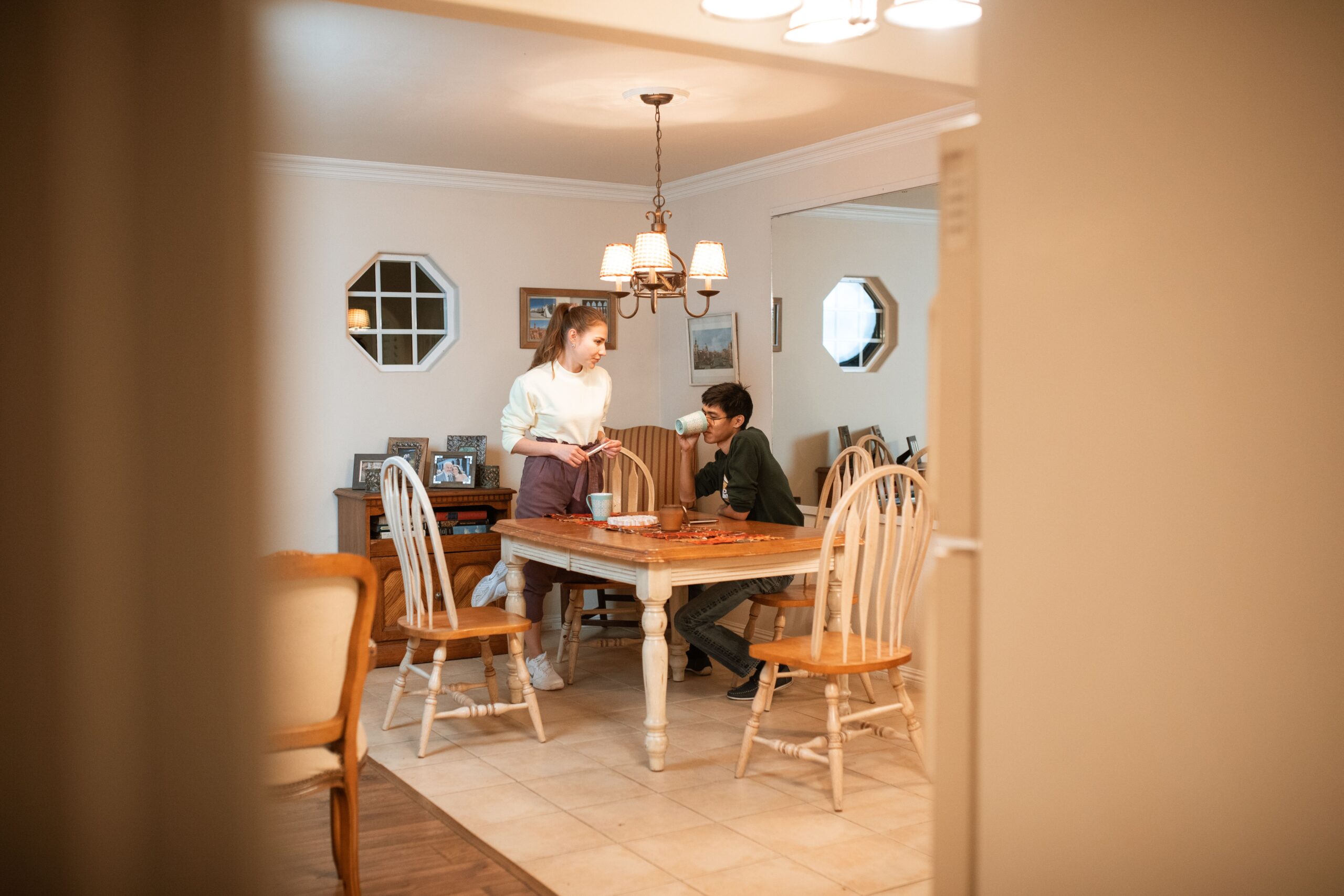
You should not have to overpower your partner to complete a sentence. When you are interrupted, stop and use the agreed signal. Then finish the thought concisely. If the interruption continues, name the limit:
“I want to have this conversation, but I cannot do it while we are talking over each other. I am going to pause and try again at eight.”
Resist the urge to punish the interruption with a longer speech or a list of every previous incident. Stay with the present conversation. If you routinely need 15 minutes to explain one point, ask whether you are including background your partner already understands. Fair turn-taking applies to airtime as well as interruptions.
What the interrupting partner can practice
If you recognize yourself as the interrupter, do not turn the issue into a debate about your intentions. You may be eager, anxious, or trying to correct a fact, and your partner may still feel crowded out.
Practice waiting for a full beat after your partner stops. Ask, “Are you finished?” if you are unsure. Then reflect the main point before adding yours. When you slip, repair it immediately rather than explaining why the interruption was justified.
Also notice which topics trigger the habit. Do you interrupt more when discussing money, family, parenting, or criticism? The pattern may show where you become defensive. That is useful information for a counselor or for your own reflection, but it is not an excuse to control the floor.
When interruption is part of a more serious pattern
Not every interruption is abusive. However, repeated talking over someone can be part of a broader pattern of contempt, intimidation, or control—especially if one partner mocks the other, prevents them from speaking to professionals or loved ones, threatens consequences for disagreeing, or makes them afraid to express an opinion.
A turn-taking exercise is not appropriate when you fear retaliation or do not feel safe. Consider speaking privately with a qualified domestic violence service, licensed mental health professional, or trusted local resource. If there is immediate danger, contact emergency services in your area. Couples counseling may not be suitable when there is coercive control or active abuse; individualized safety support comes first.
When couples counseling may help
Consider professional support when interruptions continue despite clear agreements, every important topic becomes a competition, or one person shuts down because speaking feels pointless. A couples counselor can slow the exchange, identify triggers, and help each partner practice listening without assigning one person all the blame.
Counseling can also help if the pattern is linked to unresolved resentment. Communication tools are useful, but they cannot replace an honest conversation about the issue underneath them. Review the site’s free and lower-cost couples counseling options if cost is a barrier.
Frequently asked questions
Is interrupting always disrespectful?
No. Some interruptions come from enthusiasm, conversational style, anxiety, or fear of forgetting a thought. Repeated interruption can still feel disrespectful even without harmful intent. Discuss the impact and agree on a shared rule instead of trying to prove the motive.
What can I say when my partner interrupts me?
Use a calm, repeatable phrase: “I want to hear your response, and I need to finish this thought first.” If they continue, pause the conversation and set a specific time to return.
Should couples use a talking object?
A talking object can help if both partners agree and treat it as temporary practice, not a punishment. Short timed turns and reflective listening often feel more natural and teach the same skill.
What if my partner says I talk too long?
Both concerns may be valid. Ask for uninterrupted turns that are brief—perhaps two minutes—then switch. You deserve to finish a point, and your partner deserves a conversation rather than a monologue.
The goal is room for two voices
You do not need perfectly orderly conversations to have a healthy relationship. You need a reliable way to notice when one voice is disappearing. Name the pattern calmly, keep turns short, reflect before responding, and repair interruptions as they happen. Over time, the conversation becomes less about fighting for the floor and more about understanding what each person is trying to say.