
Quick answer: If your partner keeps taking your phone charger, give each person one primary cable and create a separate shared charging spot. Ask before moving an assigned charger, return borrowed cables to the same outlet, and replace damaged equipment promptly. If the cable disappears because your home has too few working chargers, solve the shortage. If it is being taken after clear requests to stop, discuss the broken agreement rather than arguing about battery percentage.
Your phone is at 12 percent. The cable that normally lives beside your bed is gone, and you find it plugged into your partner’s tablet in the kitchen. You take it back. Ten minutes later, your partner asks why you are making such a big deal about a wire.
A charger is inexpensive compared with many shared purchases, but the interruption is concrete. You may lose an alarm, directions, access to work, or the chance to call someone. Your partner may see an unused cable and assume it is communal. A workable system needs to answer two questions: which equipment belongs to whom, and what can either person borrow?
Find out why the charger keeps moving
Start with the pattern. Does your partner take the cable because their own one is broken? Are all the convenient outlets on your side of the room? Is there one fast charger that works noticeably better? Does the charger move during travel, then never return to its usual place?
Ask about the reason without beginning with a charge of selfishness: “My bedside cable has been in the kitchen three mornings this week. What keeps making that the easiest one to grab?” The answer may expose a simple equipment problem. It may also show that you have different assumptions about shared property.
Do not bury the practical issue under a long list of past annoyances. Fixing one cable will not settle every disagreement about borrowing. It can, however, give you a small agreement that is easy to test.
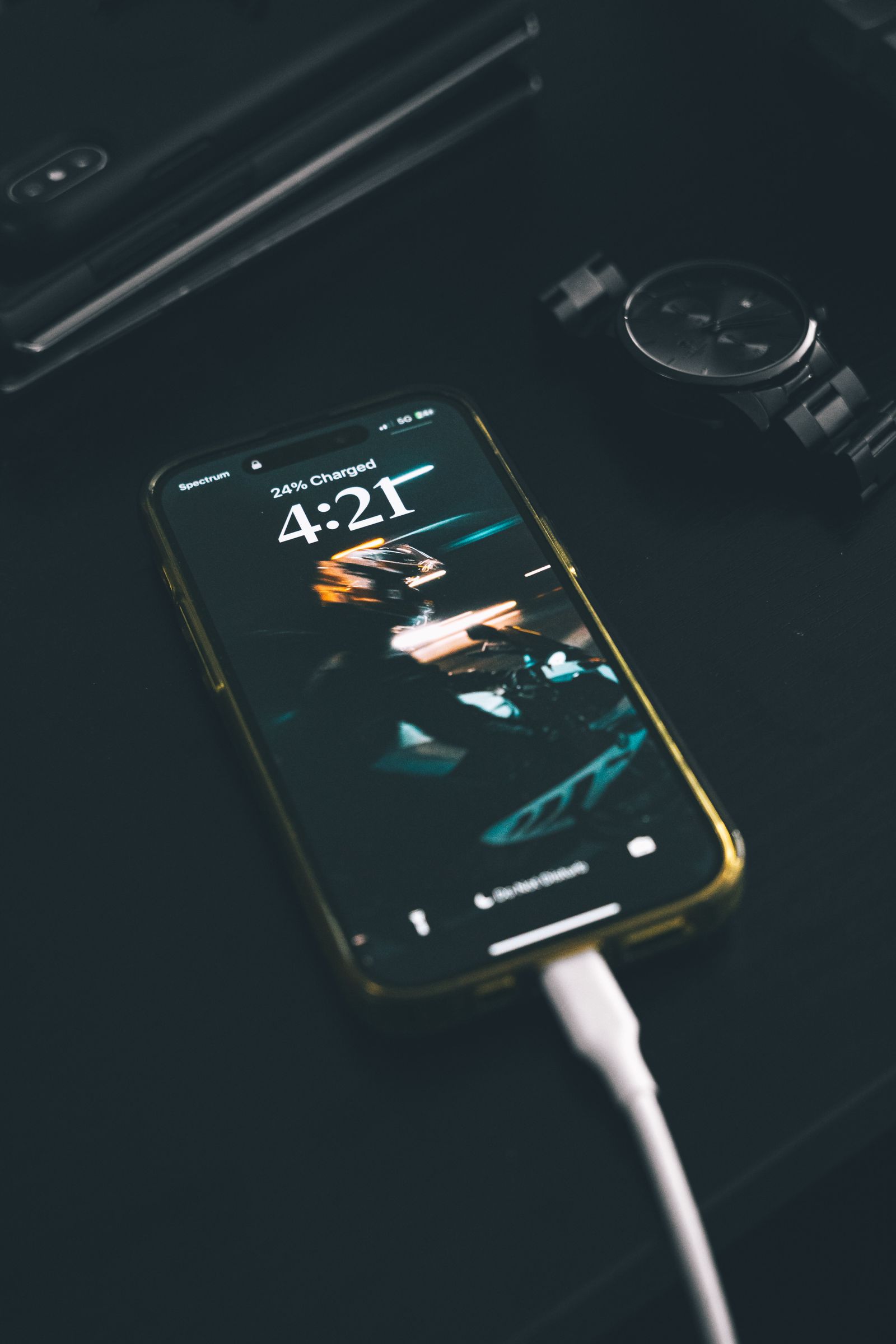
Decide which chargers are personal and which are shared
Many couples never explicitly classify small household items. One person treats every cable in a common room as shared. The other remembers who bought each item and expects it to remain in place. Neither assumption becomes a rule until you say it aloud.
Assign personal chargers where reliable access matters, such as a bedside table, work desk, medical device station, or travel bag. Put shared cables in agreed locations such as the kitchen counter or living room. A small label or colored cable tie can make ownership visible without turning the home into an inventory warehouse.
Keep the distinction narrow. You do not need to label every plug in the house. Identify the two or three chargers whose location affects someone’s routine. Everything else can remain communal if that works for both of you.
Create a charging station that is actually convenient
A shared station fails when it sits behind furniture, has the wrong connectors, or charges too slowly. Choose a reachable outlet near the place where devices collect. Use equipment that matches your phones and follows the device manufacturer’s power requirements.
Give cables enough room so connectors are not bent or pulled tight. Keep chargers away from water, damaged outlets, excessive heat, and places where cords create a trip hazard. Replace frayed or overheating equipment instead of continuing to pass one unreliable cable between rooms. For questions about electrical safety or device compatibility, follow manufacturer guidance or consult an appropriate qualified professional.
The station should reduce hunting. A tray or cable organizer can hold shared cords, but it does not need to look perfect. If both people can plug in a device and return the cable without moving somebody else’s equipment, it is doing its job.
Use a borrowing rule that fits the urgency
A simple default is: ask before taking an assigned charger, and return it immediately after use. If the owner is unavailable and the need is urgent, send a short message and say where the cable is. That keeps borrowing possible without making the owner search.
Define “urgent” realistically. A nearly dead phone before a trip, work shift, school pickup, or expected call may justify temporary use. Wanting a tablet at full charge while several other cables are available usually does not. You do not need a formal hearing each time; you need enough shared understanding to avoid predictable disruption.
If borrowing personal items is a wider source of tension, the guide on what to do when a partner borrows your things without asking explains how to separate everyday sharing from items that require permission.
Buy the missing equipment instead of repeating the fight
Sometimes two people are protecting one cable because it is the only charger that works. If your budget allows, buying another compatible charger may cost less than the time and irritation spent moving the original one. Treat that as fixing household infrastructure, not rewarding bad behavior.
Check what you already own first. Retire broken cables, match usable adapters to the correct devices, and put one spare in a known place. Avoid purchasing an unverified product just because it is cheap. Charging equipment should meet applicable safety standards and the device maker’s specifications.
Agree on who replaces equipment damaged through ordinary use and what happens if someone loses an assigned charger. A reasonable rule might be that shared replacements come from the household budget, while a person replaces a cable they repeatedly remove and misplace. Adjust that rule to your finances rather than using replacement costs as punishment.

Protect work, sleep, and emergency access
A missing cable matters more when a phone supports a necessary routine. Some people use phones for work authentication, transportation, medication reminders, accessibility tools, family contact, or emergency alerts. Ask what depends on the device before dismissing the concern as screen attachment.
Keep a dedicated charger with essential work equipment if possible. If a phone serves as an alarm, leave the bedside cable in place overnight. When severe weather, travel, caregiving, or another situation makes communication especially important, check both phones before the day begins.
This does not mean either partner must remain constantly reachable. Reliable access to a charged device and expectations about phone use are separate questions. Our article on setting phone boundaries without policing each other can help if charging arguments are mixed with conflict about screen time, messages, or availability.
Stop taking the cable back without saying anything
Snatching the charger from a device may feel efficient, but it keeps the same cycle going. Your partner discovers their battery did not charge and takes the cable again later. Both people then feel justified.
Use one direct sentence: “I need my bedside charger to stay there. Please use the shared cable or ask before moving mine.” If you need it immediately, say so and offer the nearest alternative. Clear language is less dramatic than silently unplugging devices and waiting for the next complaint.
Avoid hiding every cable, locking chargers away to make a point, or disconnecting equipment that has a safety or health function. The goal is predictable access. Retaliation makes the cable more emotionally expensive than it needs to be.
Share the mental work behind device upkeep
Chargers are part of a wider maintenance job: noticing damage, ordering replacements, packing travel adapters, untangling cords, and remembering which connector each device needs. One partner may be doing all of that while the other grabs whatever is available.
Assign ownership for the system. One person might manage the shared station while each person maintains personal cables. Or divide the task by device. Include replacement equipment on the same shopping list you use for other household supplies.
If one person routinely notices, plans, and replaces most household items, use a broader workload conversation rather than arguing cable by cable. The framework for dividing household chores without resentment includes the often invisible work of tracking supplies and finishing tasks.
Address the agreement when the equipment is no longer the issue
Suppose you now have enough chargers, the cables are labeled, and your partner still takes the one you asked them to leave alone. The problem is no longer scarcity. Name the specific broken agreement: “We agreed this cable stays by my bed, and it has moved four times this week. What needs to change so the agreement holds?”
Listen for obstacles, but do not erase your request while listening. Your partner may dislike labels, forget which cable is theirs, or believe all small items should be shared. You can revise the system together. They still need to tell you if they cannot or will not follow it.
Repeated disregard for a minor boundary can be frustrating, but avoid diagnosing your partner or treating one cable as proof of how they feel about the relationship. Look for a consistent pattern across clear, recent agreements before drawing a larger conclusion.
Notice when control or safety is involved
Moving a cable by mistake is ordinary. Deliberately preventing a partner from charging a phone so they cannot contact others, access money, get transportation, or call for help is different. So is damaging devices, monitoring communications, threatening consequences for charging a phone, or using access to electricity as leverage.
If you feel afraid or believe access to your phone is being restricted as part of coercive control, seek private support from a qualified local domestic violence service. Use a safer device if your communications may be monitored, and contact emergency services if there is immediate danger. Couples counseling is not a substitute for individual safety planning when abuse is present.
When both partners can participate freely and safely, a licensed couples counselor may help with recurring conflicts about respect, ownership, and follow-through. The counselor cannot decide who deserves the fast charger, but they can help you build agreements that neither person has to enforce through supervision.
Frequently asked questions
Is it petty to be upset about a phone charger?
No. The price of the object does not determine the inconvenience caused when it disappears. Keep your response proportionate: explain the practical impact, request a stable location, and help create an alternative cable.
Should couples share all chargers?
Only if sharing gives both people reliable access. Many couples do better with personal chargers in essential locations and one or two communal cables in shared rooms.
What if my partner’s charger is always broken?
Replace or safely dispose of the faulty equipment and agree on who maintains the new one. Do not continue using a frayed, overheating, or incompatible charger. Follow the device manufacturer’s guidance.
Can I label my charger?
Yes. A colored cable tie, small label, or distinct cable can prevent confusion. Explain the system so the label is a practical cue rather than a passive-aggressive surprise.
What if my partner says everything in the house is shared?
Shared ownership can still include assigned use. A jointly owned car can have scheduled access; a jointly purchased charger can stay at one person’s work desk because that location serves an agreed need. Discuss access and location rather than arguing only about legal ownership.
Try a one-week charger reset
For seven days, give each person one assigned charger and put at least one shared cable in a fixed location. Mark them clearly. Ask before moving an assigned cable, and return it after use. Put replacement equipment on the shopping list as soon as a cable stops working.
At the end of the week, check what failed. If one cable still moves, place the shared option closer to where it is needed. If nobody can identify their charger, use clearer labels. If the setup works, stop discussing it. A good charging routine should be pleasantly dull: the phones charge, the cables stay where expected, and a low-battery warning does not start another argument.