
Quick answer: If your partner leaves the toilet seat up, agree on one neutral reset for everyone who uses the bathroom. A practical default is lid and seat down after every use, because nobody has to guess who comes next and the bathroom is left in the same state each time. Discuss missed follow-through as a small shared-space habit, not proof that your partner is selfish, dirty, or disrespectful.
You walk into the bathroom at night, sit without checking, and get an unpleasant surprise. Or you see the seat down again and feel that one person’s preference has quietly become the house rule. The physical action takes a second. The argument lasts because each person thinks the “obvious” position is different.
This is a good example of a minor conflict that needs a concrete agreement, not a verdict about who is right in every household. The aim is a bathroom that each person can use safely and predictably.
Talk about the actual bathroom moment
Start with what happened. “The seat was up when I used the bathroom during the night, and I nearly fell into the bowl” is specific. “You never think about me” asks your partner to defend their entire character.
If the problem is inconvenience rather than a near fall, say that plainly too. You do not have to exaggerate the risk to make a request. “I keep lowering it before I can use the toilet, and I want us to agree on how we leave it” is enough.
Avoid collecting every bathroom grievance in the same conversation. The empty toilet-paper roll, toothpaste tube, wet towel, and unwashed sink may need attention, but adding them all makes a one-step habit harder to settle. Address the seat first, then schedule a broader bathroom reset if the workload is uneven. If toothpaste is the recurring side argument, use the separate guide for partners who squeeze the toothpaste differently.
Choose a neutral reset instead of arguing about fairness by gender
The familiar argument says one person raises the seat and another lowers it, so each should handle their own movement. That sounds symmetrical until you include the lid, children, guests, cleaning, nighttime use, and anyone who sits every time. Household rules work better when they describe the final state of the fixture rather than assigning a permanent winner.
“Seat and lid down after every use” is one clear reset. Everyone performs the same closing action, and the next person opens what they need. Another household may choose a different rule. What matters is that all regular users understand it and that it does not create an access or safety problem.
Do not turn the discussion into claims about what all men, all women, or all couples should do. People use toilets differently for many reasons. Keep the agreement tied to your bathroom and the people who rely on it.
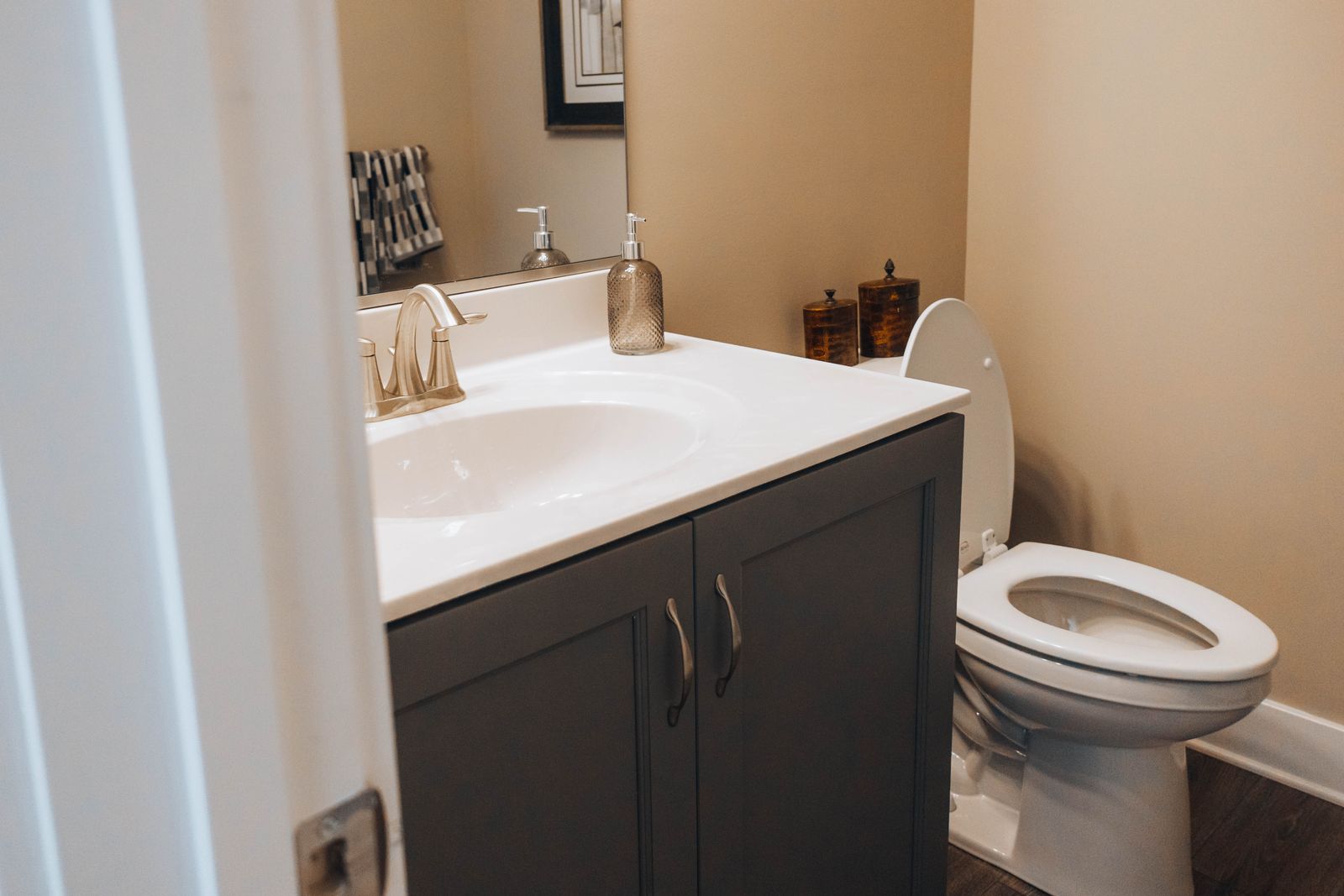
Account for safety and accessibility
A person using the bathroom half asleep may not notice that the seat is raised. Children, older adults, and people with low vision, balance problems, pain, limited mobility, or urgent toileting needs may have less time or ability to adjust the fixture safely. Ask what each household member needs rather than assuming the same movement is easy for everyone.
If someone uses a raised toilet seat, support rail, transfer aid, or another accessibility device, follow the device instructions and guidance from an appropriate health or accessibility professional. Do not remove or reposition equipment to satisfy a general house rule if doing so makes the toilet unsafe or unusable.
Repair a loose seat, unstable hinge, cracked fitting, or lid that falls unexpectedly. A relationship agreement cannot compensate for faulty hardware. Renters may need to report the problem to a landlord or property manager; homeowners can follow manufacturer guidance or use a qualified plumber or repair professional.
Make “done” easy to recognize
Vague requests fail because “put it back” can mean seat down, lid down, or simply leave the bathroom as you found it. Pick one visible finish line. For example: flush as appropriate, check that the toilet is usable, close the seat and lid, and wash your hands.
Keep the routine short. Do not attach a full toilet-cleaning inspection to every use. If splashes or marks are part of the complaint, agree that the person who creates them handles them promptly with the suitable product and follows the product label. Routine cleaning can remain a separately assigned household job.
The same ownership principle applies to supplies. The article about a partner who never replaces the toilet paper roll explains how to define the replacement step and backup supply without making one person the bathroom manager.
Use one cue while the habit changes
A new reset may need a prompt for a week or two. Choose a cue that sits where the action happens: a discreet note near the flush control, a soft-close lid, or linking “lid down” to the hand-washing sequence. The cue should help the person using the toilet remember independently.
Repeatedly calling your partner back to inspect the seat transfers the monitoring job to you. So does checking after every bathroom visit and reporting each miss. A short learning period is reasonable; permanent supervision is not a shared habit.
If the seat is hard to lower quietly, drops suddenly, or shifts sideways, fix the hardware rather than demanding more careful technique forever. The easiest reliable environment usually beats another lecture.
Decide what happens after a missed reset
People forget small actions. The useful response is quick: lower the seat, acknowledge the miss, and continue using the agreed routine. A missed reset does not need sarcasm, public embarrassment, a photo sent to friends, or an argument at two in the morning.
When the pattern repeats, describe the recent evidence without using “always” or “never.” Try: “We agreed to leave the lid and seat down. I found the seat up three evenings this week, and I do not want to keep checking behind you. What would make the reset easier to remember?”
Look for a testable adjustment. A better cue, repaired hinge, or different reset time can be tested for seven days. “I’ll try harder” may be sincere, but it does not tell either of you what will change.
Separate the seat position from toilet cleaning
Seat position and cleaning are related but different jobs. Lowering a seat does not mean one person owns the weekly bathroom clean. Raising it does not make another person responsible for wiping the hinges, rim, floor, or nearby surfaces.
Assign the whole cleaning job or divide it explicitly. Include supplies, frequency, safe product use, and the finish line. Never mix cleaning chemicals, and follow label directions for ventilation, protective equipment, contact time, and compatible surfaces.
If one partner is already tracking most of the home, use the site’s guide to dividing household chores without resentment. It distinguishes doing a visible task from noticing, planning, stocking, and following up.

Try a short bathroom agreement
“I want the bathroom to have one predictable reset. Can we leave the seat and lid down after each use for the next week? If the hinge makes that awkward or the rule creates an access problem, we’ll change the setup rather than blame each other.”
This script states the request, the trial period, and the exceptions. It also leaves room for information you may have missed. Your partner might point out that the lid bangs, a child cannot lift it, or a mobility aid requires another arrangement.
Review the experiment after a week. Ask whether the bathroom was easier to use and whether either person became the full-time reminder. Keep the rule if it worked. If it did not, identify the awkward step instead of repeating the same accusation.
When the disagreement is really about consideration
Sometimes the seat becomes evidence in a larger case: “I change things for you, but you do not change things for me.” That concern deserves a separate conversation. One bathroom habit cannot carry the weight of every unmet request.
Name two or three current examples and look for a pattern in follow-through. Are agreements unclear? Does one partner agree just to end the conversation? Is one person making most household rules? Is the other refusing every adjustment that benefits someone else? Those are more useful questions than whether the seat itself proves love.
Be willing to notice control in either direction. One partner should not deliberately leave the seat up to provoke the other. The other should not use the rule to monitor, shame, or punish every bathroom visit. A shared-space standard should reduce friction, not create a new tool for policing.
Do not diagnose a person from a one-second habit
Leaving the seat up does not prove narcissism, attention-deficit/hyperactivity disorder, depression, or lack of empathy. A repeated miss may come from habit, unclear expectations, awkward hardware, distraction, or refusal to participate. Stay with what you can observe.
If forgetfulness or difficulty completing daily routines appears across work, health, finances, and home life, encourage your partner to seek appropriate professional advice if they want it. Do not assign a diagnosis during an argument or use a possible condition to excuse disrespect.
Bathroom disagreements can also involve embarrassment about bodily functions, gender identity, disability, illness, or past experiences. Ask questions without demanding private medical details. You need enough information to make the space usable, not permission to interrogate someone.
Recognize when the problem is no longer small
An ordinary toilet-seat disagreement should remain ordinary. It becomes more concerning if one partner uses bathroom access to humiliate the other, removes accessibility equipment, blocks the door, refuses privacy, records someone, threatens them, or deliberately creates unsafe conditions as punishment.
Couples counseling may help with recurring household conflict when both partners can speak freely and participate safely. It does not guarantee agreement. If one person uses intimidation, coercion, or violence, private support and safety planning may be more appropriate than a joint communication exercise.
In the United States, the National Domestic Violence Hotline offers call, text, chat, and safety-planning options. Use a safer device if you believe your browsing is monitored. Elsewhere, contact an appropriate local domestic violence service or emergency service. If there is immediate danger, contact local emergency services.
Frequently asked questions
Is leaving the toilet seat up disrespectful?
One missed reset is usually a habit lapse, not proof of disrespect. Repeatedly dismissing a clear, reasonable agreement may show a follow-through problem. Judge the response to the request and the wider pattern, not one seat position alone.
Should the toilet lid also be closed?
Many households choose seat and lid down because it creates one neutral end position. Follow the toilet manufacturer’s instructions and account for accessibility needs. A lid-down rule still requires each person to open what they need and leave the fixture usable afterward.
What if my partner says I should just check before sitting?
Checking is sensible, especially at night, but it does not replace a shared agreement. Explain the practical effect and propose one neutral reset. Both people can take reasonable care while still leaving the bathroom predictably for the next user.
What if we cannot agree on the rule?
Test each workable option for a week and compare safety, effort, and reminder burden. If the argument is part of a broader struggle over shared standards, discuss the bathroom within the full household workload rather than debating the hinge forever.
Leave the bathroom ready for the next person
A useful agreement is boring: choose the final position, account for access needs, repair faulty hardware, and use one cue until the sequence becomes automatic. If seat and lid down works for your household, make that the reset everyone follows.
Then let a miss stay small. Correct it, adjust the system if needed, and save the larger conversation for an actual pattern. The toilet seat does not need to become a daily referendum on who cares more.