

Quick answer: If your partner leaves dirty clothes on the floor, decide which clothes belong in the hamper, which can be worn again, and where each category goes. Put an open, easy-to-reach hamper near the place where clothes usually come off. Agree that only clothes placed in the designated laundry container enter the shared wash routine, unless accessibility, caregiving, or health needs require another arrangement. Address repeated missed follow-through as a household responsibility problem, not proof that your partner is lazy or does not care.
You walk around yesterday’s jeans, a shirt beside the bed, and socks that stopped a few inches short of the hamper. Picking them up would take less than a minute. Yet doing it again can feel like accepting a permanent job you never agreed to take.
Your partner may see a harmless pile they plan to reuse or move later. You may see clutter, extra sorting, and another reminder you have to issue. The clothes are simple. The disagreement underneath them is usually about what counts as finished, who notices unfinished work, and whether agreements can be trusted.
Talk about the clothes you can both see
Start with the current event: “Your clothes have been beside the bed since yesterday, and I need the walkway clear.” That gives your partner a specific fact and request. “You are a slob” or “I have to do everything” invites a fight about identity and history before either sock moves.
Name the practical impact without inflating it. Clothes may block a walkway, make vacuuming difficult, mix clean and worn items, or leave one person doing an unplanned collection before laundry day. If the pile simply looks unpleasant to you, say that honestly. A preference can be negotiated; it does not need to masquerade as a universal rule.
Pick a neutral time for the larger conversation. Bedtime, the rush before work, and the moment you are carrying a full basket are poor settings. Handle an immediate trip hazard first, then discuss the routine when neither person is cornered by the mess.
Decide what “dirty clothes” means in your home
A surprising amount of floor laundry is not clearly dirty. A sweater worn for an hour may be headed back to the closet. Exercise clothes may need washing immediately. Jeans may sit on a chair because one person plans to wear them tomorrow. If the only choices are “clean drawer” and “dirty hamper,” half-worn clothes often become a floor category.
Create a visible place for clothes that can be worn again: one hook, a short rail, or a small open basket. Set a limit that fits the room. When that spot is full, its owner sorts it before adding more. The floor remains a walkway, not overflow storage.
Agree on any items that need separate handling. Wet clothing, heavily soiled workwear, delicate garments, or items exposed to substances that require special care should follow appropriate labels and professional guidance. Do not improvise a health or contamination protocol during an argument.
Put the hamper where the habit happens
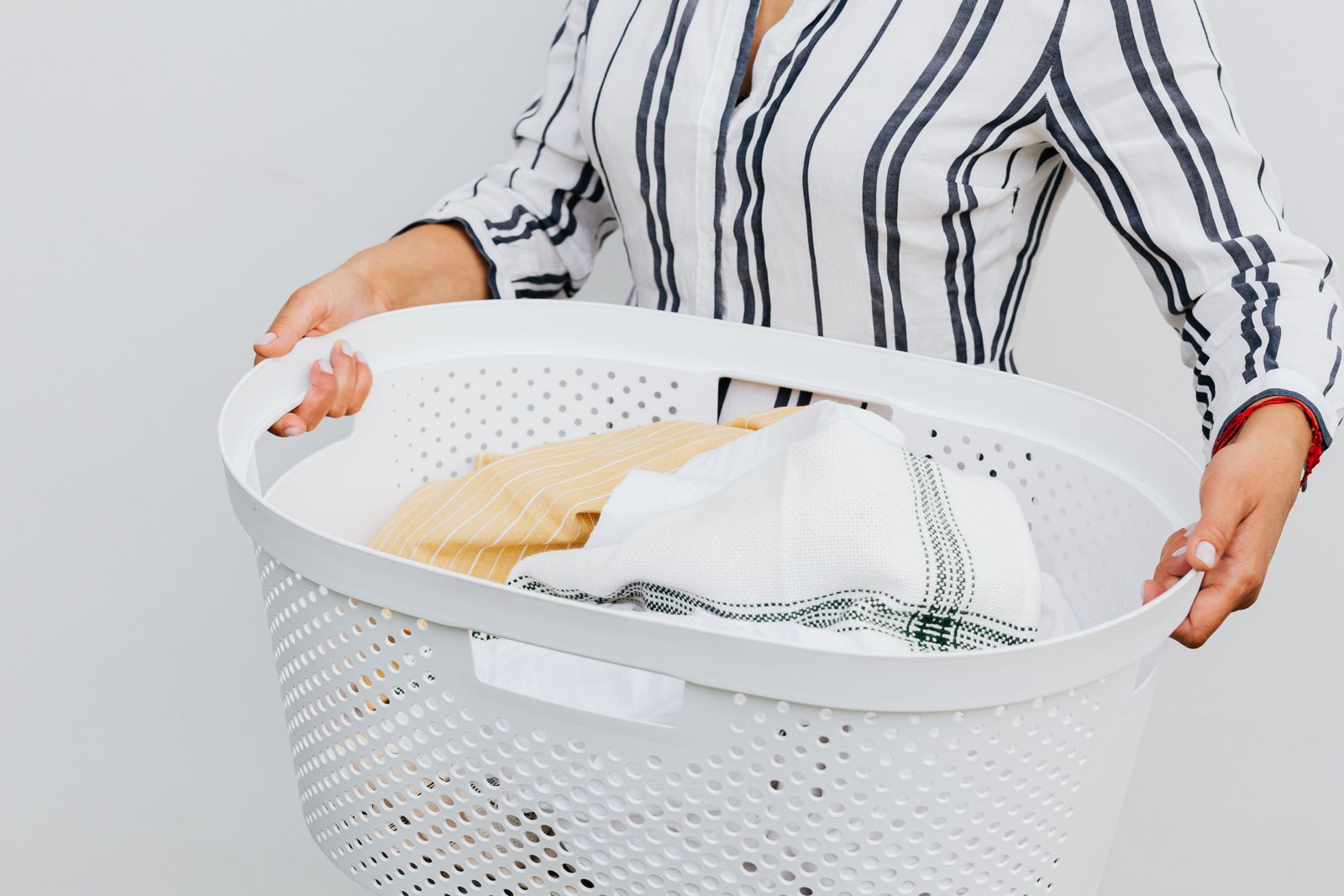
If clothes always land beside the bed while the hamper lives in a hallway closet, the room is telling you where the container belongs. Move it closer for a week and see what changes. This is not rewarding carelessness. It is basic household design: make the desired action easier than the repeated mistake.
The container itself matters. A heavy lid, narrow opening, overflowing liner, or complicated sorting system adds friction. Some households do well with one open hamper and sort later. Others need two clearly marked sections. Choose the smallest system both partners will actually use.
Consider physical access. Pain, limited mobility, fatigue, pregnancy, low vision, or a difficult reach can turn a “two-second task” into something else. Adjust the placement or division of work instead of assuming a diagnosis or lack of respect. A fair arrangement accounts for real capacity while still making ownership clear.
Separate collecting clothes from washing them
Putting clothes in a hamper is one task. Sorting, checking pockets, treating stains, washing, drying, folding, and putting everything away are additional tasks. Couples often argue about the visible pile while leaving the larger laundry workload undefined.
Decide who owns each load and when responsibility transfers. If one partner handles shared laundry, the simplest boundary may be: clothes must be in the agreed hamper by Saturday morning to be included. Items left elsewhere stay with their owner until the next load. State that rule in advance. Quietly excluding a needed uniform as punishment is not a useful boundary.
If laundry has become one part of a broader imbalance, use the guide to dividing household chores without resentment. It helps account for planning and follow-through, not only the moment a machine starts.
Agree on a daily floor reset
“Pick up your clothes” sounds clear until two people attach different deadlines to it. One means immediately after changing. The other means before laundry day. Choose a specific reset point: before bed, after the morning shower, or before leaving the room for the day.
Keep the reset short. Clothes go to the hamper, the rewear spot, or their storage place. Nothing remains in the walkway. If one person works late or changes while caring for a child, use a time that fits the household rather than creating a rule designed to fail.
Test the routine for one week. If clothes still collect in one location, look at the setup before adding more reminders. The hamper may be too small, the rewear space may not exist, or each partner may still be using a different definition of “later.”
Stop making one partner the laundry inspector
A system has not transferred responsibility if one person still has to scan the room, identify every item, and ask for each correction. That person is managing the task even when they never touch the clothes.
Use cues that belong to the environment. An open hamper beside the changing area is a cue. A shared evening reset on a household checklist can be another. Repeated verbal reminders from one partner should be temporary, not the engine that keeps the routine running.
Avoid photographing the pile for ridicule, throwing clothes outside, hiding needed items, or talking to your partner as if they were a child. Those moves may clear the floor once while making an ordinary household mistake harder to discuss. Hold the boundary plainly and let the owner handle the consequence that was agreed in advance.
Handle clean, damp, and delicate items differently
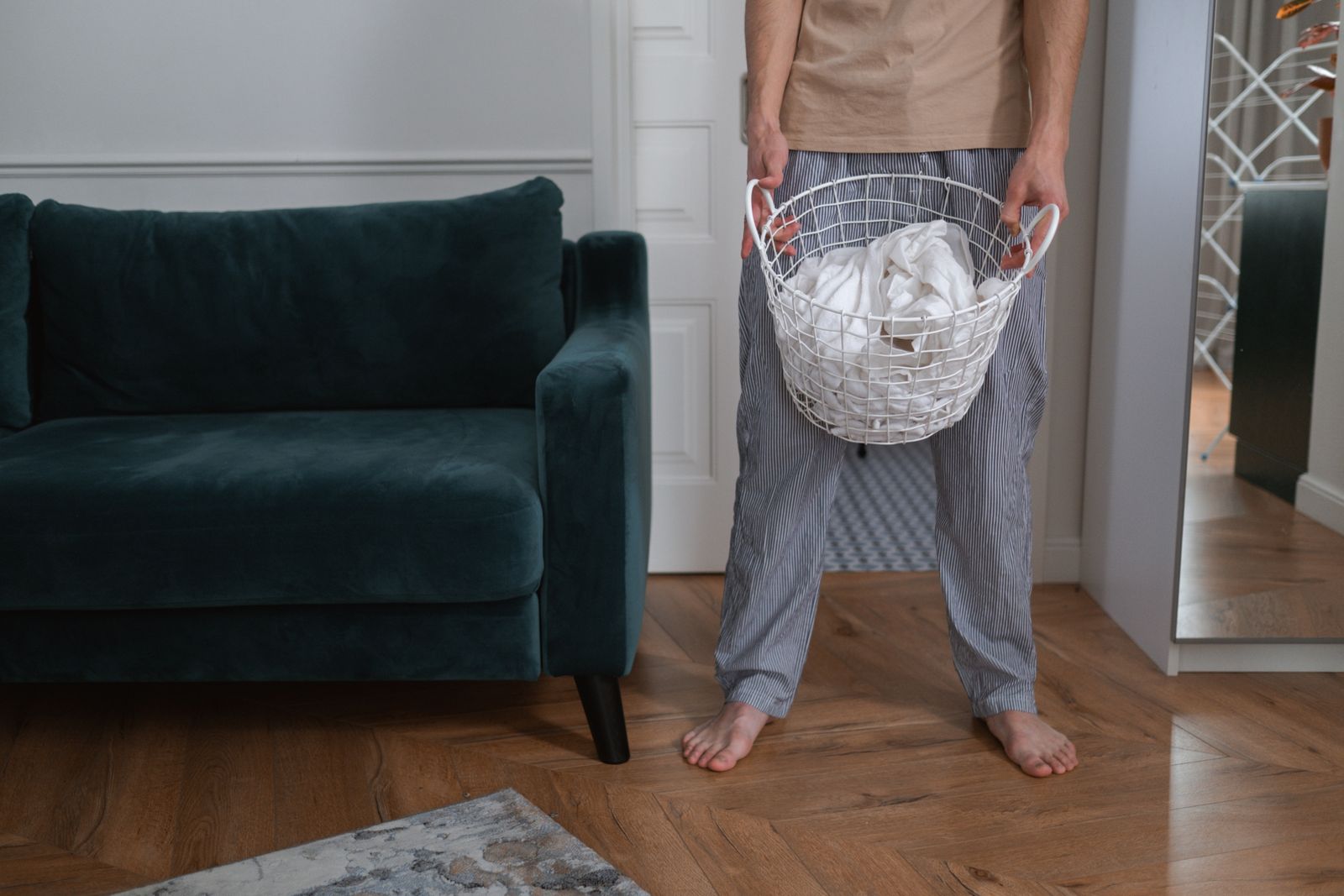
Not every item on the floor can safely be swept into one hamper. Damp towels or workout clothes may need airflow. Delicates may need a separate bag. Clothing with medication, chemicals, bodily fluids, pests, or other potential hazards may require specific handling.
Follow care labels and relevant professional advice for the actual situation. If damp fabric is the recurring issue, the article about a partner who leaves wet towels on the bed offers a separate moisture routine. If loads stall after collection, use the plan for a partner who leaves laundry in the washer.
Keep safety language proportional. An ordinary shirt on the floor is usually clutter, not a crisis. A blocked path, damp pile, or contaminated garment deserves a practical response. Address the real condition rather than using fear to win the wider argument.
What to say when you have asked many times
Repeated requests change the conversation. You may no longer be upset about today’s clothes; you may be reacting to months of hearing “I’ll do it” and finding the same pile. Say that directly without producing a courtroom transcript.
Try: “We agreed clothes would be off the floor before bed. It happened twice this week and I picked them up both times. I do not want to own collection. What needs to change so you can handle it?” This names the agreement, recent pattern, impact, and next decision.
Listen for a concrete answer. Moving the hamper, changing the deadline, or making each person responsible for their own washing can be tested. “I’ll try harder” has no visible mechanism. Ask what you will both do differently and when you will review it.
Set a boundary without using laundry as leverage
A reasonable boundary describes what you will do. For example: “On Sunday I will wash the clothes in the shared hamper. I will not search the bedroom for additional items.” Give enough notice that both partners understand the consequence.
Do not use access to clean clothes, work uniforms, medical garments, or essential items to control or humiliate your partner. In households with children, disabled family members, or caregiving duties, make sure a boundary does not shift risk onto someone who cannot manage the task independently.
If each adult can safely manage their own laundry, separate loads may reduce friction. That is a practical division, not a relationship referendum. Couples do not need identical chore systems to be caring partners.
When the floor argument points to a larger pattern
One untidy corner does not diagnose attention problems, depression, hoarding disorder, or any other condition. Resist assigning a label from a household habit. If your partner is struggling across daily life, ask what they are experiencing and encourage appropriate professional support without using a diagnosis as an insult.
The relationship concern becomes more serious when requests are met with contempt, intimidation, threats, deliberate mess-making, financial control, or retaliation. A better hamper will not repair coercive behavior. Seek private support from a qualified professional or local domestic abuse service if you feel afraid or controlled. Contact local emergency services if there is immediate danger.
If the conflict is safe but stuck, a qualified couples counselor may help you discuss workload and follow-through. Counseling cannot guarantee a result, and both partners remain responsible for respectful behavior.
Frequently asked questions
Should I stop washing clothes left on the floor?
You can agree that only items in the designated hamper enter the shared load. State the rule beforehand and account for essential clothing, caregiving, disability, and safety needs. Do not spring it on your partner as punishment.
What if the hamper is right there and clothes still miss it?
Check whether the hamper is full, lidded, awkward to reach, or being used for clean clothes. If the setup works, return to ownership: the person who leaves the clothes collects them during the agreed reset without waiting for a reminder.
Are clothes on a chair better than clothes on the floor?
Only if both partners agree and the chair remains usable. A single rewear hook or basket usually creates a clearer limit than a chair that slowly disappears under a week’s clothing.
Am I controlling for wanting a clear bedroom floor?
Wanting a shared walkway clear is a reasonable request. Control depends on how power is used. Negotiate a workable baseline, allow personal choices that do not disrupt shared space, and avoid surveillance, humiliation, or threats.
Try one laundry agreement tonight
Choose three destinations: hamper, rewear spot, and storage. Move the containers to where clothes come off, agree on one daily reset time, and decide which items enter the next shared load. Keep the arrangement for a week before judging it.
If the floor clears, keep the system boring. If it does not, change the placement, deadline, or ownership. The goal is not to make both partners care about laundry in exactly the same way. It is to stop one pile from assigning invisible work to the same person every day.