

Quick answer: When one partner wants houseguests and the other does not, neither person should invite someone to stay overnight before the couple agrees. Decide how much notice is required, how long visits can last, where guests will sleep, who will do the extra work, and what would make either partner feel unsafe or unable to rest at home.
An overnight visit can look generous to one person and exhausting to the other. A sibling needs a place for “a few days.” A college friend is passing through. Parents assume they can use the spare room. One partner says yes before checking, while the other finds out from a group text or a suitcase at the door.
The argument is rarely only about the guest. It is about whether home still feels shared, whether family loyalty outranks the relationship, and who absorbs the cleaning, cost, noise, and loss of privacy. A useful agreement handles those practical questions before the doorbell rings.
Why houseguests can create so much tension
Home is where people sleep, change clothes, work, recover from illness, care for children, and stop performing for other people. Adding a guest changes those routines. Even a kind visitor can take up bathroom time, alter meals, wake a light sleeper, or make private conversation difficult.
The two partners may also have different histories with hospitality. One grew up in a house where relatives arrived without notice and always had a bed. The other grew up with strict privacy, or learned that visitors meant extra work and conflict. Neither history automatically sets the rule for the current household.
Start by dropping character judgments. Wanting guests does not prove someone is generous. Wanting limits does not make someone cold or antisocial. The couple needs a policy that respects relationships outside the home and the needs of both people who live inside it.
No overnight invitation should be unilateral
A shared home requires two yeses for an overnight stay. This is not the same as giving either partner control over the other’s friendships. People can meet elsewhere, spend time together during the day, or help someone find another place to stay. Sleeping in the shared home affects both residents directly.
Ask before offering the room. Do not tell a guest, “It should be fine,” and then pressure your partner to agree because backing out would feel embarrassing. That turns the partner into the apparent villain while protecting the person who made the premature promise.
A clean request includes the person, dates, reason, and likely routine: “Maya is coming for a conference from Thursday to Sunday. She asked whether she can stay here. She would leave by seven each morning. Are you open to it?” The answer can still be no, but both people are deciding the same proposal.
Set a notice period that fits your household
Some couples can handle a one-night visit with two days’ notice. Others need a week because of shift work, children, disability, pets, remote work, or limited space. Choose a normal minimum instead of negotiating from zero every time.
Notice is different from permission. A rule that says “tell me three days ahead” is not useful if telling is treated as automatic approval. Use language that keeps the decision open: “Please ask at least a week before an overnight invitation, unless it is a genuine emergency.”
Define emergency carefully. A canceled flight, sudden evacuation, or immediate safety concern may require a fast decision. Cheap concert lodging or a relative who did not book a hotel is usually a planning problem, not an emergency. Even during a crisis, discuss what the household can safely offer and for how long.
Agree on an exact arrival and departure
“A few days” causes trouble because each person hears a different number. Put arrival and departure dates in the invitation. If plans change, the guest asks rather than assuming the stay continues.
Longer visits need checkpoints. A two-week stay may affect work, childcare, utilities, laundry, parking, and intimacy much more than a weekend. If someone is between homes or jobs, compassion matters, but an open-ended stay can quietly become a living arrangement. Discuss a firm review date, contribution to costs, household expectations, and realistic alternatives before agreeing.
Do not use the guest’s hardship to silence practical questions. It is possible to care about someone and still admit that your home cannot meet all of their needs.
Make the host responsible for the extra labor
The partner who wants the visit should handle most of the added planning unless the couple agrees otherwise. That includes preparing the sleeping space, communicating house rules, arranging meals, washing linens, and cleaning afterward.
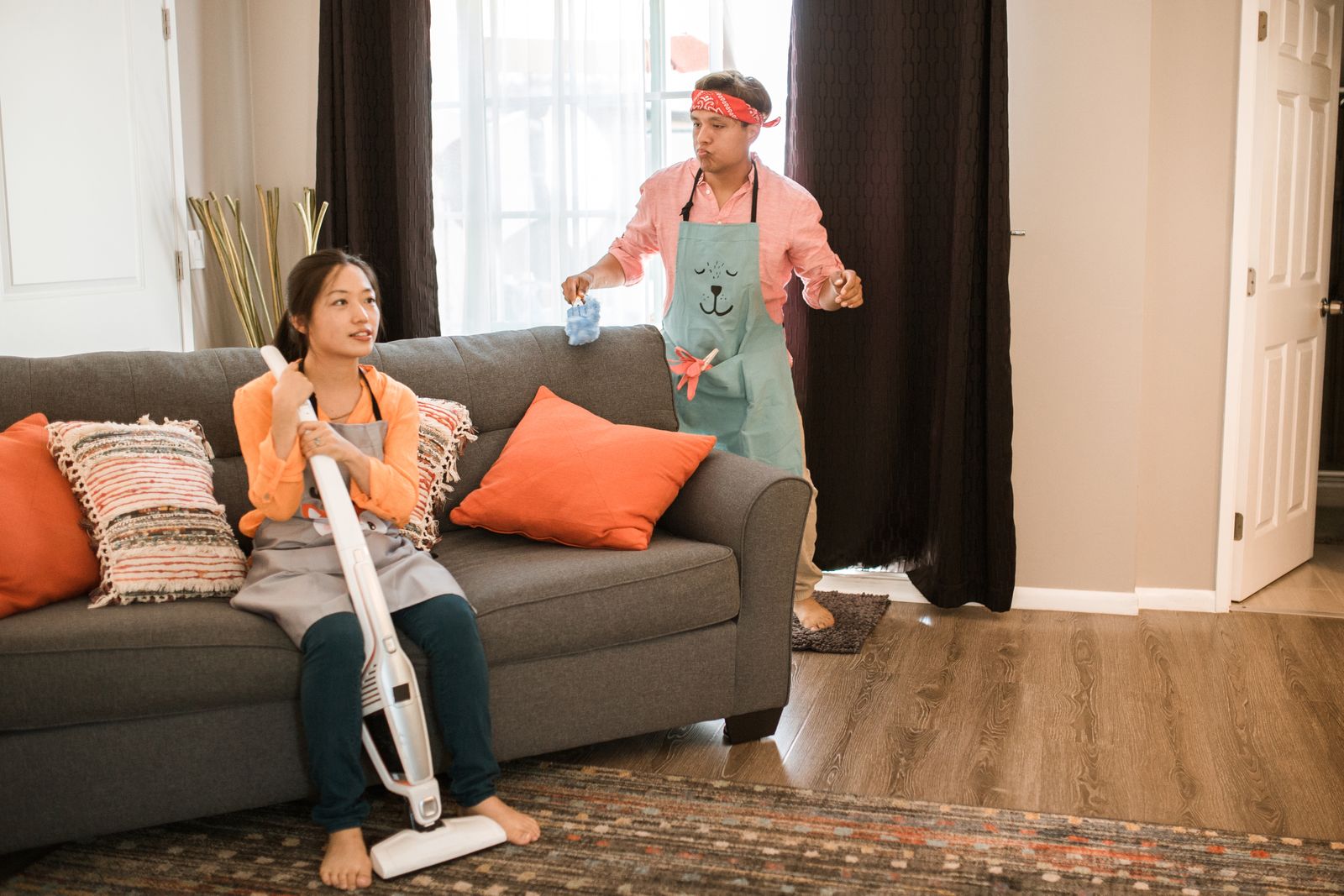
A common pattern is that one person invites and entertains while the other shops, cooks, tidies, changes sheets, manages children, and keeps the household running. Resentment is predictable when hospitality depends on invisible labor.
Use the same task-based approach described in dividing household chores without resentment. Name each job and its owner. “We will clean up” is vague. “I will make the bed Thursday, cook Friday, and wash the linens Sunday” can be checked.
Discuss money before the visit
Guests can add groceries, transportation, restaurant bills, utilities, parking, entertainment, and lost work time. A weekend may barely affect the budget. Repeated or extended visits may.
Decide what the household is offering. Are meals included? Will the guest buy groceries? Is the inviting partner paying for outings from personal spending money? If the guest cannot contribute, agree on what the couple can afford rather than arguing in front of them later.
The method in talking about money without fighting works here: use real amounts, separate needs from assumptions, and make the tradeoff visible. Generosity is easier to sustain when it does not create a surprise bill.
Protect privacy, sleep, and remote work
Decide which rooms are private, when the household becomes quiet, and whether the guest may invite anyone else over. Clarify bathroom routines, keys, parking, smoking, alcohol, pets, and food restrictions when relevant. These are ordinary logistics, not accusations.
A guest should not enter the couple’s bedroom, read mail, use a work computer, photograph private spaces, or share household details online without permission. If one partner works from home, identify where calls will happen and when the common area needs to stay quiet.
Plan private time for the couple, too. The resident partner should not have to entertain every hour. It is reasonable to go for a walk alone, close a door, keep a regular appointment, or ask the host and guest to spend time elsewhere. The guide to asking for alone time without making a partner feel rejected can help frame that request without turning it into a verdict on the visitor.
Handle family visits without forcing loyalty tests
Family visits carry extra pressure. A partner may hear a limit as rejection of their parents, siblings, or culture. The other may feel that every boundary disappears when relatives are involved.
Keep the conversation on the stay: duration, frequency, behavior, space, and labor. “Your mother can never come here” is much broader than “Ten nights is too long for me while I am working from the living room. I can manage three nights, or we can help find a nearby rental.”
Partners should normally communicate limits to their own relatives. Present the decision as a household agreement rather than blaming the reluctant partner. More examples are available in setting boundaries with in-laws without damaging your marriage.

What if your partner says no to every guest?
A pattern of automatic refusal deserves a calm conversation outside a specific request. Ask what the person fears or loses during visits. The issue may be sleep, social anxiety, trauma, infection risk, accessibility, a previous guest who ignored limits, or simply too little space.
Look for alternatives that address the actual concern. Try daytime visits, one guest at a time, a shorter stay, a hotel nearby, quiet hours, or a trial visit with a clear departure. Compromise does not require an overnight stay if home cannot safely or reasonably accommodate one.
At the same time, one partner should not use house rules to isolate the other from friends or family. If someone monitors all contact, threatens consequences for seeing loved ones, prevents visitors solely to cut off support, or makes the partner afraid to ask, the concern is larger than hospitality.
What if a guest ignores the rules?
The inviting partner should address the problem promptly. Do not make the other resident repeatedly enforce boundaries with someone they did not invite. A direct sentence is enough: “We agreed that the office stays private. Please do not go in there again.”
For serious or repeated violations, the stay may need to end. Threats, harassment, theft, deliberate property damage, violence, sexual misconduct, or refusal to leave require attention to safety and local law. Contact appropriate local services or a qualified legal professional when needed. Do not physically confront someone if doing so could put anyone at risk.
Write a simple houseguest agreement
The policy does not need to sound like a lease. A short note can cover:
- how much notice an overnight request needs
- the maximum usual stay and visit frequency
- who prepares, hosts, pays, and cleans
- quiet hours and private rooms
- rules for children, pets, smoking, alcohol, keys, and additional visitors
- what happens when either partner feels unsafe
Review the agreement after a visit. Keep what worked and change what did not. The aim is not perfect equality between every family member or friend. It is a home where both partners retain a meaningful voice.
When counseling or individual support may help
A licensed couples therapist may help when ordinary hosting discussions keep turning into contempt, family loyalty battles, or broken agreements and both partners can participate freely. If cost is a concern, review these free and lower-cost couples counseling options.
Couples counseling is not the first tool when someone fears retaliation or is being isolated, threatened, or controlled. In that situation, seek confidential individual support from a domestic violence service, counselor, legal professional, or emergency service as appropriate. Use a safer device if communications may be monitored.
FAQ
Can my partner invite someone to stay without asking me?
They can ask, but an overnight stay in a shared home should require agreement from both residents. The invitation affects privacy, sleep, work, cost, and access to common spaces.
Is it unfair to say no to my partner’s family staying over?
Not automatically. Explain the specific limit and offer realistic alternatives when possible. A shorter stay or nearby lodging may protect the relationship better than agreeing resentfully.
How long is too long for a houseguest?
There is no universal number. The right limit depends on space, work, health, children, cost, and the guest’s behavior. Agree on exact dates before the visit and require a new conversation for any extension.
Should a guest pay for groceries or utilities?
For a short visit, the hosts may choose to cover ordinary costs. For longer or repeated stays, discussing groceries and household expenses is reasonable. Decide privately before making promises.
What if my partner agrees and then becomes resentful?
Address the unmet expectation rather than calling the agreement final. Ask whether the problem is noise, work, money, duration, or lack of help. Adjust the current visit if possible and change the policy before the next one.
Make the home welcoming to both residents first
A fair hosting boundary starts before anyone is invited. Ask early, use exact dates, assign the extra work, discuss costs, and protect private space. Family and friends can matter deeply without receiving automatic access to the shared home.
The strongest policy is simple enough to use when pressure is high: two yeses for an overnight stay, one clear plan, and no punishment when a partner raises a practical or safety concern.