
Quick answer: If you and your partner squeeze toothpaste differently, stop trying to establish one morally correct way to use a tube. Decide what outcome matters: easy dispensing, less mess, no wasted product, or a calm shared sink. Try a tube roller, store the toothpaste upright, or buy separate tubes. Set one rule for replacing an empty tube and one for cleaning residue. A two-dollar bathroom preference does not need a winner.
You squeeze from the bottom and carefully flatten the tube as you go. Your partner grabs the middle, leaves a dent, and walks away. By the end of the week, the toothpaste looks like it survived a minor accident. You point at it. Your partner says toothpaste still comes out. Somehow, both of you are now arguing before breakfast.
The disagreement is small, but the irritation can be real. One person sees waste and a needlessly messy object. The other sees a harmless preference being monitored. Solve the tube first. If the fight keeps returning, talk separately about the larger issue of follow-through or feeling corrected.

Name the problem without grading your partner
Describe what you can see: “The tube is crumpled in the middle, and I have trouble getting toothpaste out of it.” That gives your partner a concrete problem. “You use everything wrong” does not. It turns a bathroom habit into a judgment about competence.
Be honest about what bothers you. Is toothpaste getting trapped near the end? Is dried paste collecting around the cap? Do you dislike the look of a mangled tube on a tidy counter? Are you already rushed when you discover that the tube is empty? Those are different problems, and each one has a different fix.
Skip the courtroom demonstration. You do not need to press every pocket of the tube to prove how much product remains. You also do not need to mock someone for caring about a cheap household item. State the inconvenience, ask for a workable setup, and leave character out of it.
Decide whether the squeeze actually matters
A tube squeezed in the middle can usually be worked toward the opening later. That may annoy the bottom-squeezer, but it does not automatically mean half the toothpaste is wasted. Test the practical issue instead of arguing from principle.
When the tube seems finished, move the remaining paste toward the cap and see how many normal uses remain. If the answer is one or two, the disagreement may be mostly about order and appearance. If the packaging repeatedly tears, leaks, or becomes hard for one person to handle, then the method has a clearer effect.
Some packaging is more flexible than others. A rigid pump, stand-up tube, or tube key may remove the problem. Follow the product instructions and do not cut open packaging if doing so could create sharp edges, contamination, or unsafe storage. The point is not to extract the final microscopic trace at any cost.
Pick the simplest shared-tube rule
If you want to keep sharing one tube, agree on a rule short enough to remember while half awake. One option is “press anywhere, then smooth the tube toward the cap before putting it away.” Another is to attach an inexpensive roller and return it to the same spot after each use.
Store the toothpaste where the preferred action is easy. An upright holder can keep product near the opening. A shallow tray catches residue and stops the tube from disappearing behind other items. If the cap is removable, agree that it goes back on immediately rather than balancing it on the sink.
Try the setup for a week before adding more rules. If both people still reach for the tube differently, do not turn the morning routine into a compliance check. A shared object is only efficient when sharing it takes less effort than maintaining two.
Use separate toothpaste when preferences differ
Separate tubes are not evidence of relationship failure. Couples routinely use different shampoo, deodorant, medications, foods, and pillows. Toothpaste can join that list. This is especially practical when you prefer different flavors, textures, ingredients, or packaging.
Give each tube a clear place. A labeled cup, separate drawer section, or different color prevents accidental use. Each person replaces their own product unless you agree otherwise. Shared shopping can still include both tubes; the ownership rule simply removes the daily dispute.
Do not use separate products as a punishment. “Fine, buy your own everything” expands a tiny compromise into a threat about the relationship. Keep it ordinary: “We use toothpaste differently, so two tubes will make mornings easier.” Then move on.
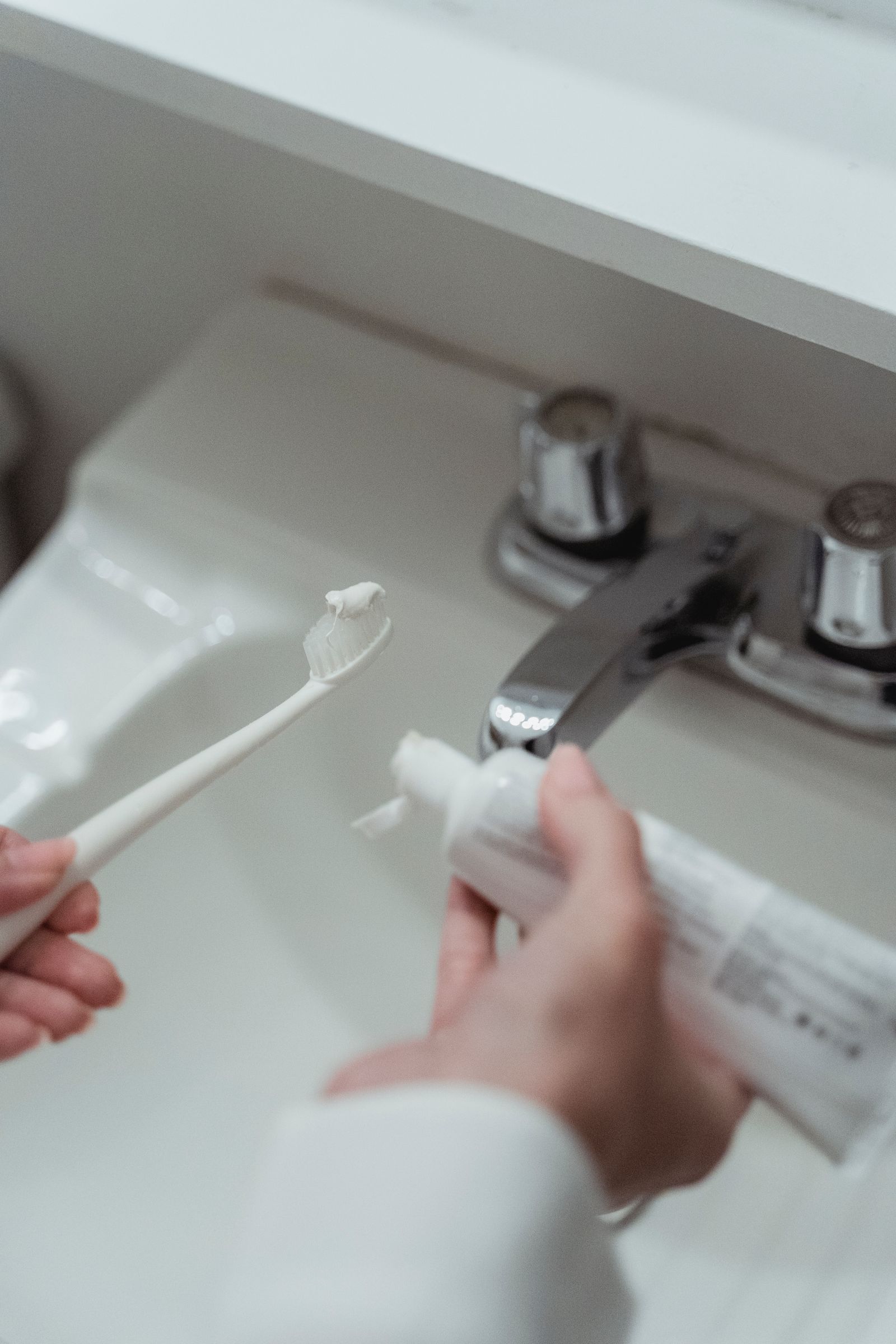
Separate squeezing from sink cleanup
The squeeze may get blamed when the real irritation is dried toothpaste on the cap, mirror, counter, or faucet. Make cleanup its own agreement. The person who leaves visible residue wipes it during the same bathroom visit. Keep a washable cloth or appropriate cleaning supplies within reach.
Define “clean” without requiring a hotel inspection. The cap should close, the tube should not stick to the counter, and obvious splashes should be wiped. Tiny water spots can wait for the regular bathroom clean. If standards differ sharply, agree on a daily reset and a deeper weekly task.
This distinction matters because one partner may adopt the approved squeezing technique while the sink stays messy. The other person then feels ignored and adds new complaints. A precise rule avoids moving the finish line after somebody follows the original request.
Agree on who replaces the empty tube
An almost-empty tube creates the same handoff problem as many household supplies. The person who uses the last practical amount may put it back because they think another use remains. The next person discovers the shortage when they have no time to search a cabinet.
Choose a replacement point. For example, when the tube takes more than a few seconds to dispense a normal amount, move it to a use-first spot and put a new tube beside it. Whoever opens the backup adds toothpaste to the shopping list. This keeps the final uses available without surprising the next person.
Store one backup if your budget and space allow. Avoid building a large stockpile unless it matches actual use and storage guidance. If one partner needs a specific product for dental reasons, that person can track it with help from the shared shopping system rather than relying on a generic substitute.
The same finish-line approach works for other bathroom supplies. Our article about a partner who never replaces the toilet paper roll explains how to place backups, define replacement, and keep the next person from discovering an unfinished task at the worst moment.
Protect the morning rush
Minor bathroom annoyances become louder when two people need the sink at once. Decide who uses which area and when. Toothpaste, brushes, skincare, hair tools, and towels need homes that do not block the other person’s routine.
If one partner needs to leave first, give that person an uninterrupted window. The other can use a second mirror, prepare elsewhere, or wait a few minutes. Do not start a detailed discussion about tube geometry while someone is trying to catch a train or get a child to school.
Hot water can add another layer of pressure. If showers and sink use are colliding, our guide for when a partner uses all the hot water offers a way to map demand, agree on timing, and check the equipment rather than blaming one long shower for every rushed morning.
Account for accessibility and health needs
Hand strength, pain, tremor, limited dexterity, vision, and fatigue can affect how someone handles a tube and cap. A roller that feels neat to one person may be awkward for another. Ask what motion is comfortable before insisting on a particular technique.
A pump dispenser, larger cap, grip aid, automatic dispenser, or separate product may be easier. Choose something both people can operate safely. If a new difficulty with gripping, coordination, pain, or daily self-care is concerning, the affected person can consult an appropriate licensed healthcare professional.
Toothpaste choice can also involve allergies, sensitivity, oral conditions, or advice from a dentist. Do not tell a partner to switch a recommended product merely to simplify the shopping list. For individualized oral-health questions, ask a qualified dental professional rather than treating relationship advice as dental care.
Stop tracking every squeeze
Once you agree on a setup, give it room to work. Do not inspect the tube after every use, leave sarcastic notes, or call your partner back to redo a squeeze. One neutral reminder is enough: “Can you smooth the tube before you put it away?” If the rule still fails, switch the setup instead of escalating the supervision.
Repeated correction can create a parent-child dynamic. The corrected partner may become defensive or deliberately careless. The correcting partner may feel forced to monitor because nothing changes without a reminder. Both people can step out of that loop by assigning ownership and accepting a good-enough result.
If toothpaste is one item in a long list of chores and supplies that one person manages, discuss the whole workload at a planned time. Our guide to dividing household chores without resentment helps couples count planning, noticing, buying, and cleanup instead of arguing over one visible object at a time.
Talk about the larger pattern only when it is there
Sometimes a tube is just a tube. Your partner can care about you and still squeeze it in a way you dislike. Avoid turning one low-stakes habit into proof that they are selfish, disrespectful, or incapable of compromise.
A broader conversation makes sense when clear agreements are repeatedly dismissed across many areas, or when one partner constantly corrects harmless preferences. Name that pattern with recent examples: “We agreed on three shared routines, and none lasted past the first week” or “I feel watched when ordinary preferences are treated as mistakes.” Then ask for one change you can observe.
Pay attention if the conflict includes intimidation, threats, destruction of belongings, restricted access to hygiene products, or control over money and basic needs. Those behaviors are different from an annoying squeeze. If you feel afraid or controlled, seek private support from a qualified local domestic violence service. Contact emergency services if there is immediate danger. Couples counseling is not a substitute for individual safety planning in an abusive situation.
Frequently asked questions
Is squeezing toothpaste from the middle wasteful?
It can make the tube harder to empty neatly, but much of the product can usually be moved toward the cap later. Test the practical effect with your packaging. A roller, upright holder, or separate tube may matter more than proving one squeeze is correct.
Is it unreasonable to buy separate toothpaste?
No. Separate tubes are a simple solution when partners prefer different products or handling methods. Assign each tube a place and decide whether each person replaces their own or both go on a shared list.
Who should replace an empty toothpaste tube?
A useful default is that the person who opens the backup adds a replacement to the shopping list. Move the nearly empty tube to a visible use-first spot so the next person is not surprised.
What if my partner laughs when I bring it up?
State the specific impact without inflating it: “It seems small, but I have trouble dispensing it during a rushed morning. I want two tubes if we cannot agree on one setup.” A practical request is easier to answer than a debate about whether you are allowed to care.
What if every small household habit becomes a fight?
Schedule one calm conversation about how you make and review agreements. Pick a single routine, define a realistic finish line, and test it for a week. A licensed couples counselor may help with recurring conflict when both partners can participate freely and safely.
Try a seven-day toothpaste truce
Choose one option today: attach a roller to the shared tube, store it upright and smooth it after use, or place two labeled tubes by the sink. Decide who wipes residue and who adds the next tube to the shopping list. Write down only those rules.
After seven days, ask whether mornings were easier and whether anyone felt monitored. Keep the setup that required the fewest reminders. The best toothpaste agreement is boring. Both people brush their teeth, the sink remains usable, and nobody starts the day litigating a dent in a tube.