
Quick answer: If your partner leaves food splattered in the microwave, agree that the person who causes a spill wipes it after the appliance cools. Use a microwave-safe cover when practical, keep a soft cloth nearby, and set a separate schedule for the deeper clean. Follow the appliance manual before removing parts or using any cleaner.
You open the microwave to warm lunch and find dried sauce across the ceiling, grease on the door, and yesterday’s bowl still on the turntable. Cleaning it takes only a few minutes, but the same surprise every week can make those minutes feel loaded. One person sees a forgotten splash. The other sees another task quietly handed to them.
This is a household-system problem before it is a character problem. A clear rule about spills, a realistic definition of “clean,” and supplies within reach will usually do more than another argument about who cares more.
Deal with the immediate spill safely
Wait until the microwave and any container are cool enough to handle. Hot liquid can continue bubbling after heating, and steam can burn when you lift a cover. If you see sparks, a damaged door, exposed interior metal, smoke, or a burning smell, stop using the appliance and consult the manual or a qualified technician.
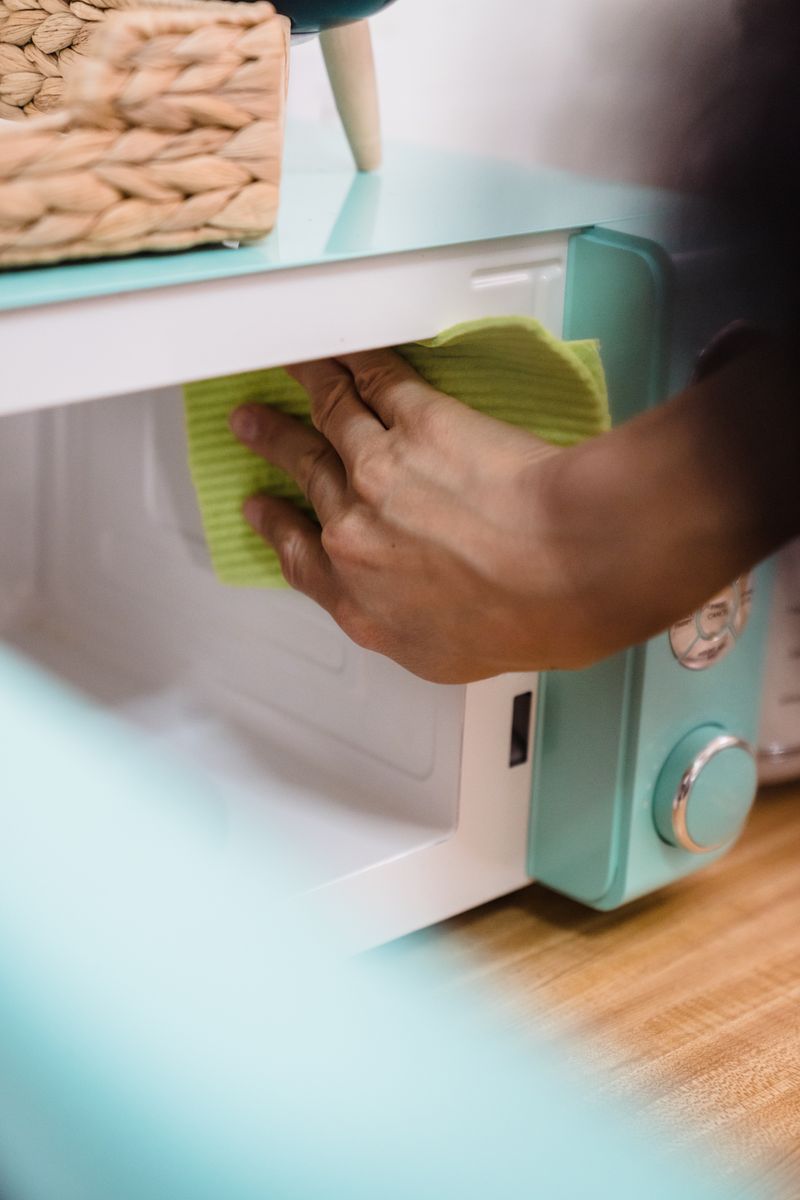
Wipe fresh splatters with a damp, soft cloth once it is safe. Do not spray liquid directly into vents, controls, or openings. Avoid abrasive pads that could damage the interior finish. The instructions for your model take priority over a cleaning shortcut found online.
Name what happened without turning it into a verdict
Try: “There is dried tomato sauce on the inside from last night, and I had to clean it before I could use the microwave.” That gives both of you a visible event to discuss.
“You are disgusting” or “You never clean anything” turns a wipeable mess into a defense of someone’s worth. Even if you are tired of the pattern, stay with the appliance and the handoff. You can discuss the broader workload later if this is one example of many.
A direct way to raise it
“When food splatters in the microwave, I often find it after it has dried. Can we agree that whoever causes the spill wipes it once the microwave is cool, and that we both use a cover for foods that tend to pop?”
The request says who acts, when they act, and what prevention looks like. It leaves room for your partner to mention a genuine obstacle without making you responsible for repeated reminders.
Agree on two different cleaning jobs
A spill cleanup and a full microwave clean are not the same task. Mixing them together creates an easy excuse: one partner thinks every splash requires dismantling the turntable, while the other waits for a future deep-clean day.
The spill rule can be simple: remove the dish, let hot surfaces cool, and wipe visible residue caused by that use. The deeper job may include washing the turntable, wiping the walls and ceiling, cleaning the door seal area as the manual allows, and wiping the exterior.
Define the finish line in one sentence
Use a sentence both people can remember: “After a spill, leave the inside free of visible food and return the dry turntable to its correct position.” For the deeper clean: “Clean the removable parts and interior according to the manual, then leave the appliance dry and ready to use.”
This follows the same ownership principle described in how to divide household chores without resentment. The job includes noticing and finishing, not merely waiting for someone else to point out the residue.
Use the appliance instructions, not a viral cleaning hack
Microwaves vary in interior coatings, removable parts, filters, and cleaning precautions. Whirlpool’s general microwave cleaning guide describes using water, mild dish soap, and a soft cloth, while telling owners to check whether a turntable is dishwasher-safe. Your own manufacturer and model manual should decide what is safe for your appliance.
Be cautious with strong chemicals, metal scrubbers, and heavily scented mixtures. Never mix cleaning products. If either partner has asthma, chemical sensitivity, or another health concern, choose a method and division of labor that respects that need.
Prevent the splatter before it becomes a chore
A vented microwave-safe cover catches much of the mess while allowing steam to escape. A microwave-safe plate can work for some foods if the appliance instructions allow it. Do not seal a container tightly, and do not use a cover that is not intended for microwave use.
Lower power, shorter heating intervals, and stirring between intervals can also reduce sudden popping. Sauces, soups, oatmeal, and fatty foods behave differently, so the useful setting depends on the food and appliance. Prevention should make cooking easier, not become another rigid standard used to criticize each other.
Put the cover where it will be used
Store the cover beside the microwave or inside it when the appliance is not running, if the manufacturer permits that storage practice. If the cover lives in a crowded cabinet across the kitchen, neither person is likely to reach for it during a rushed lunch.
Keep a soft cloth in a nearby cleaning area too. A good system removes steps from the desired action. It does not rely on one person remembering supplies for everyone.
Choose who owns the deeper clean
The person who made a spill should handle that spill. The periodic clean can be assigned separately. One partner might clean the microwave every Sunday while the other owns another appliance. You could alternate weeks or include it in a broader kitchen reset.
Fairness does not require splitting every wipe exactly in half. It requires a division both people understand and a workload that looks reasonable in context. If one partner already carries most of the cooking, shopping, and kitchen cleaning, adding the microwave to that same list by default may deepen the resentment.
Review the overall split rather than keeping a courtroom tally. The guide on keeping score in a relationship explains why exact point systems can distract from a more useful workload conversation.
Stop reminders from becoming supervision
After you agree on the rule, use one neutral reminder when needed: “The soup splattered. Please wipe the microwave after it cools.” Avoid a running commentary, sarcasm, or cleaning it angrily while describing every previous incident.
The other partner’s part is to respond without making the reminder itself the main offense. “I forgot; I will handle it after dinner” is useful only if the cleanup happens. If it does not, move the reminder into the system with a shared kitchen-reset prompt or assign clear appliance ownership.
Review the setup after one week
Ask two questions: Did the cover get used, and were fresh spills wiped? If not, identify the exact failure point. Perhaps the cover is awkward, the cloth is never clean, or your rule depends on noticing residue in poor light. Fix the setup before repeating the same speech.
Talk about standards without using disgust
People can have genuinely different tolerances for food residue. One person may wipe every speck. Another may act only when the turntable feels sticky. Neither preference automatically proves care or disrespect.
Choose a shared minimum for a shared appliance: no pooled liquid, loose food, strong odor, or visible splatter left after the person responsible has had a safe chance to clean it. One partner can choose a more detailed polish during their deeper-clean turn without demanding that every use end in a spotless inspection.
If the conversation becomes contemptuous, pause. The site’s guidance on how successful couples resolve conflicts can help you keep the discussion on one behavior and one practical request.
Make room for limits and unequal abilities
Someone with limited reach, grip strength, pain, poor vision, or sensitivity to cleaning products may need a different task. A countertop microwave may be accessible to one partner and difficult for the other; an over-the-range model can make the ceiling especially awkward to reach.
Adapt the division rather than framing a physical limit as laziness. One person might handle immediate wipes while the other washes the removable turntable. You could use a stable, safe setup recommended for the space, or ask for help rather than climbing on an unsuitable chair.
Address the larger pattern if the microwave is not the only issue
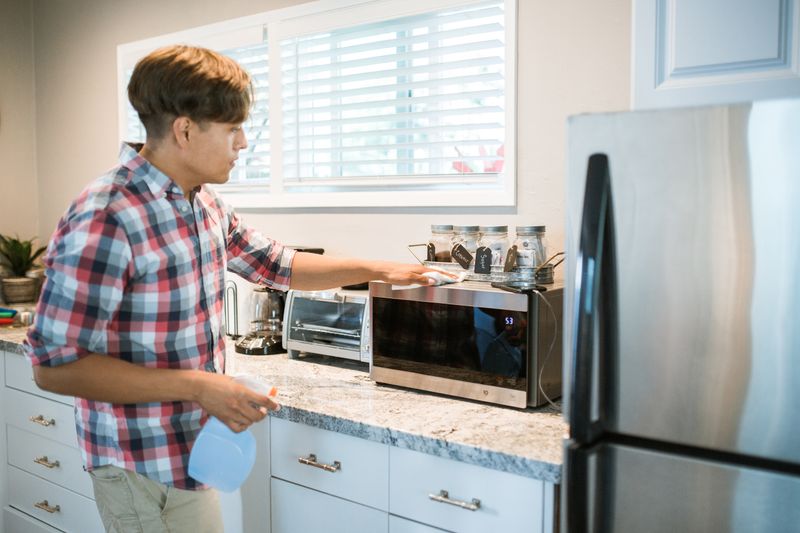
Sometimes the dried sauce is one item in a long chain of unfinished handoffs. If one partner repeatedly cooks, leaves spills, and expects the other to restore the kitchen, discuss the full cooking-and-cleanup cycle. Do not force the entire history into a fight while someone is trying to heat breakfast.
Pick a calm time. List the recurring tasks, decide who owns each one, and include planning and restocking. If someone broke an agreement and responded harshly, a specific repair may help; this guide to apologizing after a hurtful argument focuses on acknowledging impact and changing the behavior.
If requests about housework lead to intimidation, threats, property damage, blocked access to food or money, or fear of retaliation, the issue is bigger than microwave cleanliness. Prioritize your safety and contact a trusted local domestic violence service or emergency provider when appropriate. Couples exercises are not a substitute for individual safety support.
Try a seven-day microwave reset
- Read the cleaning section of your appliance manual.
- Choose one microwave-safe splatter cover and store it nearby.
- Agree that the person who causes a spill wipes it after cooling.
- Assign the periodic clean to a named person or alternating day.
- Keep a suitable soft cloth and mild cleaner in an agreed location.
- Review what worked after seven days without adding unrelated complaints.
Seven days is long enough to expose a weak setup and short enough to avoid building another permanent chore chart. If the routine works, keep it. If it fails, change one part at a time.
Frequently asked questions
Who should clean microwave splatters?
The simplest rule is that the person whose food spills or pops handles the fresh residue once the appliance is safe to touch. Assign periodic deep cleaning separately so one accidental splash does not become a debate about the entire kitchen.
Should the microwave be wiped after every use?
It does not need a full clean after every use. Visible spills are easier to remove before they dry, so wipe those promptly after cooling. Follow the manufacturer instructions for deeper-clean frequency and approved products.
What if my partner says they do not notice the mess?
Agree on observable triggers rather than asking them to “notice better”: pooled liquid, visible food on the walls or ceiling, a sticky turntable, or a strong odor. Good lighting and a quick look after removing the dish can make the check routine.
What if we still fight after making a rule?
Discuss whether the conflict is really about an unequal workload, repeated broken agreements, or the way reminders are delivered. A counselor may help if the same cycle affects many parts of the relationship. The site’s overview of free and lower-cost counseling options explains what support can and cannot provide.
A small cleanup rule that can hold
You do not need identical cleanliness standards to share a microwave. You need a minimum both people can live with: cover foods that tend to splatter, wipe the mess you make once it is safe, and give the deeper clean a clear owner.
Start with the seven-day reset. If the microwave stays usable without reminders becoming supervision, you have a workable rule. If it does not, fix the specific handoff rather than attaching another label to your partner.