
Quick answer: If your partner buys groceries you already have, use one shared shopping list, check the kitchen before leaving, and decide who owns each shopping trip from inventory through putting food away. Add an item when someone opens the backup, not after the last one is gone. For expensive or perishable extras, agree that the shopper sends one message before buying.
You unpack the bags and find another jar of mustard behind two open jars. There are six onions, no milk, and a second family-size box of cereal that nobody especially likes. The extra purchase may be small, but repeated duplicate grocery shopping wastes money, crowds the kitchen, and leaves one person wondering why they bothered to make a list.
This is usually a systems problem before it is a relationship verdict. Two people can shop with good intentions and still work from different information. The fix is a list both people can trust, a quick inventory habit, and clear ownership that does not turn either partner into the household purchasing manager.
Talk about the pattern after the groceries are put away
Do not start the larger conversation while frozen food is warming on the counter. Store perishables first, keep anything that needs refrigeration at a safe temperature, and set aside the duplicates you need to review. Then talk when neither person is rushing.
Name what happened without assigning a motive. Try: “We bought a second bag of spinach and the first one may spoil. I want a better way for both of us to see what we already have.” That gives you a practical problem to solve. “You never pay attention” invites a defense of character instead.
Separate an occasional mistake from a recurring cost
Anyone can forget what is in the pantry. If duplicate purchases happen once every few months, use the food and move on. If they happen weekly, estimate the actual cost and waste for a month. Keep the record neutral: item, quantity, price, and whether it was used. The goal is to understand the pattern, not build a case against your partner.
Use one shared grocery list
A list in one person’s head is not shared. Neither is a paper note left at home when the other partner stops at the store. Pick one place both people can open from the kitchen and the shop: a shared notes app, grocery-list app, whiteboard that gets photographed before leaving, or a paper list kept with the reusable bags.
Do not maintain parallel lists in texts, screenshots, and memory. That is how “I thought you were getting it” becomes another duplicate purchase. Choose one source of truth and agree that an item is ready to buy only when it appears there.
Write enough detail to prevent guesswork
“Yogurt” may mean a large plain tub to one person and six flavored cups to the other. Include the useful detail: item, size or quantity, preferred type, and whether substitutes are acceptable. Save firm preferences for products where the difference matters. A list with a paragraph for every apple will be abandoned.
For example:
- milk, one gallon, 2%;
- plain yogurt, large tub, any brand;
- pasta, two boxes, no need to buy if the usual kind is unavailable.
Add items when the backup is opened
Waiting until a product is completely gone creates emergency shopping and memory failures. For household staples, use a simple trigger: when someone opens the backup, that person adds the item to the shared list. If there is no backup, add it when the package reaches an agreed level.
The trigger should fit how quickly you use the product. Milk may go on the list when one carton is nearly empty. Rice may go on the list when the container reaches a marked line. Toilet paper may need a minimum household quantity. You do not need a complex inventory database. You need a cue that both people can see and repeat.
Check the kitchen before the shopping trip
A two-minute scan catches mistakes the list cannot. Before leaving, check the refrigerator, freezer, pantry, and the usual storage place for household supplies. Look at the actual item rather than asking across the room, “Do we have any?”
Focus the scan on expensive, perishable, and frequently duplicated products. If olive oil, coffee, meat, cheese, cleaning products, or pet food regularly cause confusion, put those at the top of the check. There is no need to count every spice before a routine trip.
Make opened products visible
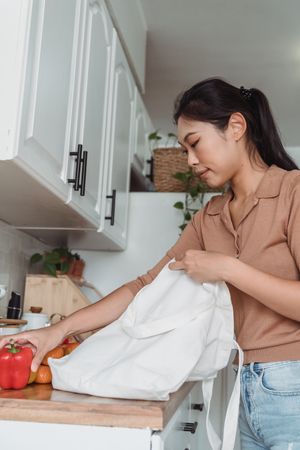
Duplicates multiply when half-used products live in several places. Keep each category together when space allows. Put open packages in front and unopened backups behind them. Use one shelf or bin for overflow instead of hiding extras across the kitchen.
If you find three open versions of the same product, combine them only when it is safe and appropriate, and keep labels or date information you may need. Otherwise, arrange them so the oldest suitable product gets used first.
Give one person ownership of each trip
Ownership is more than pushing the cart. The person who owns the trip reviews the list, checks inventory, shops within the agreed budget, handles reasonable substitutions, and makes sure the purchases are put away. The other partner can add items without supervising every aisle by text.
You can alternate trips, divide stores, or assign categories. One person might own the weekly food shop while the other manages pharmacy and household supplies. Choose the division that fits your schedules. The broader guide to dividing household chores without resentment explains why full ownership usually works better than asking one partner to plan while the other only executes.
Set a rule for unplanned purchases
A list should guide the trip without banning every spontaneous choice. Agree on a small amount each person can spend on extras without checking in. For costly items, large quantities, or food likely to spoil, send one clear message before buying.
A useful message is specific: “There is a two-for-one offer on strawberries. Do we have room and will we use both boxes by Thursday?” If there is no reply, follow the default rule you agreed on. That may mean buying only the listed amount or skipping the extra.
Do not confuse a sale with a saving
Two packages for a lower unit price still cost more if the second package is thrown away. Check storage space, expected use, and the household budget before buying multiples. Bulk purchasing makes sense when you regularly use the product and can store it safely. It is not automatically the responsible choice.
Handle duplicate groceries without blame
First decide whether the item can be used. Move shelf-stable duplicates into the meal plan. Freeze suitable food before it spoils. If the store accepts returns and the product meets its policy, keep the receipt and return it promptly. Unopened food may also be appropriate for a local food pantry, but check the organization’s current donation rules before dropping anything off.
Do not force one partner to consume something unwanted as punishment for buying it. The consequence should repair the practical problem. The shopper might handle the return, update the list, or adjust the next trip. Humiliation does not improve inventory.
Keep grocery planning from becoming one person’s mental load
A shared app does not make the work shared if one person still notices every shortage, plans every meal, checks every shelf, and reminds the other person to open the app. Both partners need to add items and use the list without being prompted.
Pay attention to the invisible parts of grocery shopping: tracking staples, remembering dietary needs, checking the calendar, planning meals, watching the budget, and using food before it spoils. If one person owns all of that while the other only visits the store, the visible errand may be divided but the responsibility is not.
Review the full workload rather than comparing one receipt at a time. Otherwise the discussion can turn into keeping score in the relationship, where both partners collect evidence and neither gets a reliable system.
Plan meals lightly enough that you will use the plan
You do not need to schedule every snack. Choose a handful of meals for the next several days, check what those meals require, and leave room for leftovers or changed plans. A realistic meal outline tells the shopper why an item is on the list and helps prevent attractive duplicates with no job.
Start with food already at home. If you have extra rice, beans, frozen vegetables, or pasta, build one or two meals around them before buying replacements. This is practical inventory control, not a test of culinary creativity.
Agree on substitutions before they happen
Some shoppers treat any similar product as interchangeable. Others care about allergies, texture, ingredients, price, religious practice, medical guidance, or a child’s limited range of accepted foods. Do not dismiss those differences as being picky.
Mark list items as “any brand,” “ask before substituting,” or “skip if unavailable.” For allergies and other health-related restrictions, verify the label every time and follow professional medical advice relevant to your household. A discounted substitute is not useful if someone cannot safely eat it.
Use a short weekly reset
Once a week, spend ten minutes clearing expired or spoiled food, moving older items forward, checking the meal plan, and updating the list. Do it before the main shopping trip. This catches duplicates while there is still time to use them.
Keep the reset short. If it becomes a complete pantry redesign every Sunday, it will not last. The useful outcome is simple: both people know what needs to be used, what is low, and what should not be bought again this week.
Review the system, not each other’s worth
After two weeks, ask what failed. Was the list hard to access? Did one person forget to mark purchased items? Were groceries stored in unexpected places? Did last-minute schedule changes make the meal plan unrealistic? Adjust that part of the system.
If a conversation starts to circle, pause and return to one concrete agreement. The article on how successful couples resolve conflicts offers a useful structure for staying with the current issue instead of pulling every past shopping mistake into the room.
Know when the problem is bigger than groceries
Occasional duplicate shopping does not prove carelessness, a mental health condition, or disrespect. Avoid diagnosing your partner from a crowded pantry. Stress, a changed routine, unclear storage, rushed shopping, or two separate lists may explain the pattern.
However, money rules should be mutual. If one partner controls access to food, withholds money for necessities, monitors every purchase to intimidate the other person, or uses the grocery budget as punishment, this is not a list-management problem. Seek confidential support from a qualified local service. If you feel in immediate danger, contact local emergency services when it is safe to do so.
Frequently asked questions
What is the easiest shared grocery system for couples?
Use one list that both partners can update from their phones or from a consistent place in the kitchen. Add an item when the backup is opened, check high-cost and perishable items before leaving, and mark items off while shopping.
Who should fix a duplicate grocery purchase?
The partner who made the purchase can usually handle the return, donation check, freezer plan, or list correction. Keep the response proportional. The point is to close the loop, not impose a penalty.
How do we stop buying food we already have?
Store categories together, keep opened products visible, use one overflow area, and do a short inventory scan before the main trip. A shared list helps only when both people update and trust it.
What if my partner ignores the shopping list?
Ask what makes the list difficult to use and agree on a default for unlisted items. If the pattern continues, discuss the budget and assign complete ownership of the trip. Be specific about the effect without turning the mistake into a judgment about the relationship.
A shopping agreement you can try this week
Choose one shared list today. Add products when the backup is opened. Before shopping, the trip owner checks the kitchen and reviews the next few meals. Unplanned perishables or expensive extras require one message; without a reply, the shopper follows the agreed default. After unpacking, purchased items come off the list and older food moves to the front.
Try that agreement for two shopping cycles, then change the part that caused friction. The aim is not a perfectly cataloged pantry. It is a grocery routine that both partners can use without waste, guesswork, or one person carrying every reminder.