

Bringing a service dog to couples therapy calls for a practical conversation about access before your first visit. Tell the practice that you use a disability-related service dog, explain the arrangements you need, and ask who will communicate them to reception. In the United States, a covered practice’s no-pets policy generally does not exclude a qualifying service animal.
You may already spend enough time explaining your dog at shops and appointments. A therapy visit should leave room for the relationship concerns you came to discuss. Sorting out where the dog will settle and how staff will respond can reduce avoidable interruptions.
This guide addresses a client’s service dog, not a therapist’s pet or a planned animal-assisted intervention. It provides general information, not a legal ruling or individualized clinical advice. The U.S. rules below concern the Americans with Disabilities Act (ADA); other countries and some settings have different requirements.
Know which animal-access rules apply
The U.S. Department of Justice’s service animal guidance describes a service animal as a dog trained to perform work or tasks directly related to a person’s disability. A psychiatric service dog can qualify. A dog’s presence providing comfort, by itself, does not meet that definition.
An emotional support animal and a service dog therefore do not have identical public-access rights under the ADA. Housing and air travel operate under different rules. If you are unsure which provisions apply to your appointment, consult a disability-rights resource rather than buying an online certificate.
A vest is not a legal prerequisite
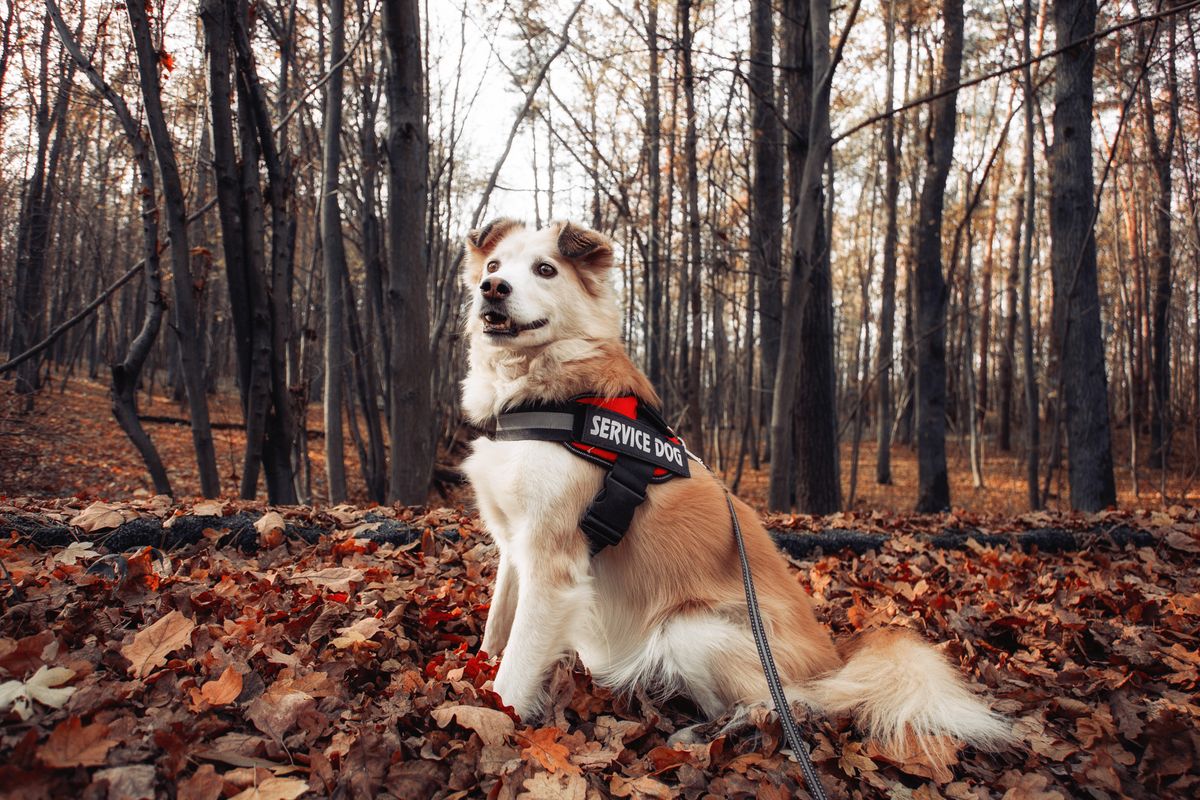
Under the ADA, service dogs do not need a particular vest, professional training program, or service-animal registration. A vest alone also does not establish that a dog qualifies. Ordinary local requirements for dog licensing and vaccination may still apply.
For broader questions about the building and appointment format, see our guide to accessible couples counseling. Here, the focus is the working dog’s attendance and your participation as its handler.
Send a short access message before booking
Advance communication can make the visit easier to arrange. It should not become a demand that you prove your relationship deserves treatment or disclose your whole medical history. You can describe what the office needs to do without sharing every detail of your disability.
“I use a service dog and will bring the dog to our couples appointment. Could you confirm a place beside my seat where the dog can settle, and let reception know not to distract the dog? Please tell me who to contact if there is an access question on arrival.”
Ask whether another animal is routinely present, including in the waiting area. If the therapist brings a pet to work, the practice needs to address that arrangement rather than leaving you to negotiate an encounter between dogs at the door.
Keep the permitted questions distinct from clinical assessment
When the service the dog provides is not obvious, the ADA permits covered staff to ask whether the dog is required because of a disability and what work or task it has been trained to perform. Staff cannot require a task demonstration or service-animal certification, or ask about the nature of your disability to establish public-access eligibility.
A clinician may separately discuss relevant health information as part of treatment. Those clinical conversations are different from reception deciding whether your working dog may enter. Ask why information is needed and how it will be handled.
Plan the room around the dog’s work
Discuss where you will sit and where the dog normally settles. There should be room for the dog without blocking a doorway or separating it from the person it assists. If moving a coffee table would solve the problem, request that before the appointment begins.
Explain any practical boundary staff need to follow: not petting, calling, feeding, or photographing the dog while it is working. The therapist does not need to become a dog trainer. They do need to understand how to avoid interfering with the assistance you use.
Agree on what happens during an alert
If your dog performs a task during the appointment, tell the clinician what response you want from them. For example: “Please pause the discussion while I respond to the dog. I will tell you when I can continue.” Do not ask the therapist to infer medical instructions from the dog’s behavior.
Discuss any emergency arrangements separately with the appropriate professionals. A service dog does not replace medical care, and a relationship counselor should not offer medical instructions outside their qualifications.
Address allergies or fear without making either partner disappear
A partner may have a genuine allergy or fear of dogs. That concern deserves attention, but it does not automatically cancel your access need. U.S. Department of Justice service animal requirements explain that allergies and fear of dogs are not valid reasons for denying access under the ADA.
Ask the practice to work through an arrangement that addresses both people’s needs. Depending on the circumstances, that may involve space between seats, a different room, or another suitable appointment format. Do not assume video therapy is the only solution or that the handler should simply attend without the dog.
Our article about a therapist’s dog in the office covers a different situation: an animal introduced by the clinician. Declining that optional involvement is not the same issue as excluding a client’s disability-related service animal.
Keep responsibility and session boundaries clear
The handler remains responsible for the dog’s care and control. Under ADA rules, a dog generally must be harnessed, leashed, or tethered unless that interferes with its work or the person’s disability prevents it; other effective control is then required. The practice is not responsible for supervising or feeding the dog.
A covered business may require removal when a dog is not housebroken, or is out of control and the handler does not take effective action. That is different from excluding a dog because another client dislikes it. The person must still be offered the opportunity to receive services without the animal present, though whether a particular therapy session can proceed safely needs discussion.
If the practice asks for a pet surcharge or an animal deposit, request clarification. ADA rules do not permit an extra charge for admitting a service animal, although ordinary policies for damage can apply. Seek qualified local advice if access is refused or the fee explanation remains unclear.
Protect your voice in the relationship conversation
The therapist should speak to you directly, even if your partner usually handles appointments. You can accept practical help without giving up control of what is shared. Review the practice’s couples therapy confidentiality arrangements before sending sensitive details through a shared inbox.
A dog responding to its handler is not evidence that the partner is wrong or that one person has won an argument. Ask the therapist to avoid making relationship judgments from the dog’s behavior. The conversation can pause for a disability-related need without treating that pause as a verdict on the disagreement.
When interference becomes a safety concern
Threatening the dog, withholding its equipment, or deliberately blocking disability-related assistance can be part of coercion or abuse. If you fear retaliation, seek confidential individual support before raising the issue in a joint appointment. Couples counseling may be unsafe when someone cannot speak freely.
The National Domestic Violence Hotline offers support in the United States. Use a safer device if your activity may be monitored. If you face immediate danger, contact local emergency services when you can do so safely. Outside the United States, contact a local domestic abuse service.
Questions before the first visit
Can I bring a dog that is still in training?
The ADA’s public-access provisions do not cover service dogs in training. State or local laws may provide additional rights. Check the rules where the appointment takes place and discuss the practice’s arrangements rather than assuming the same protection applies.
Does the dog need to take part in therapy exercises?
No. Attending as your disability-related assistance does not make the dog part of an animal-assisted treatment plan. You can ask that exercises leave its working role undisturbed.
What should we confirm first?
Before traveling, ask the practice to confirm the dog’s access and a workable place beside you in the room. Keep the contact person’s details available. You are arranging an appointment you can participate in, not asking the dog to become the focus of your relationship work.