

Couples therapy in different states may be possible, but a video link alone does not make the appointment available everywhere. Before booking, tell the practice where each partner will physically be during the session. Ask the therapist to confirm that they can provide couples treatment involving both locations under the rules that apply to their profession.
Picture one partner at home in North Carolina and the other staying with family in Pennsylvania. You find a therapist you both like, arrange time off, and assume you can join from separate laptops. The location question can still change whether that appointment goes ahead. It is better to raise it before paying for a recurring slot.
This guide focuses on U.S. cross-state appointment planning. It offers general educational information, not legal advice or a determination that a particular therapist may treat you. Requirements depend on the profession, jurisdiction, and circumstances. The provider and relevant licensing boards need to confirm the arrangement.
Start with where each person will actually be
Your mailing address and your location on appointment day may be different. A partner who normally lives in one state could be attending from a hotel, a relative’s home, or temporary housing elsewhere. Give the practice that information even if the trip is short.
The U.S. Department of Health and Human Services explains in its guidance on licensing across state lines that the ability to deliver care across borders varies with state regulations. It also advises providers to verify patient location and obtain consent before an appointment. With two partners joining from different places, ask about both locations rather than assuming only the person who booked matters.
A useful first inquiry
Try: “We are looking for couples therapy. For the next month, I will be in North Carolina and my partner will be in Pennsylvania during appointments. Can your clinician provide couples treatment with that arrangement? What information do you need to confirm it?”
At this stage, the states and expected dates may be enough to begin the conversation. Send exact addresses through the practice’s approved process when requested, rather than putting sensitive location details into a public contact form.
Ask about authorization, not just online availability
A profile that says “online appointments” does not necessarily mean the clinician can see people in every state. Ask for the therapist’s professional license type and the jurisdictions in which they can provide the service you need. A licensed marriage and family therapist, psychologist, counselor, and clinical social worker may have different pathways and requirements.
HHS describes several possible routes, including a full license, qualifying temporary practice provisions, reciprocity, a relevant compact, or telehealth registration. These are possibilities to investigate, not interchangeable permissions. A clinician’s participation in one arrangement does not prove it covers your situation.
Check the specific appointment arrangement
Ask: “Have you confirmed that your authorization covers this couples appointment when we are each in those states? Does it change if either of us travels?” If the answer is uncertain, allow the practice to check before scheduling. You should not have to interpret a licensing statute together during an intake call.
If you want independent verification, use the relevant state licensing board’s official lookup and contact information. A current license listing can help verify a credential, but may not explain every temporary practice condition. Ask the board about the precise question instead of treating a search result as a legal conclusion.
Do not hide travel to keep an appointment
Tell the practice about a new location before the session, even if the booking system still shows your usual home address. An established treatment relationship does not automatically remove cross-state requirements. HHS notes that some states have temporary practice laws that support continuity of care; whether one applies requires confirmation.
For example, a partner might normally attend from home but plan to join next week’s appointment from a work conference. Contact the office as soon as the trip is known. Ask whether the session can proceed, needs rescheduling, or requires another arrangement.
Do not misstate your location, use a VPN to disguise it, or assume an audio call avoids the issue. Changing the technology does not establish permission to deliver the underlying service. A postponed session can be frustrating. Giving the clinician accurate information is still the practical route.
Make the appointment time unambiguous
Two people can agree on “six o’clock” and mean different moments. Ask the office to confirm the date, time, and named time zone. Put the same appointment into each partner’s calendar and check that the calendar has converted it correctly.
Recheck the displayed time after travel or a daylight-saving change. If one person finishes work close to the appointment, allow time to reach a private place rather than joining from a car or a busy hallway.
Also establish who contacts the practice when travel disrupts the appointment. Our guide to couples therapy cancellation policies covers notice deadlines and what to ask if only one partner is available. Location restrictions and cancellation charges are separate questions; clarify both.
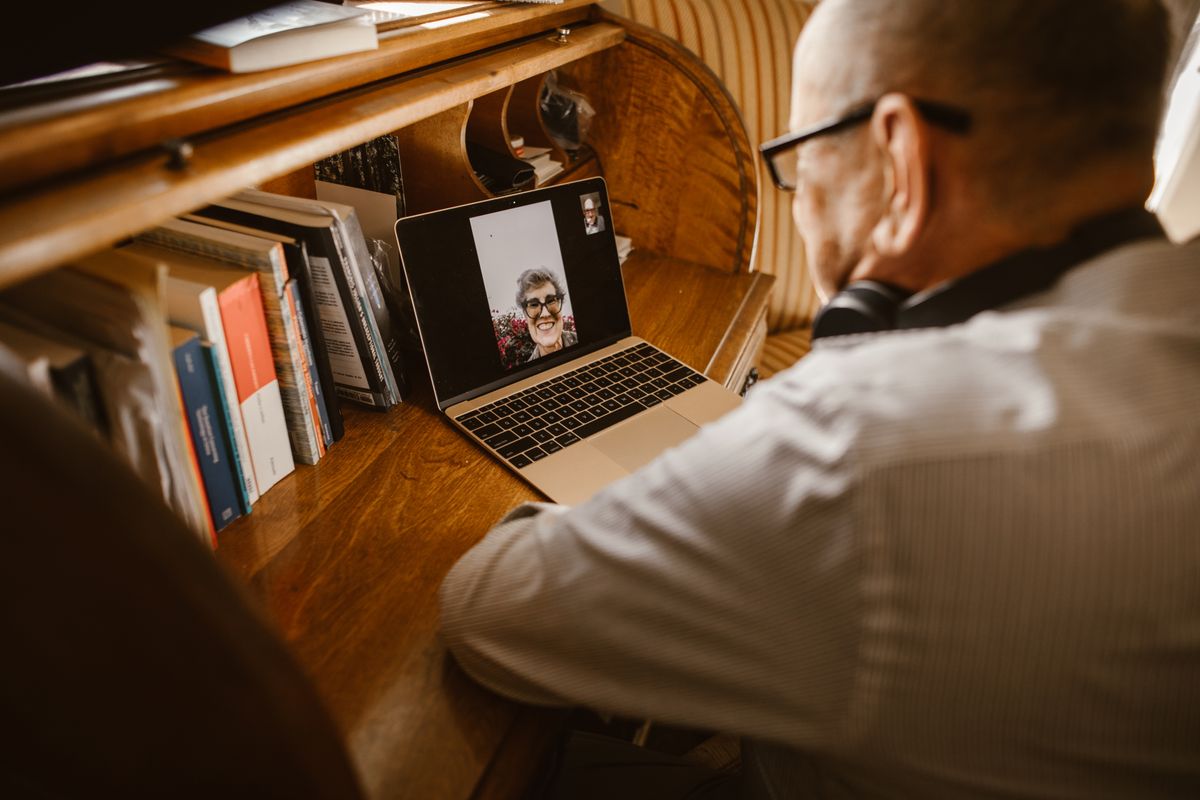
Prepare a private space at each end
Separate locations can make attending easier, but each person still needs somewhere they can speak freely. A closed door may help; it does not guarantee that roommates or family members cannot hear. Headphones reduce sound from the device, not the sound of your own voice.
The HHS patient guide to preparing for a telehealth visit recommends a quiet place, usable internet access, and testing the technology. Check those conditions independently. One partner’s clear connection does not solve the other’s weak signal.
Ask what happens if privacy changes
Someone may arrive home unexpectedly. A hotel room may turn out to have thin walls. Ask the therapist how to pause the conversation if a person enters or either partner no longer feels comfortable speaking. Do not push through a sensitive topic simply because the appointment has already started.
Clarify recording, messages, and individual contact with the clinician before treatment. Our article on confidentiality in couples therapy explains why those policies need a separate conversation. Being in another state does not give either partner permission to record the session or monitor the other’s device.
Agree on a connection-loss plan
Ask which platform the practice uses, how each partner joins, and whether everyone needs a separate account. Test the camera and microphone before the appointment. Keep the office’s approved contact method nearby in case the invitation never arrives.
The therapist should explain what to do if one partner disconnects. Will everyone wait, will the clinician contact the missing person, or will the appointment end? Do not assume the remaining partner can turn the rest of the session into an individual meeting. Consent, clinical judgment, confidentiality, and billing may all affect that decision.
Check accessibility separately from connection quality
A stable internet connection does not ensure that someone can follow the discussion. Ask about captions, screen-reader compatibility, interpreter arrangements, or pauses if relevant. Our guide to accessible couples counseling can help you describe practical barriers before booking.
During the call, tell the clinician if delayed sound makes interruptions look intentional. A simple request such as “Could we pause a moment before replying? The audio is lagging” addresses the technical problem without assigning blame.
Discuss emergency support for both locations
A remote appointment is not an emergency response service. Ask the therapist how they plan for urgent concerns when participants are in different places. They may need each person’s current address, a callback number, and appropriate local support information, using the practice’s privacy procedures.
A partner across state lines may be unable to provide immediate in-person help. The plan should not assume that one of you can reach the other quickly or that the therapist’s office can dispatch assistance in every location without preparation.
If there is immediate danger, contact emergency services where you are. If a relationship involves threats, coercive control, or fear of retaliation after sessions, seek confidential individual support before treating joint telehealth as the solution. U.S. readers can contact the National Domestic Violence Hotline from a safe device. Couples exercises are not a substitute for a safety assessment.
Clarify cost before committing to a regular slot
Ask the practice for its fee, payment terms, and any charges for interrupted or canceled sessions. If you plan to use insurance, confirm benefits with the insurer and ask the provider how this specific couples service is billed. Do not assume online attendance or a clinician’s cross-state authorization guarantees reimbursement.
If the first practice cannot accommodate both locations, ask whether it can suggest an appropriately authorized clinician or discuss a pause and referral plan. An option that works for one partner’s individual care may not be suitable for your joint treatment.
Ask about lower-cost arrangements if needed, while keeping the same location checks. A reduced fee does not change the need to confirm that the provider can offer care involving both partners.
Send one short booking checklist
Instead of a long email about every relationship difficulty, begin with the facts needed to assess the appointment:
- The state where each partner expects to be physically present.
- Any travel or relocation dates that could change those locations.
- A request to confirm the clinician’s authorization for that arrangement.
- Your preferred appointment times, with the time zone spelled out.
- Any privacy, accessibility, or technology needs affecting participation.
- A request for the telehealth consent, fees, cancellation terms, and connection-loss process.
Once the practice confirms the logistics, you can discuss whether its clinical approach fits your goals. Keep location updates part of the routine instead of a one-time question at intake.
Frequently asked questions
Can couples attend therapy from two different states?
Sometimes. The therapist must confirm that the service can be provided with each participant’s actual location under the applicable professional and jurisdictional rules. Being able to open the same video invitation is not enough.
Does a vacation change whether we can attend?
It may. Tell the practice where you will be before the appointment. Temporary practice provisions exist in some states, but you should not assume your clinician qualifies or that a provision covers this service.
Can one partner attend alone if the other’s location is not covered?
Ask the clinician. A solo appointment may have a different purpose and consent arrangement, and is not an automatic workaround for the joint session. The provider needs to decide what is clinically and legally appropriate.
What if the practice cannot give a clear answer?
Ask it to check with the relevant licensing board or other qualified professional resource before booking. You can also seek clarification from the board yourself. Avoid paying for a series of appointments on an assumption nobody has verified.
Confirm the locations before confirming the appointment
Start with a short inquiry listing both states and any upcoming travel. Ask for confirmation before you reserve the session. That gives the practice the information it needs and leaves you free to focus on the conversation once the appointment is actually workable.