

Quick answer: If your partner leaves the car unlocked, agree that the person who last exits checks the doors, closes the windows, and confirms the lock before walking away. Keep valuables out of sight, use the vehicle’s lock confirmation when available, and decide who handles the practical consequences if the routine is missed. Treat repeated failures as a shared security problem, not proof that either person is careless or controlling.
You return to the parking lot and pull the handle before reaching for the key. The door opens. Maybe nothing is missing. Even so, one person feels exposed while the other says, “It was only this once” or “There was nothing valuable inside.” The argument quickly stops being about a lock and turns into a fight over whose judgment counts.
An unlocked car creates a real, avoidable risk, but criticism alone rarely builds a reliable habit. A better response is specific: identify when the miss happens, assign the final check, reduce the number of things you expect someone to remember, and use a backup that does not turn one partner into the other’s full-time monitor.
Start with the actual security problem
Talk about what happened without stretching one incident into a verdict about the relationship. “The passenger door was unlocked when we came back from dinner” is useful. “You never care about our safety” is so broad that your partner may defend their character instead of discussing the car.
Include the concrete risk. An unlocked door can expose belongings, registration papers, a garage remote, spare keys, work equipment, medication, or information showing where you live. Even when the car is empty, somebody may enter it, damage it, or leave something behind. You do not need to exaggerate the danger to justify a locking routine.
Separate a mistake from a pattern
Anyone can miss a lock once while carrying bags, helping a child, or rushing out of bad weather. If it happens rarely, correct it and move on. If it happens repeatedly, look for the point where the routine breaks: unloading the trunk, switching drivers, leaving through different doors, or assuming the other person has the key.
A pattern needs a system. Replaying every past incident will not tell you who should press the button tonight.
Agree that the last person out owns the check
The cleanest rule is usually this: the last person who exits the vehicle checks that every door and the trunk are closed, the windows are up, and the car is locked. This removes the vague assumption that “someone” handled it.
If the driver always carries the key, you may prefer to make the driver responsible. That can also work, provided both people understand the rule. Choose one owner for each trip rather than switching responsibility according to who notices the risk first.
Define what “locked” means
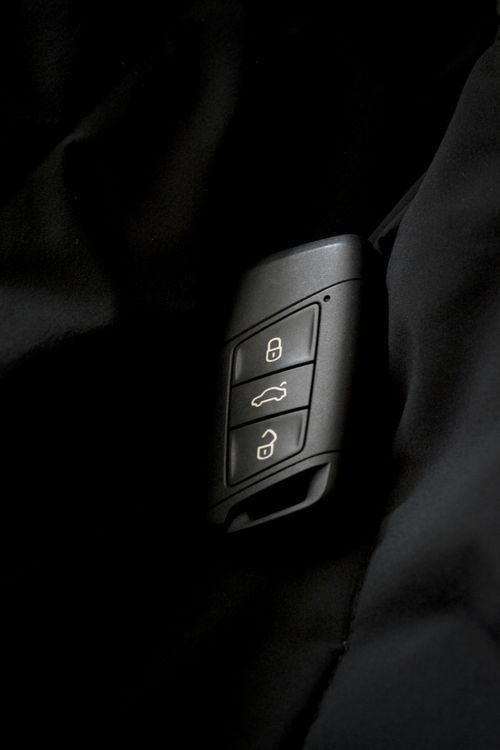
Pressing a button is an action, not confirmation. Depending on the vehicle and setting, use the light flash, horn chirp, mirror fold, dashboard notice, app status, or a quick handle check. Learn how your own car confirms a successful lock. Do not rely on a feature you have not tested.
Be careful with proximity keys. On some vehicles, touching a handle while the key is nearby unlocks the door again. Check the owner’s manual and use a confirmation method that fits the car.
Build the check into the exit sequence
A reliable habit needs a cue. Use the same short order whenever you park: engine off, windows closed, belongings collected, doors shut, lock confirmed. The sequence should take seconds.
Attach the lock to something that already happens. Press the button after closing the final door, before putting the key in a pocket, or as you step away from the car. If you wait until you are halfway across the parking lot and already talking about the next task, the check is easier to lose.
This is similar to building a fixed place and exit check when a partner keeps misplacing their keys. The goal is not perfect memory. It is a routine that asks less of memory.
Remove valuables instead of trusting the lock alone
Locking reduces risk, but it does not make a car a secure storage cabinet. Take wallets, phones, laptops, bags, house keys, identification, and work equipment with you. If something must remain temporarily, keep it out of sight before arriving at the destination rather than moving it into the trunk where people can watch.
Do not leave a garage remote beside documents that show your home address. Avoid keeping a spare house key in the vehicle. If you share the car, agree on what must never be left inside so neither person assumes the other removed it.
Account for children, pets, and medication
A lock discussion should never distract from checking the back seat. Confirm that every person and animal is out of the vehicle before locking it. Medication should generally travel with the person who needs it, both for access and because parked cars can reach unsafe temperatures.
If a child can open a door or press controls, review the vehicle’s child-lock settings and supervise the exit. This is a safety procedure, not a task to use as leverage in an argument.
Use technology as a backup, not a substitute
Some cars can lock automatically, report door status, or send an alert through an app. Those features are useful when they are configured correctly. Test them at home. Confirm what happens if a door is not fully closed, the trunk is open, the key remains inside, or the phone has no connection.
Do not assume every automatic lock behaves the same way. A rental car, borrowed vehicle, replacement key, or software setting may change the routine. The human check still matters.
If remote status creates constant checking, set a limit. One confirmation after parking is practical. Refreshing the app repeatedly or demanding screenshots from a partner can turn a simple security tool into surveillance.
Choose a reminder that does not sound like parenting
A neutral prompt works better than a character judgment. Try, “Can you confirm the car?” or simply, “Lock check.” Use the same phrase for either partner. The reminder should point to the agreed task, not imply that one adult is supervising another.
If one person gives every reminder, the system is still incomplete. Add a shared cue: a note near the key hook, a recurring phone automation when leaving a common parking location, or a rule that the key stays in hand until the lights flash. The person who cares most should not become the permanent security manager.
Keep the reminder proportionate
One calm prompt is enough. Shouting across a parking lot, testing the doors after your partner confirms the lock, or bringing up old mistakes in front of other people adds humiliation without improving security. If you do not trust the confirmation, discuss that problem privately rather than staging a test.
Plan for shared cars and driver changes
Responsibility becomes fuzzy when both people use the same vehicle. Decide how keys, fuel, charging, maintenance notices, and security handoffs work. A simple shared-car rule might be: the driver starts the trip, the last person out locks the car, and the person who notices a warning records it immediately.
If changing drivers has already caused arguments about other responsibilities, the guide on what to do when a partner returns the car with an empty gas tank offers a similar principle: define the handoff before the inconvenience appears.
For valet parking, repair shops, car washes, or lending the car to family, decide who verifies that all keys are returned and personal data is removed from connected systems when necessary.
Decide what happens after a missed lock
A useful agreement covers repair, not punishment. If somebody realizes the car may be unlocked, the person who can safely return checks it. If returning alone would be unsafe, choose another option: contact the parking facility, use a verified remote-lock feature, or go back together.
If property is missing or the car appears disturbed, do not enter immediately if you believe someone may still be nearby. Move to a safe place and contact local emergency services when there is an immediate threat. For a past theft or damage, follow local police and insurance procedures. Preserve relevant messages, app notifications, photographs, and receipts without turning the incident into a private interrogation.
Handle costs without using shame
Insurance deductibles, replacement costs, and time spent filing reports can strain a household. Discuss how shared and personal losses are handled before resentment hardens. Accountability can include making the report, arranging repairs, or replacing an item. It does not require insults, threats, or indefinite punishment.
Distinguish safety requests from control
Asking for a shared vehicle to be locked is a specific safety request. It does not justify tracking every trip, demanding constant location access, restricting where a partner may go, taking away keys to control movement, or using financial threats to enforce compliance.
The same distinction matters when a partner leaves the front door unlocked: agree on the security action while preserving each person’s dignity and independence.
If a partner uses access to transportation to isolate you, strands you intentionally, drives dangerously to frighten you, or threatens harm, this is larger than a locking habit. Seek support from a trusted person or a qualified local domestic violence service. If you are in immediate danger, contact local emergency services. Couples exercises are not a substitute for an individual safety plan.
Use a short script for the conversation
“The car was unlocked when we returned, and that worries me because we keep work items and our registration inside. I do not want to argue about whether you meant to leave it open. Can we agree that the last person out closes everything, presses the lock, and waits for the light confirmation? I will follow the same rule when I am last.”
This script names the event, the reason, the requested behavior, and the fact that the rule applies both ways. It leaves room for your partner to suggest a better confirmation method without reopening the question of whether the car should be secured.
If the discussion starts to spiral, pause and return to one decision at a time. The article on how successful couples resolve conflicts can help you keep a practical disagreement from becoming a catalogue of unrelated complaints.
Review the routine after one week
Try the rule for seven days, then ask whether it worked. Did the assigned person know they owned the check? Was the vehicle’s confirmation clear? Did reminders decrease? Did any situation, such as unloading children or groceries, still create confusion?
Change the weak part rather than abandoning the whole agreement. You might move the key, enable a lock chirp, change the owner from driver to last person out, or create a separate unloading procedure. A routine should fit real life, not win an argument on paper.
Frequently asked questions
Am I overreacting if nothing was stolen?
No. You can ask for a reasonable security routine before a loss occurs. Keep the response proportionate: describe the risk, agree on a check, and avoid treating one mistake as proof of bad intent.
What if my partner says the neighborhood is safe?
A low-risk location does not make locking difficult or unreasonable. Avoid debating whether a neighborhood is “good” or “bad.” A consistent rule is easier because it does not require a new risk assessment every time you park.
Should I check the car after my partner locks it?
Occasional confirmation while establishing a routine may be practical, especially if the vehicle’s signals are unclear. Permanent double-checking keeps you responsible for both people. Test the system together, then let the assigned person own the task.
What if the car does not always lock properly?
Check for an open door, trunk, key left inside, weak key-fob battery, or a setting described in the owner’s manual. If the lock is unreliable, arrange professional inspection or repair. Do not frame a mechanical fault as a relationship failure.
A small rule should make the car boring again
The best outcome is not a perfect apology about last Tuesday. It is a car that gets secured without a debate. Give the final check to one person, use a confirmation both people understand, remove valuables, and review the few situations where the routine still fails.
If the same argument continues after the rule is clear, discuss what blocks follow-through: an impractical sequence, disagreement about ownership, or a broader pattern of dismissing shared decisions. Address that issue directly. The lock itself should remain the easy part.