
Quick answer: If your partner leaves the windows open, close any window that creates an immediate risk, then agree on when ventilation is welcome and when every window must be secured. Build the rule around weather, outdoor air, children, pets, security, and who is leaving home. Keep it about a visible household action rather than treating an open window as proof that your partner does not care.
You come home to rain on the sill, a cold room, or a window open beside a screen that a pet can reach. Your partner remembers wanting fresh air and assumes the opening was harmless. You see damaged flooring, a safety risk, or another final check that has quietly become yours.
Both needs can be real. Fresh air may make a room more comfortable. An unattended window may also be the wrong choice for the weather, the building, or the people and animals inside. A useful agreement tells you which windows can be opened, how far, under what conditions, and who closes them.
Handle the immediate risk first
Close the window if rain, smoke, extreme temperatures, an unsecured opening, or access by a child or pet creates a current concern. Move wet items away from the sill and dry visible water before it spreads. If water has reached electrical equipment or wiring, avoid contact and get qualified help rather than improvising a repair.
If you suspect someone entered through a window, see damage, or believe a person may still be inside, move to a safer place and contact the appropriate local authority or emergency service. Do not search the home simply to settle whether the concern is justified.
Deal with the relationship conversation after the situation is stable. Trying to discuss motives while one person is catching a frightened pet or mopping rain usually produces heat, not a better routine.
Describe the window, time, and effect
“The bedroom window was open when I got home, and rain had reached the floor” is useful evidence. “You never think about anyone else” is a verdict about character. The second statement may carry genuine frustration, but it gives your partner nothing specific to repeat differently.
If this has happened more than once, name a few recent examples. Avoid “always” unless you literally mean every time. Then make a request that can be observed: “Before the last person leaves, can we check the bedroom and living-room windows and close them?”
The site’s guide to resolving conflict one issue at a time can help if the window discussion starts collecting unrelated complaints. Stay with ventilation and the final check for now.
Find out why the window stays open
An open window can come from several different situations. One partner may be hot, dislike a stale room, want cooking odors to clear, or believe someone else is still home. They may have opened it for ten minutes and then taken a call. The latch may also be stiff enough that the window only looked closed.
Walk through the last use. Which room was it? Who opened it? Was the household asleep, awake, or leaving? What changed before it was forgotten? This is not an interrogation. You are locating the handoff that failed.
Check the hardware too. A sash that will not stay up, a loose screen, damaged lock, cracked frame, or window that will not close fully needs property maintenance or a qualified professional. A reminder cannot repair faulty equipment.
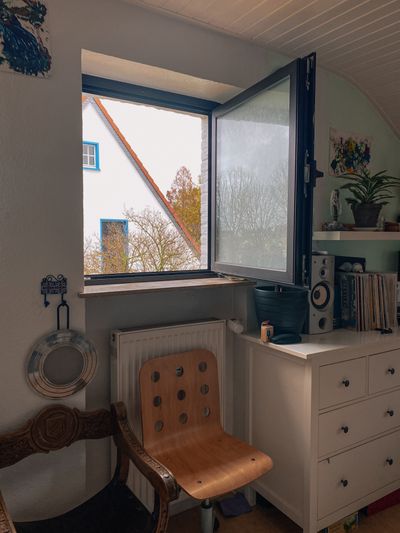
Separate ventilation from unattended access
“Open the windows” is too broad to be a household rule. Ventilation while both partners are awake and nearby is different from leaving a ground-floor window open overnight or while nobody is home. Decide on those cases separately.
A simple default may be: windows can be opened while an adult is home and conditions are suitable; the last person leaving closes and latches every agreed window. Your home may need a stricter rule because of the floor level, window design, lease, neighborhood, pets, or a specific safety concern.
Do not assume a screen prevents a fall or provides security. The U.S. Consumer Product Safety Commission advises caregivers to use appropriate window safeguards and, where possible, open windows from the top when young children are present. Follow the window manufacturer’s instructions, applicable building rules, and current professional guidance for your home.
Agree which conditions mean “close them now”
Write a short list instead of renegotiating each time. Rain entering the room, severe weather, wildfire smoke, poor outdoor air, an unsupervised child, a pet at risk of escaping, or everyone leaving are reasonable triggers to review.
Outdoor air is not automatically cleaner. The U.S. Environmental Protection Agency notes that pollutants can enter buildings through open windows and doors. During wildfire smoke or another local air-quality event, follow current public-health guidance for your area rather than relying on habit.
Temperature matters too, but avoid turning the agreement into an invented universal number. Comfort, health needs, humidity, heating or cooling equipment, and local climate vary. Pick a range or condition that works for your household, then revisit it when the season changes.
Use a last-person-out window check
The cleanest handoff is often tied to departure. The last person leaving checks the windows that can be opened, closes them, and tests each latch once. If another adult is staying home, the person leaving can say which window remains open instead of assuming they noticed.
Keep the route short. A two-minute check of bedrooms, living areas, and accessible windows is more likely to happen than a complicated inspection. If a window is intentionally left in a permitted ventilation position, both partners should know which one and why.
The same ownership principle appears in the guide to agreeing on a front-door locking routine. The person completing the transition owns the final action. Their partner should not have to text from work to supervise it.
Make the agreed action easy to complete
Repair sticky latches. Move clutter that blocks safe access, but do not place climbable furniture where it increases a child’s access to an open window. Keep blinds and cords arranged according to product safety guidance. If you rent, report damaged windows or locks through the proper maintenance channel.
A note near the main exit can help during the first week: “Keys, stove, windows.” Keep it brief. A reminder works best when the person leaving can act on it immediately.
If opening and closing a window is physically difficult, do not demand unsafe reaching or lifting. Discuss an accessible alternative, a hardware assessment, or a different division of the check. Accountability can include accommodation.
Do not become the permanent window monitor
A temporary reminder while you test a new routine is reasonable. Constantly walking through every room after another adult leaves is not a transfer of responsibility. The person assigned the check must notice and complete it.
If one partner owns most household checks, look at the wider load. The article on dividing household chores without resentment explains why noticing, planning, and verifying count as work. You might combine the window check with another departure task or rotate it based on schedule.
Smart sensors may tell you whether a compatible window is open, but agree on their use first. Use them to report equipment state, not to reconstruct your partner’s movements. Review account access, notifications, batteries, privacy, and what happens when the network is unavailable.

Use a direct script for repeated open windows
“The bedroom window was left open twice this week after we both went out. Yesterday rain reached the sill. I do not want to check behind you every time, and I also do not want us to stop airing out the room. Can we agree that the last person leaving closes and latches the bedroom and living-room windows, and that we tell each other if one needs to stay open while someone is home?”
This script includes the evidence, practical effect, boundary, and requested routine. It leaves room for your partner to explain a broken latch, comfort need, or assumption that you did not know about.
Test the routine for a week. If the windows are secured when required, stop checking. If the problem continues, look again at the trigger and the hardware instead of repeating the same argument louder.
Keep nearby safety issues separate
An open window, unlocked front door, and open garage may all relate to a departure routine, but fixing all three in one angry conversation can blur ownership. Choose one short exit checklist and define who completes it.
If the garage is part of the same route, the guide for a partner who leaves the garage door open covers equipment checks and a separate closing rule. Do not assume the same device, risk, or repair advice applies to every opening in the home.
Similarly, visible condensation, recurring leaks, damaged walls, or mold-like growth is a property issue as well as a habit discussion. Document what you observe and contact the responsible landlord, property manager, or qualified professional. Do not diagnose the material or promise that opening a window will solve it.
Avoid diagnosing forgetfulness
Leaving a window open does not prove laziness, narcissism, attention-deficit/hyperactivity disorder, memory loss, or lack of respect. It may be a missed transition, different comfort preference, broken latch, or refusal to follow an agreement. Stay with what you can observe.
If forgetfulness has changed suddenly or appears across medication, driving, finances, cooking, and other safety tasks, the affected person may want advice from an appropriate health professional. A partner can describe changes without assigning a condition.
Couples counseling may help when both people can participate freely and safely, but it does not guarantee agreement. If the window conflict includes threats, intimidation, stalking, deliberate property damage, or disabling safeguards to frighten someone, private support and safety planning may be more appropriate than a joint communication exercise.
Frequently asked questions
Who should close the windows before leaving home?
A practical default is that the last person leaving completes the agreed window check. If someone remains home, use a clear handoff for any window that stays open instead of assuming they noticed it.
Is it safe to leave a window open overnight?
There is no universal answer. Floor level, window design, locks, weather, outdoor air, children, pets, and local security conditions all matter. Follow manufacturer guidance, building rules, and relevant safety advice for your household.
What if my partner needs fresh air but I feel unsafe?
Separate the need from the method. You might ventilate earlier while both people are awake, use an appropriate upper opening, address indoor pollution sources, or consider suitable mechanical ventilation. Do not override a concrete child, pet, smoke, weather, or security risk simply to avoid disagreement.
Should we install a window sensor?
A compatible sensor can support an agreed routine, but it should not replace safe hardware or become hidden partner monitoring. Decide who gets alerts, who acts, how data is handled, and what the backup is when the device fails.
Make the rule easy to repeat
The routine should fit in one sentence: when the last person leaves, they close and latch the agreed windows; when someone stays home, any exception gets a direct handoff. Add weather, air-quality, child, and pet limits that actually apply to your home.
Fresh air and home safety do not need to compete every day. Define the conditions, repair the hardware, and give the final check one owner. Then let a completed routine be complete instead of turning every window into another relationship test.