

If your partner forgets to feed the dog, protect the dog’s care first, then agree on one named person for each meal, a visible record of completed feedings, and an explicit backup handoff. Follow the feeding plan recommended by your veterinarian. Do not leave the dog hungry to prove a point or guess whether an empty bowl means a meal was missed.
You come home, the dog rushes toward the kitchen, and neither of you knows whether dinner happened. One person assumed the other was handling it. The other thought the morning portion covered the day. Now you are worried about the dog and angry that you have to investigate.
A dependable routine needs more than “I’ll remember next time.” It needs a way to tell what happened, who is responsible, and what to do when the ordinary schedule changes. These are practical suggestions for sharing care, not veterinary advice or a diagnosis of either partner.
Check the dog’s needs before discussing the argument
Start by confirming the last known feeding, the usual food and portion, and any veterinary instructions. If you cannot establish whether a meal was given, contact your veterinary practice for guidance rather than adding another full portion just in case. This is especially important for dogs with medical conditions or medication schedules linked to meals.
If the dog seems unwell, has missed essential medication, or shows concerning symptoms, seek prompt veterinary advice. A discussion about fairness can wait while you arrange care. Fresh drinking water also needs an assigned check; do not assume that a full food bowl proves the rest of the routine is covered.
Find the failure point without guessing at motives
Ask what happened at the time of the missed meal. Was there no agreed owner? Did work run late? Was the food container empty? Did someone feed the dog but forget to tell the other person? A missed feeding, a late feeding, and uncertainty about a completed feeding need different fixes.
Use a concrete description: “Yesterday evening I couldn’t confirm whether the dog had eaten, and I felt worried. We need a record both of us can check.” Avoid “You don’t care about anything” or using the dog’s behavior as proof of your partner’s intentions.
Separate forgetfulness from unwillingness
A person who wants to do the task but keeps losing track may need a reminder and a clearer cue. A person who says they will not take responsibility needs a different conversation. Neither explanation makes unreliable care acceptable. The animal still needs a capable adult to follow through.
Give each feeding one clear owner
“Whoever is home” sounds flexible but leaves plenty of room for assumptions. Write down who owns each feeding period under your dog’s actual care plan. For example, one partner might cover the morning routine and the other the evening routine. That example is a division of labor, not a recommendation for how often your dog should eat.
Ownership includes checking the correct food, following the agreed portion, providing the meal, and recording completion. It should not require the other partner to send a daily reminder. If pet care is part of a wider workload problem, start with the guide to dividing household chores without resentment.
Account for work and accessibility
Build the routine around real schedules and abilities. Someone leaving before dawn may not be the best owner of a later meal. A partner who cannot lift a large food bag may still handle feeding if food is stored in an accessible container. Fairness means reliable care and a sustainable workload, not identical duties.
Make completed feedings visible
A paper checklist beside the food container, a small whiteboard, or a shared phone note can answer the daily question. Keep it simple: date, meal or care period, completion time, and initials. Mark the task after it is done, never when you merely intend to do it.
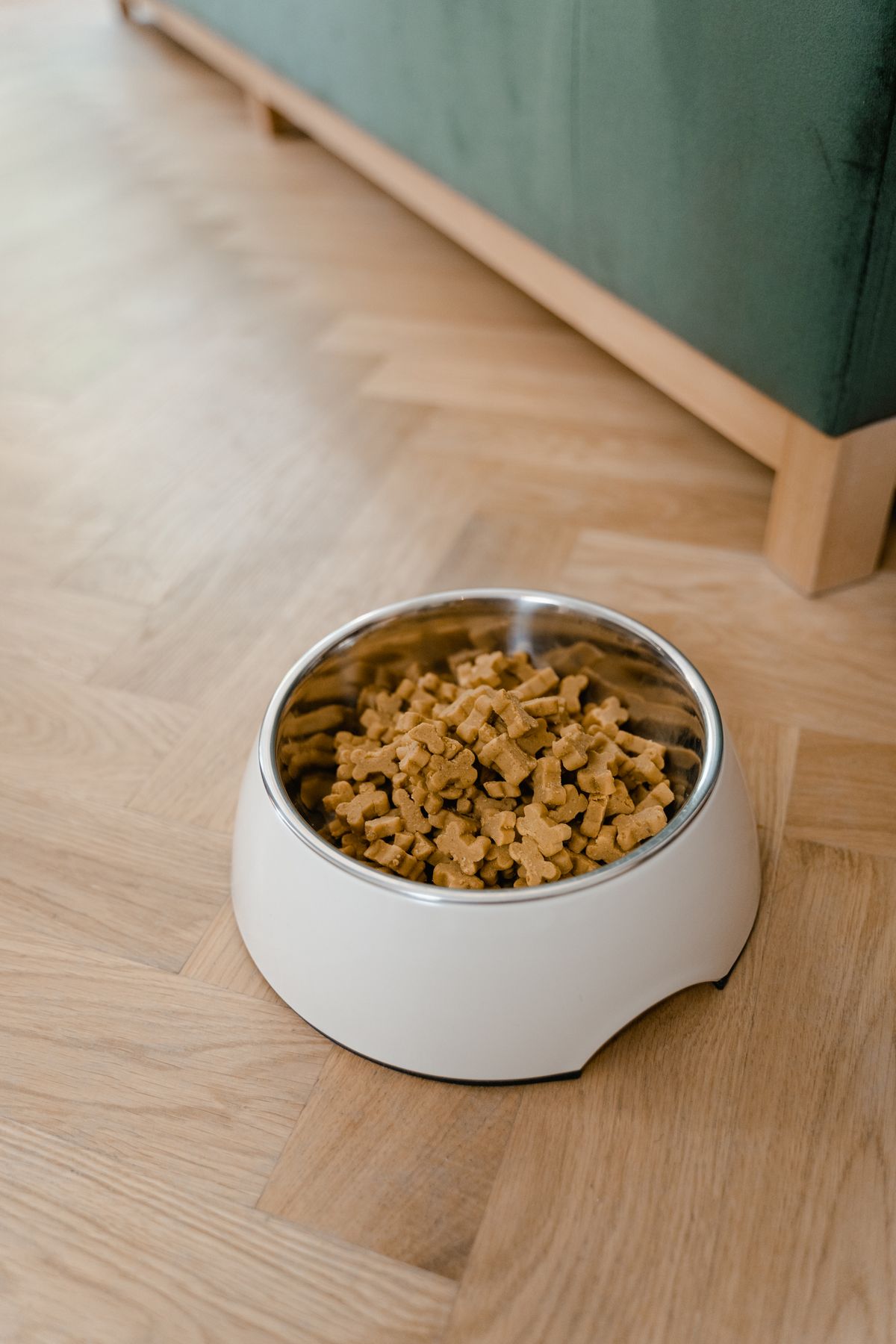
An empty bowl is not a record. A dog asking for food is not a reliable log either. Both partners need one place to check before giving a meal. If several people live in the home, explain that the same record applies to everyone who feeds the dog.
Use reminders that belong to the responsible person
The meal owner should set their own alarm, calendar reminder, or routine cue. Connecting the check to an existing activity, such as arriving home, may help if that timing matches the dog’s care plan. Choose something that still works on busy days rather than a cue that disappears whenever the schedule changes.
Do not turn one partner into the notification system. “Just text me every day” transfers the remembering back to the person who is already worried. A reminder can support responsibility; it cannot replace willingness to carry it.
Agree on a backup handoff before you need it
A handoff needs an acknowledgement. “I’m stuck at work; can you handle the dog’s evening meal?” is a request, not a completed transfer. The backup replies that they can take it, then records the feeding when it is finished. If they cannot help, the original owner arranges another safe option.
Choose a realistic backup for days when both partners are unavailable. That might be a trusted person who knows the dog and has the correct instructions, or a suitable paid care service. Confirm availability rather than assuming someone will notice your absence.
Write instructions for unfamiliar carers
Keep the food location, veterinary feeding instructions, relevant medical information, emergency contact details, and completion-record method together. If your partner often travels for work, plan care before departure instead of renegotiating each day from the road.
Include food shopping and bowl care
Feeding breaks down when the supplies run out or everyone assumes someone else ordered the next bag. Assign who checks the remaining food, buys the right product, and stores it according to the packaging instructions. Do not make unplanned diet changes because the usual food is unavailable without appropriate veterinary guidance.
Also assign bowl cleaning and water checks. These jobs can belong to a different person, but they need the same clarity. A short shared shopping list can prevent an empty container and unnecessary extra purchases, much like the routine for avoiding duplicate grocery shopping.

Treat automated feeders as support, not proof
An automatic feeder may help in some households, if it suits the animal and the veterinary care plan. It still needs someone to check the settings, refill it, clean it, and confirm that food dispenses and the dog can access it. Technical failure and empty reservoirs remain possible.
Technology also does not cover every pet-care need. A device cannot replace water checks, observation of appetite, walks, medication oversight, or arranging help when the dog seems ill. Do not buy a gadget to avoid an unresolved disagreement about who will look after a dependent animal.
What to say when the same problem happens again
Try: “We agreed that you would handle this care period, but it was missed again. I need a reliable plan for the dog, and I can’t keep supervising every feeding. What will you change before tomorrow?” Ask for an action that you can both understand, not another broad promise.
Look for the specific step that failed. If the alarm was dismissed, change the cue. If the person was away, fix the handoff. If they refuse the responsibility, arrange reliable alternative care while discussing what that means for your household. Do not let the dog become the test case for whether your partner eventually notices.
Do not turn rescue care into punishment
Feed or arrange care as needed under the dog’s plan, then address the relationship problem separately. Withholding care, hiding food, or leaving the dog without support to teach your partner a lesson risks harm to an animal that has no control over the disagreement.
Recognize when a routine is not enough
A shared checklist will not resolve repeated refusal, deliberate neglect, threats to harm the animal, or intimidation toward you. If you fear your partner’s reaction, avoid a confrontation that could put you or the dog at risk. Seek confidential individual support and advice about a safe care arrangement.
In the United States, the National Domestic Violence Hotline can help you discuss safety concerns. If there is immediate danger, contact local emergency services when it is safe to do so. Couples counseling may help willing partners with non-abusive conflict, but it is not a substitute for safety planning when coercion or violence is present.
If pet ownership was never a shared agreement, the article about one partner wanting a pet when the other does not addresses that underlying commitment. Whatever the original decision, the dog needs reliable care now.
Questions couples often ask about feeding the dog
Should we split every pet-care task equally?
No. One person may do more feeding while the other handles walks, supplies, or appointments. Consider the whole workload and each person’s capacity. The arrangement is workable only if the care happens reliably and neither person has to manage every task from the sidelines.
What if we cannot remember whether the dog was fed?
Check your shared record and ask anyone who may have provided the meal. If you still cannot confirm, seek veterinary guidance appropriate to your dog rather than guessing about an extra portion. Then add a completion record so the uncertainty does not repeat.
Does forgetting to feed the dog mean my partner does not love me?
A missed task does not establish someone’s feelings or diagnose their character. Repeated unreliable care does give you a concrete problem to address. Pay attention to whether your partner accepts responsibility, takes practical action, and follows through.
Start with the next care period
Write down the next feeding owner, the completion record, and the backup contact today. Use the veterinary plan you already have, and ask your practice about anything unclear. Review the routine after several ordinary days, including a busy one. You are looking for a dog whose care is covered and two adults who no longer have to guess what happened.