

Quick answer: If your partner uses the last clean towel, agree on a minimum reserve, decide who starts and finishes each towel load, and give used towels one place to dry before laundry day. Keep personal, guest, cleaning, and pet towels separate. The goal is a reliable linen routine, not a debate about who deserves the final towel.
You step out of the shower and reach for the shelf. It is empty. The last clean towel is damp on the floor, packed in a gym bag, or wrapped around your partner’s wet hair. This is a small household problem, but it lands badly when you are cold, late, and expected to solve it without warning.
A practical agreement can prevent the scramble. Start with how many towels the household actually uses, then assign the whole laundry cycle instead of treating “wash the towels” as one vague task.
Describe the towel problem without exaggerating it
“You use every towel” invites an argument about the word every. Use the most recent event: “I got out of the shower this morning and there were no clean bath towels,” or “The two dry towels were taken to the gym and not returned.” A concrete example gives you something to fix.
Check whether you are discussing quantity, location, or timing. You may own enough towels, but they are scattered around the home. You may have a full laundry load that nobody started. One partner may assume a towel remains usable for several showers while the other takes a fresh one each time. Those are different problems, and they need different agreements.
Ask what counts as available
A towel hanging behind a closed door may look available to one person and clearly used to the other. Decide that “clean” means washed, fully dry, and stored in the agreed place. A damp towel on a hook is in use. A towel in a bag is unavailable until it comes home. That definition removes a surprising amount of guesswork.
Count normal use before buying more
For one week, notice how many bath, hand, hair, gym, kitchen, and cleaning towels you use. Include children, regular guests, sports, swimming, pets, and any accessibility or caregiving needs. Do not count only the tidy week when everyone follows the new plan.
Then set a modest reserve. One household might keep two bath towels per person plus two guest towels. Another may need more because laundry happens outside the home or someone uses extra linens for medical care. There is no correct universal number. The useful number carries you from one realistic laundry day to the next with a small buffer.
Buying another bundle can help if the current supply is genuinely too small. It will not fix towels that never reach the hamper, washer, dryer, or shelf. Add stock only after identifying where the cycle breaks.
Separate towel types so the last one is not ambiguous
Bath towels should not quietly become floor cloths, pet towels, or car-cleaning rags. Use separate colors, shelves, baskets, or labels for different jobs. The system does not need to look like a hotel. It needs to be obvious when someone is holding a towel that belongs to another category.
- Store personal bath towels where both partners can reach them.
- Keep guest towels apart so routine use does not empty the guest supply.
- Mark worn towels for cleaning, pets, spills, or muddy shoes.
- Give gym and pool towels a return point near the laundry area.
If towel confusion is part of a broader laundry disagreement, the article on what to do when a partner leaves dirty clothes on the floor offers a similar one-place rule without turning either person into the household monitor.
Reserve emergency towels without hiding them
Keep one or two clean towels for unexpected guests, plumbing problems, illness, or a delayed laundry day. Both partners should know where they are and when they can be used. A secret stash solves one person’s morning while preserving the same broken system for everyone else.
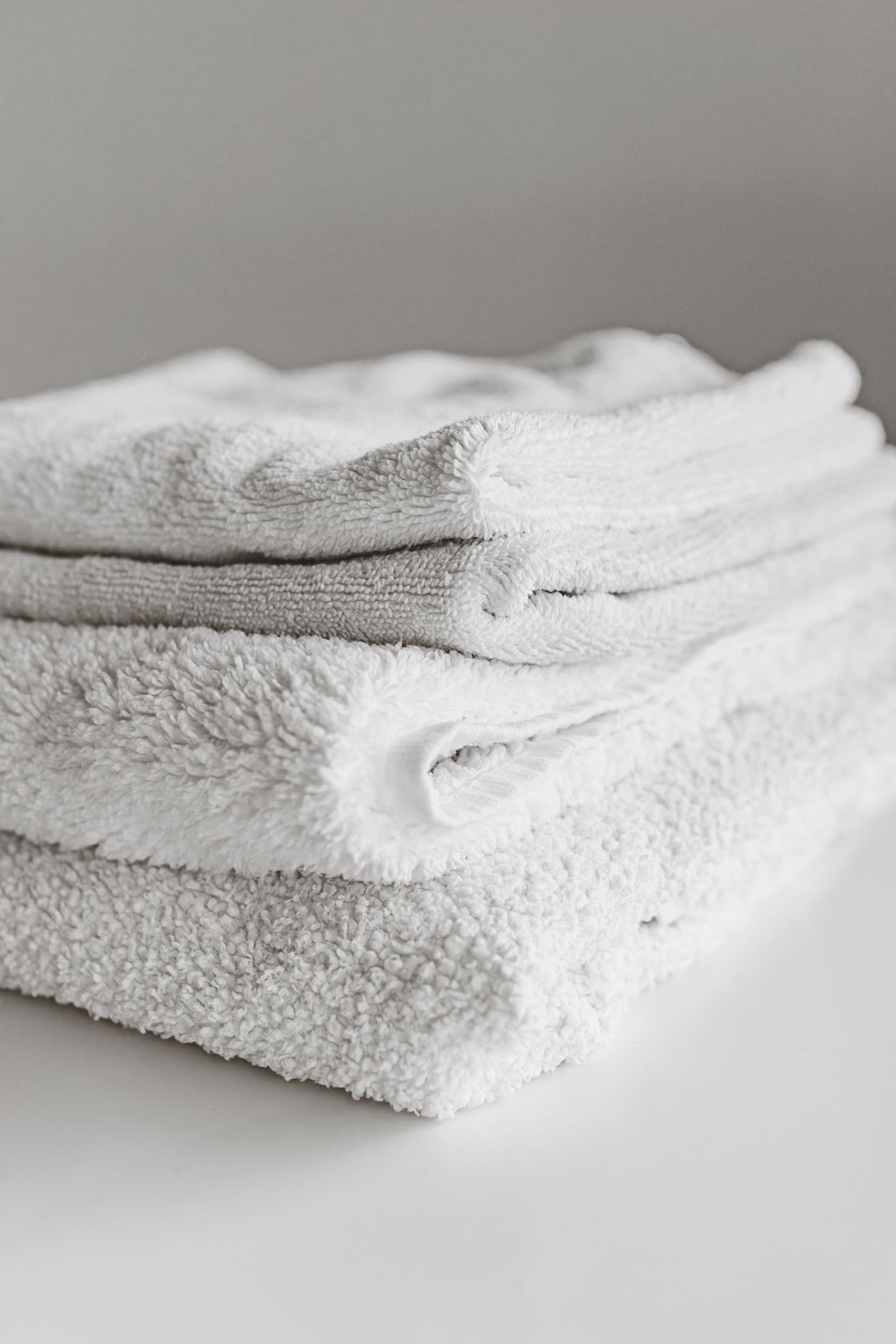
Give used towels one place to dry
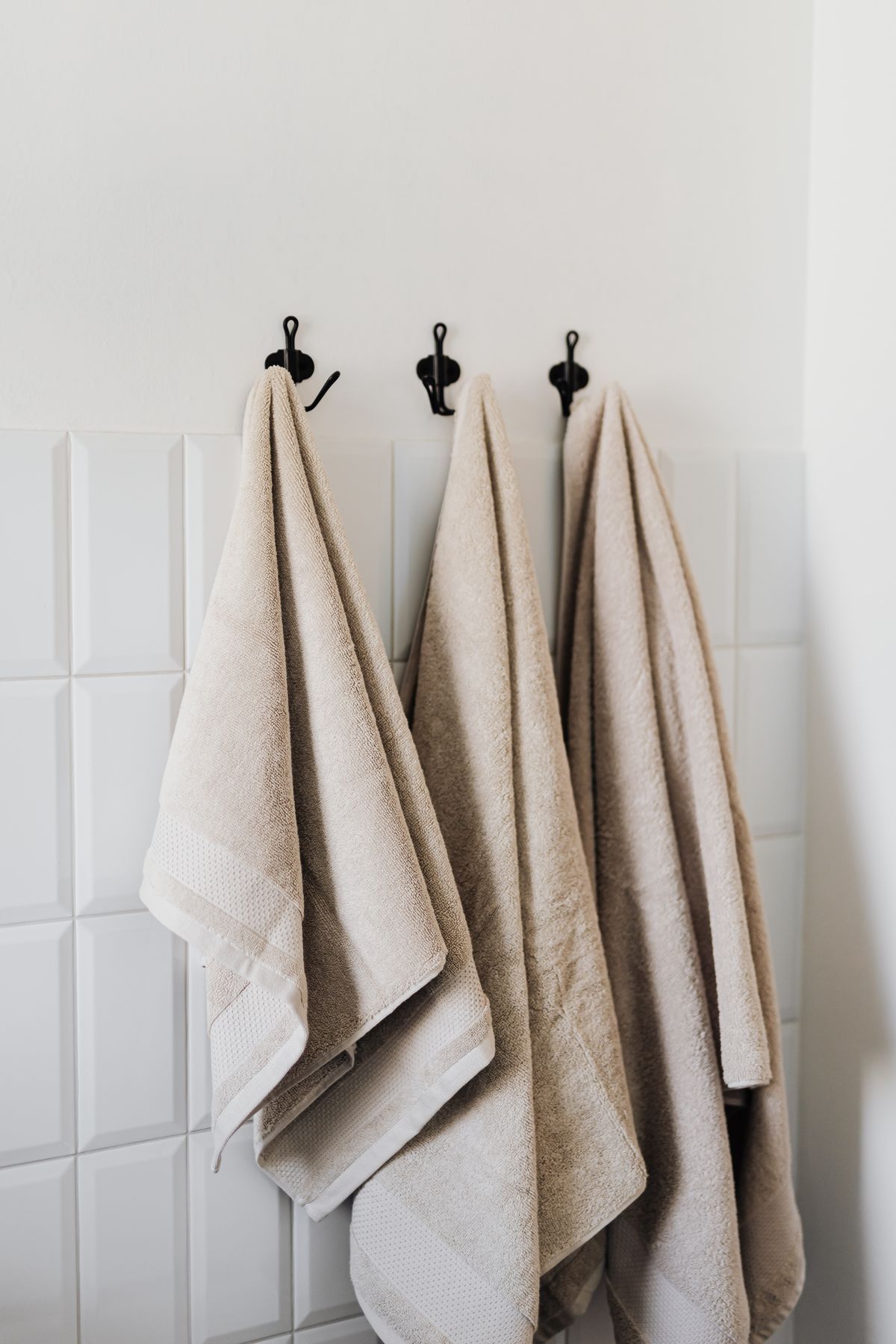
A wet towel should dry before it enters a closed hamper whenever the fabric and household setup allow it. Install enough hooks or bars so towels are not layered on top of each other. If a small bathroom makes that difficult, use an over-door rack, a freestanding airer, or another ventilated location.
Agree on a simple path: use, hang, dry, hamper, wash, dry completely, fold, return. When towels stop midway, name that step. “The clean towels never make it back to the shelf” is more useful than “laundry is a disaster.”
Do not leave damp towels on a walking surface. Besides making the next towel hard to find, that can create a slip hazard. The guide about a wet bathroom floor explains how to assign the immediate dry-off separately from routine bathroom cleaning.
Assign the complete towel load
Starting the washer is only one part of the task. A towel load also includes collecting used items, checking care labels, choosing an appropriate cycle, transferring the load, drying it fully, folding it, and returning it to storage. If one person starts every load and the other repeatedly leaves clean towels in the dryer, the handoff is still unclear.
Use one of these arrangements:
- One person owns the complete towel cycle on a fixed day.
- Partners alternate complete loads and mark the turn on a shared list.
- One person washes and dries; the other folds and stores by an agreed deadline.
Choose the setup that fits your schedules rather than dividing every step exactly in half. Fairness is easier to evaluate when each responsibility has a visible finish line. For a wider household system, see how to divide household chores without resentment.
Set a deadline that protects the reserve
“Soon” is not a laundry schedule. Pick a trigger such as “start a load when four clean bath towels remain” or a time such as Sunday morning. The trigger should leave enough clean towels for the wash and drying period. If you use a shared laundromat, build travel time and machine availability into the plan.
Use a neutral last-towel cue
Agree on one sentence either person can use: “We are at the towel reserve,” or “I took the last everyday towel, so I am starting the load tonight.” The cue should report the state of the supply and identify the next action.
Avoid using the empty shelf as a trap. If you notice the last towel is gone, say so before your partner’s next shower. Likewise, the person who uses the final clean towel should not wait to be confronted. Early information turns an inconvenience into a routine task.
“I am using the last clean bath towel. I will wash this load after dinner and put two dry towels back on the shelf before bed.”
That sentence is specific. It does not ask the other person to discover the shortage or carry the job the rest of the way.
Plan for busy weeks and delayed laundry
Travel, illness, work deadlines, childcare, and a broken appliance can interrupt the best routine. Decide what happens when the usual laundry owner cannot finish the load. The backup might be a direct handoff, a trip to a laundromat, or temporary use of the reserve.
Do not assume that the partner with more flexible hours is automatically available. Ask: “Can you take the towel load today, or should we use the backup set and move laundry to tomorrow?” If the answer is no, make another plan without treating the refusal as proof that the person does not care.
Wash and dry towels according to the care label and appliance guidance. If someone has skin sensitivities, allergies, mobility limitations, or specific hygiene needs, include those requirements in the routine rather than dismissing them as preferences.
Keep towel use personal without keeping score
Some people prefer a fresh towel often. Others reuse one for longer. Hair length, exercise, climate, skin needs, menstruation, caregiving, and work can all change usage. Ask what each person needs before deciding that a higher towel count is wasteful or a lower count is unhygienic.
You can reduce friction by assigning each partner a color or shelf. That makes ownership visible without requiring a daily tally. If one person’s needs consume the reserve faster, increase the planned quantity or adjust the laundry trigger. Do not turn towel use into surveillance.
Handle linen preferences separately
One partner may care more about softness, scent, folding, or matching sets. Those preferences can be discussed, but they should not be smuggled into the basic availability rule. First make sure a clean, dry towel is available. Then decide whether special washing products or storage methods are affordable, safe, and worth the extra work.
Connect towels to the rest of the linen routine
Towels and bed linens often compete for washer time, drying space, and the same person’s attention. Put both jobs on one realistic calendar. Avoid scheduling every bulky load for the same evening, especially if your dryer is slow or your home has limited space for air drying.
If one person already carries the bed-linen cycle, towel duty may belong to the other person. The article about a partner who never changes the bed sheets can help you define ownership for another job that is easy to start and easy to leave unfinished.
Review the routine after two laundry cycles
Test the agreement long enough to see whether it works on an ordinary week. After two towel loads, ask four questions:
- Was a clean bath towel available when each person needed one?
- Did used towels have enough room to dry?
- Did the person responsible finish the full cycle?
- Was the reserve large enough without creating overflowing storage?
Fix the point of failure. Add a hook, move the hamper, change the laundry trigger, or store the reserve where both people can see it. Keep the solution proportional. A missed load does not require a new household constitution.
Frequently asked questions
How many bath towels should a couple own?
There is no fixed number for every couple. Count the towels used between realistic laundry days, then add a small reserve. Laundry access, guests, exercise, caregiving, and personal needs may raise or lower the number.
Should the person who uses the last towel wash the load?
That rule can work if both people have comparable access, time, and ability to do laundry. A fixed owner or alternating schedule may be fairer when one person uses more towels for work, sport, health, or caregiving. Whatever you choose, assign the complete cycle.
What if my partner leaves wet towels on the floor?
Provide a reachable hook, bar, or drying rack and agree that the towel goes there immediately after use. If the setup is practical and the behavior continues, address that specific missed step rather than arguing about every bathroom chore at once.
Is it controlling to assign personal towel colors?
No, if both people agree and the colors make storage easier. It becomes controlling when the system is used to monitor, shame, or restrict reasonable personal use. The purpose is to make clean and used towels easy to identify.
When the disagreement needs more than a laundry plan
If both partners can speak freely but the same argument keeps returning, a licensed couples counselor may help you discuss the wider workload and recurring resentment. Household advice is educational, not a substitute for individualized professional care.
Restricting access to basic hygiene supplies, threatening a partner, or punishing them for using a towel is not an ordinary chore disagreement. If you feel afraid or controlled, prioritize confidential individual support rather than a joint negotiation. In the United States, the National Domestic Violence Hotline offers support and safety planning. Use a safer device if your browsing may be monitored; call emergency services if you are in immediate danger.
Make the next clean towel predictable
Keep a visible reserve, give each towel type a home, and assign the full laundry cycle with a clear trigger. When someone uses the last everyday towel, they should say so and follow the agreed next step. A good system means the shelf does the reminding, not one exhausted partner.