
Quick answer: If your partner plays videos out loud, agree on which rooms and times require headphones, where low-volume speaker audio is fine, and how either person can ask for quiet without starting a larger argument. Protect sleep, work calls, conversations, and decompression time first. Make room for hearing, sensory, caregiving, and accessibility needs rather than treating one sound preference as the universal standard.
You are reading, working, or watching something when a video starts three feet away. Then another starts. The volume changes with every clip. Your partner may hear harmless background noise. You hear a sequence of interruptions you did not choose.
This is a small domestic conflict with a very practical fix. The two of you need a shared sound rule, not a courtroom argument about who is more considerate.
Name the sound problem precisely
“Your phone is always loud” is broad enough to invite a list of exceptions. Describe what happened instead: “Three videos played on speaker while I was on a work call,” or “The sound woke me after I had gone to bed.” A specific event gives your partner something they can change.
Separate volume from timing and location. A quiet clip may still be disruptive during a conversation. A louder video may be fine when one person is alone in the kitchen. Sometimes the problem is not decibels at all. It is the unpredictability of short clips, notification sounds, music, dialogue, and ads arriving one after another.
Ask what the audio is doing for your partner
Your partner may use videos to relax, follow a recipe, keep up with friends, or fill silence while doing chores. They may not notice how often clips autoplay. Asking does not excuse the disruption. It helps you preserve the useful part while changing how the sound reaches the room.
Protect the moments that need quiet first
Do not begin with a rule for every minute at home. Identify the situations where uninvited audio has a clear cost:
- someone is sleeping or trying to fall asleep;
- a work, medical, school, or family call is underway;
- one partner has asked for focused attention during a conversation;
- a child is sleeping, studying, or settling down;
- someone is reading, working, or recovering from an overstimulating day.
These are sensible starting points because the competing need is visible. Agree that personal videos use headphones or move to another room during those times. If bedtime noise is part of a wider schedule conflict, the guide to staying connected with different sleep schedules can help you protect both rest and time together.
Divide the home into sound zones
A single rule may not fit every room. A shared sofa is different from a closed office. The bedroom at midnight is different from the kitchen at noon. Walk through the spaces you actually use and make a short map.
One example:
- Headphones zone: bedroom when either person is resting, workspace during calls, and any room where the other person is already listening to something.
- Ask-first zone: shared living room when both people are present.
- Speaker-friendly zone: kitchen or hobby room when nobody nearby has asked for quiet.
The labels matter less than consistency. “Use common sense” usually means each person keeps using a different private rule.
Keep emergency audio available
Do not build a quiet-home agreement that silences smoke alarms, weather warnings, caregiving alerts, doorbells, or calls that someone genuinely needs to hear. Name those exceptions. A person who is on call can say so before an alert arrives rather than making every notification exempt by default.
Make headphones easy to use
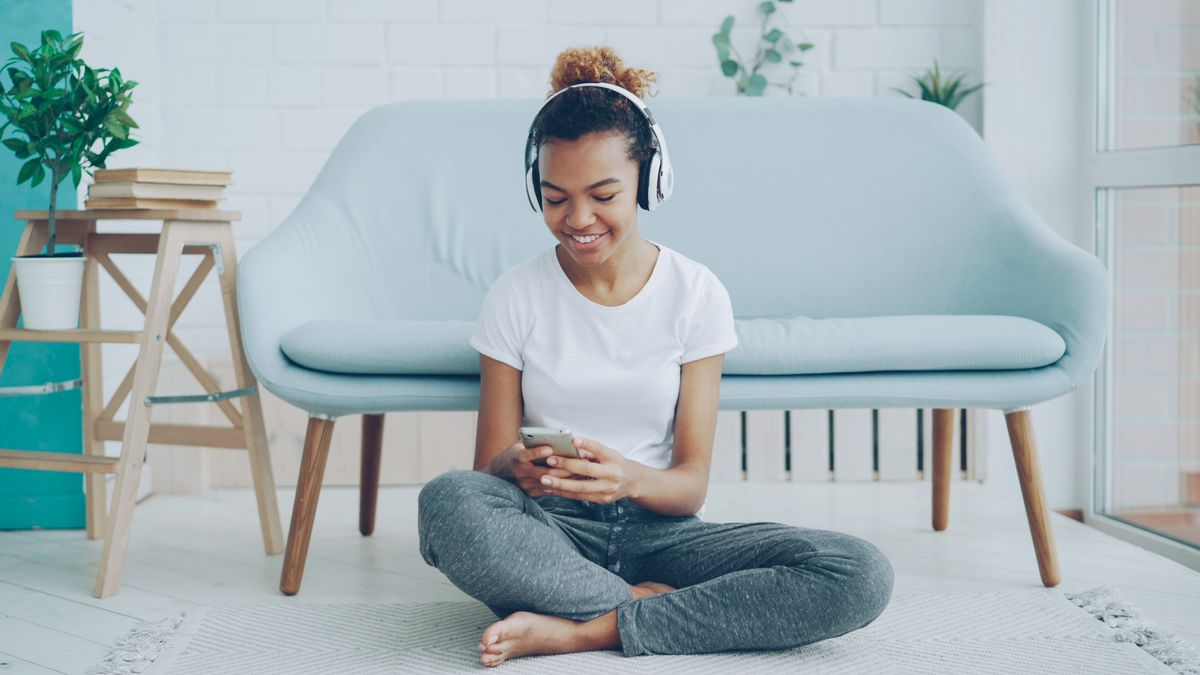
“Just wear headphones” sounds simple until the pair is uncharged, missing, uncomfortable, or connected to the wrong device. Put working headphones near the place where phone videos usually play. Keep the charger there too. If two people use the same pair, decide who reconnects it and where it returns.
Comfort and access matter. In-ear buds do not suit everyone. Some people need an over-ear set, one open ear for caregiving, captions instead of audio, or a small speaker close to them at a lower volume. Hearing differences can also mean that one person finds a setting inaudible while the other finds it intrusive. Test equipment instead of turning the difference into a moral judgment.
Use captions when sound is optional
Many short videos remain understandable with captions. Turn them on when you are scrolling casually in a shared quiet space. Captions will not replace audio for every piece of content, and they are not equally accurate, but they provide another option between full-volume playback and leaving the room.
Agree on one neutral quiet cue
Choose a phrase before the next interruption: “Headphones, please,” “Quiet room,” or “I need ten minutes without phone audio.” The cue should point to the agreement, not reopen the argument.
The person receiving it can lower the sound, put on headphones, move rooms, or explain a genuine reason they cannot do that immediately. “It is only one video” is not a response to the effect on the shared space. At the same time, the person asking should not use the cue to control every sound the other person makes.
“I am trying to finish this report. Could you use headphones for the next twenty minutes? After that, the kitchen is free if you want speaker sound.”
That request includes the behavior, reason, and duration. It is easier to answer than an exhausted “Can you ever be quiet?”
Do not compete with more noise
Turning up the television, playing your own video, or speaking louder may make your point obvious. It also creates a contest that neither person can win without making the home less usable.
Pause what you are doing if necessary and make the request once. If your partner misses it because they cannot hear you over the phone, get their attention without grabbing the device or removing headphones from their body. Physical interference and public shaming do not improve a sound agreement.
If phone use is also interrupting meals or important conversations, treat that as a separate attention issue. The site’s guide to setting phone boundaries without policing each other covers shared phone-free moments without requiring passwords or surveillance.
Protect personal downtime for both people
One partner may decompress with videos. The other may recover through silence. Neither need is absurd, but both cannot occupy the same room at full strength at the same moment.
Try a clean handoff. For thirty minutes after work, one person uses headphones while the other has quiet. Later, the video watcher can use a speaker-friendly room while the other reads elsewhere. If one partner needs solitude rather than silence alone, use the approach in asking for alone time without making a partner feel rejected.
Avoid turning sensitivity into an insult
“You are too sensitive” and “you have no awareness” both replace a negotiable behavior with a character judgment. People vary in hearing, concentration, stress, sensory tolerance, and the amount of background sound they enjoy. You do not need identical nervous systems to reach a usable agreement.
Set a rule for sharing videos together
Sometimes the audio starts because your partner wants to show you something. Ask first: “Do you have thirty seconds for this?” If the answer is no, send the link or save it for later. Holding a phone near someone’s face while they are reading is not a shared activity simply because the clip is funny.
When both people say yes, watch the clip together at a comfortable volume. Then stop autoplay or return to headphones. This preserves the social part of sharing without letting one clip turn into fifteen minutes of somebody else’s feed.
Review the rule after one week
For seven days, use headphones in protected moments, ask before playing videos in the shared living room, and keep one speaker-friendly area available. At the end of the week, ask:
- Did sleep, calls, and conversations stay protected?
- Were the headphones charged and comfortable?
- Did either person feel monitored?
- Was there still a room or time for relaxed speaker listening?
Change the setup where it failed. Move the charger. Add captions. Make the quiet window shorter but more reliable. If requests keep turning into unrelated grievances, return to one issue at a time, as described in the guide on how couples can resolve recurring conflicts.
Notice when sound becomes intimidation
Ordinary volume disagreements are common. The issue is different if a partner deliberately blasts audio to prevent sleep, overwhelms you after you ask them to stop, uses sound to frighten or punish you, destroys hearing devices, or blocks you from leaving the room. A headphone rule is not an adequate response to deliberate intimidation or coercive control.
If you feel afraid or controlled, consider speaking privately with a trusted professional or a domestic violence support service. In the United States, the National Domestic Violence Hotline offers confidential support and safety-planning resources. If there is immediate danger, contact local emergency services when it is safe to do so.
Frequently asked questions
Is it rude to play phone videos out loud at home?
It depends on the room, time, and agreement. Speaker audio may be fine when someone is alone or in an agreed sound-friendly space. It is usually inconsiderate when it interrupts sleep, work, another program, or a conversation after a clear request for quiet.
What if my partner refuses to wear headphones?
Ask what makes the available pair unsuitable. Try another style, captions, lower sound near the listener, or a different room. Your partner does not have to prefer headphones, but both people still need a workable way to share the space.
Can I ask for silence in our shared home?
Yes, especially for a defined reason and time. You cannot reasonably claim permanent control over every shared room, and your partner cannot reasonably treat every room as their personal speaker zone. Negotiate protected quiet windows and places where ordinary sound remains welcome.
What if the volume is related to hearing difficulty?
Do not diagnose the cause during an argument. Adjust distance, captions, device settings, or listening equipment together. If the person is concerned about a change in hearing, they can seek guidance from an appropriate qualified health professional.
Use a rule you can hear yourself following
Keep the agreement short: headphones during sleep, calls, focused work, and important conversations; ask before using a speaker in shared rooms; keep one place or time where relaxed audio is fine. The point is not a silent home. It is a home where neither person has to fight for control of the sound around them.