
Quick answer: When a marriage feels like a roommate arrangement, the relationship has usually become efficient but emotionally thin. You may share bills, chores, parenting, and a bed while barely sharing your inner lives. Reconnection rarely starts with a dramatic vacation or pressure to “bring back the spark.” It starts by naming the drift without blame, making room for honest conversation, and rebuilding small moments of warmth that can survive an ordinary week.
You can love your spouse and still feel as if you are running a household with a dependable coworker. The conversations are about groceries, schedules, school pickup, and what needs fixing. You get things done. Then one evening you realize you cannot remember the last time you felt chosen rather than simply included in the logistics.
People often call this the roommate phase of marriage. It is not a diagnosis, and it does not automatically mean the marriage is over. It does mean the relationship needs attention. The goal is not to imitate your first year together. It is to create a version of closeness that fits the life you have now.
What the roommate phase actually feels like
Roommate mode is less about how busy you are and more about what has disappeared between you. Two people can have packed calendars and still feel close. They can also spend every evening in the same room without making real contact.
Common signs include:
- Most conversations are practical or transactional.
- You sit near each other but disappear into separate screens.
- Affection has become brief, automatic, or absent.
- You no longer tell each other the small things that made you laugh, worry, or think during the day.
- Date night feels like another task to organize.
- You work well as parents or household partners but rarely feel like a couple.
- Sex has become infrequent, pressured, or disconnected from emotional warmth.
This can resemble emotional neglect in a relationship, but the two are not identical. Roommate mode can grow from exhaustion and routine even when both partners still care and respond well once the problem is named. Emotional neglect is a more persistent pattern in which one person’s inner life repeatedly gets ignored, minimized, or shut out.
Why loving couples drift into roommate mode
Life becomes a continuous handoff
Work, children, caregiving, money pressure, and household tasks can turn a marriage into a relay race. One person handles dinner while the other handles bedtime. One pays the bills while the other answers school emails. The system may be fair and still leave no unclaimed space for the couple.
Small bids for attention stop landing
Connection often begins with ordinary moments: “Look at this,” “You will not believe what happened,” or a hand on a shoulder in the kitchen. When those moments keep meeting a phone screen, a tired nod, or “not now,” people reach less often. The silence that follows can look peaceful while both partners quietly feel rejected.
Unresolved tension makes distance feel safer
Some couples become roommates after too many conversations end badly. Staying practical feels safer than risking another argument. The household runs, but the subjects that matter most remain untouched. If every attempt to talk turns into the same fight, review how successful couples resolve conflicts before trying to solve everything in one sitting.
Affection gets tied to pressure
If every hug is treated as an invitation to sex, the partner with lower desire may stop initiating touch. The other partner then feels unwanted and may stop reaching out too. Soon even easy affection disappears. Rebuilding nonsexual warmth first can make closeness feel safer for both people.
You stopped learning who your spouse is now
Long-term partners can mistake familiarity for current knowledge. You know the old stories, favorite foods, and usual opinions, but work, parenthood, grief, health changes, and age keep changing a person. A marriage goes stale when both partners relate to an old file instead of the person in front of them.
How to talk about feeling like roommates without starting a fight
Do not open with “We have no spark” or “You never make an effort.” Those sentences turn a shared problem into a performance review. Try a softer and more accurate opening:
“I think we have become very good at managing life, but I miss feeling close to you. I do not want to blame you. I want us to find our way back to each other.”
Then keep the first conversation small. You are not deciding the future of the marriage in one night. You are checking whether both people can acknowledge the distance and take one step toward it.
A useful first talk answers three questions:
- When do you feel most disconnected from me?
- When do you still feel close to me, even briefly?
- What is one realistic change we could test this week?
Listen for specifics. “I miss us” is honest, but “I miss talking for ten minutes after dinner without our phones” gives you something to do.

How to reconnect when your marriage feels like roommates
1. Protect ten minutes that are not about logistics
Ten focused minutes are more useful than an hour spent half-watching television and half-scrolling. Put the phones down. Do not discuss chores, calendars, children, or money. Ask one question that cannot be answered with “fine.”
- What took the most energy from you today?
- What have you been thinking about lately that I might not know?
- What are you looking forward to this month?
- Where do you wish life felt easier right now?
The aim is not a deep breakthrough every night. It is renewed access to each other’s inner lives.
2. Make one daily bid and answer one
A bid is a small attempt to connect: showing a funny photo, asking for an opinion, leaning in for a hug, or pointing something out on a walk. For one week, notice these attempts. When your spouse makes one, turn toward it when you reasonably can. If you cannot, say when you can return: “I want to hear this. Give me ten minutes to finish the email.”
This sounds almost too small. That is the point. A relationship built in ordinary moments has to be repaired there too.
3. Restore touch that does not demand an outcome
Start with affection that is not a test and does not carry an automatic next step. Hold hands during a walk. Sit close enough that your shoulders touch. Hug when one of you gets home. If touch has become tense, ask what feels welcome rather than guessing.
Do not use this exercise to measure whether your spouse initiates an equal number of times. That turns reconnection into another scoreboard. If fairness is already a sore point, read about keeping score in a relationship and deal with the resentment directly.
4. Turn one routine into couple time
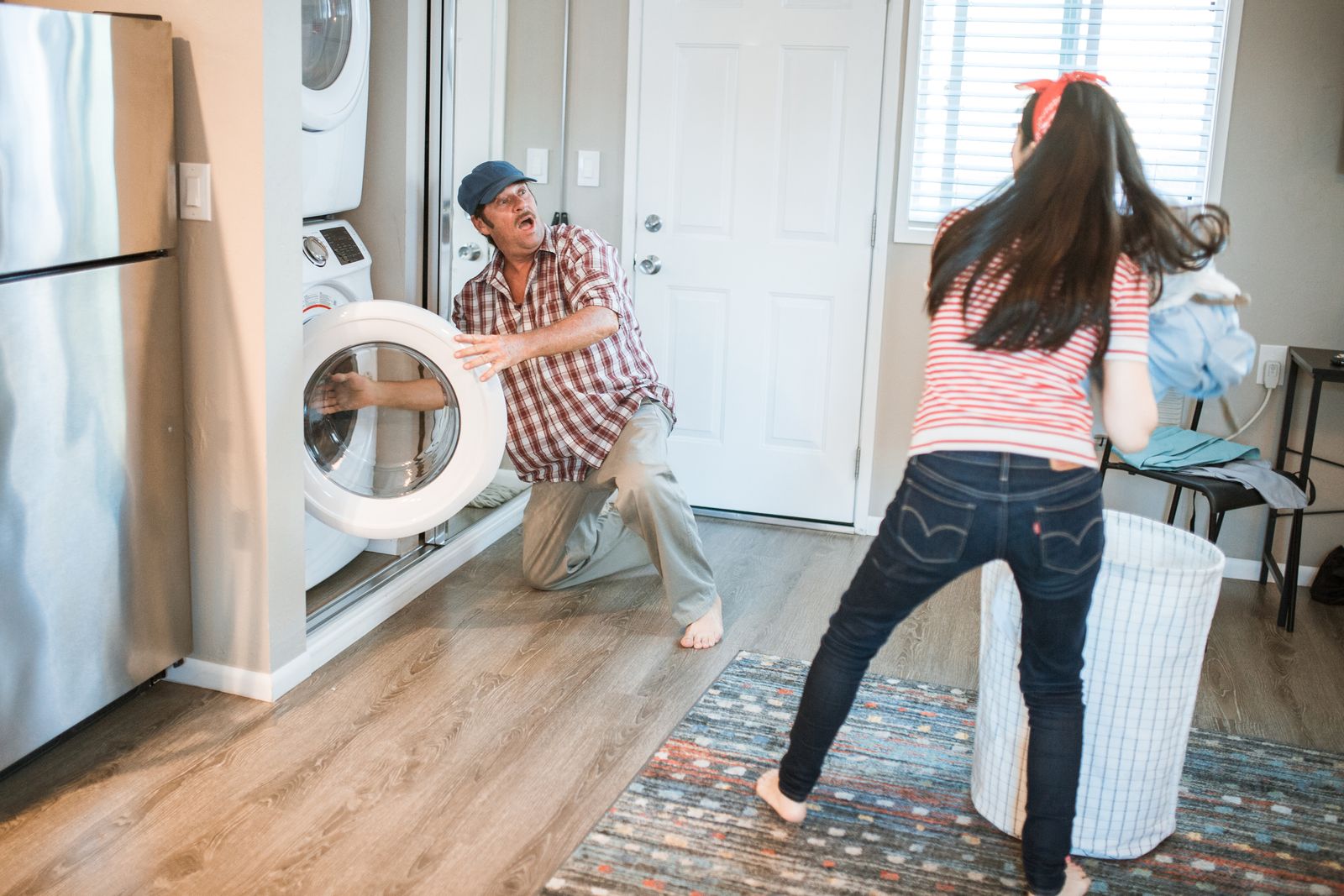
You do not need an elaborate date to stop feeling like roommates. Pick an existing routine and change how you inhabit it. Cook one meal together instead of dividing the job. Walk around the block after dinner. Drink coffee together before the house wakes up. Fold laundry with music and conversation instead of separate screens.
The activity is only a container. Attention is what makes it couple time.
5. Create a short weekly relationship meeting
Set aside 20 to 30 minutes once a week. Keep the structure simple:
- One thing I appreciated this week
- One place I felt alone, stressed, or missed
- One practical issue we need to handle
- One small thing we want to do together next week
This keeps relationship maintenance from appearing only during a crisis. It also gives practical concerns a home, so they do not consume every casual conversation.
6. Deal with the obstacle beneath the distance
More date nights will not fix resentment, untreated depression, chronic exhaustion, betrayal, painful sex, or an unfair division of labor. If one issue keeps swallowing every attempt to reconnect, name it. The roommate pattern may be the surface problem, not the main one.
If trust was damaged by dishonesty, work through the steps for rebuilding trust after lying rather than trying to manufacture romance over an open injury.
7. Stop waiting to feel spontaneous
Couples often say they want closeness to happen naturally. That made sense when daily life contained fewer obligations and more novelty. In a full adult life, some connection needs a place on the calendar. Scheduled does not mean fake. It means the relationship is important enough not to live on leftover time.
A seven-day roommate-phase reset
Use this as an experiment, not a pass-fail test.
- Day 1: Say out loud that you miss the relationship, without assigning fault.
- Day 2: Have a ten-minute conversation with both phones out of reach.
- Day 3: Offer one form of nonsexual affection and respect the response.
- Day 4: Do one routine task together and talk while you do it.
- Day 5: Ask a question about your spouse’s current hopes, worries, or interests.
- Day 6: Spend 30 minutes together outside your usual evening pattern.
- Day 7: Name what felt natural, what felt awkward, and what you want to repeat.
Awkward does not mean useless. When a couple has been distant for months, deliberate attention can feel unfamiliar at first. Look for warmth, honesty, and willingness rather than instant chemistry.
What not to do
- Do not threaten separation simply to provoke attention.
- Do not compare your marriage with curated couples online.
- Do not make sex the only proof that reconnection is working.
- Do not plan a costly trip while ignoring the way you treat each other on a Tuesday night.
- Do not carry the entire repair alone for months and call it patience.
One person can change the tone of an interaction, but one person cannot create mutual intimacy by themselves. Watch whether your partner responds with effort, curiosity, and follow-through.
When the roommate phase needs outside help
Consider couples counseling when you both care but cannot talk without defensiveness, shutdown, or the same unresolved argument. Support is also worth seeking when there has been betrayal, persistent sexual pain or avoidance, depression, substance misuse, or resentment that has hardened into contempt.
If cost is the barrier, start with these free couples counseling options online. A structured workbook, community clinic, support group, or low-cost session can help you stop repeating the same private conversation.
If there is intimidation, coercive control, threats, or violence, standard couples exercises may not be safe. Seek individual support and local safety resources instead of treating the problem as ordinary relationship drift.
FAQ
Is the roommate phase normal in marriage?
It is common during demanding seasons, especially when work, parenting, illness, or caregiving leaves little energy. Common does not mean harmless. If the distance becomes the permanent structure of the marriage, address it rather than waiting for life to calm down on its own.
Can you love someone and still feel like roommates?
Yes. Love can remain while attention, curiosity, affection, and shared experiences fade. That is why the situation can feel so confusing. The question is whether both people are willing to turn love into visible participation again.
How long does it take to reconnect with your spouse?
There is no fixed timeline. Some couples feel a shift after a week of consistent contact. Deeper resentment or trust injuries take longer. Measure progress by the quality of your conversations, willingness to reach, and reliability of follow-through, not by whether every evening suddenly feels romantic.
What if my spouse does not want to work on the relationship?
Ask for one concrete, manageable step rather than a vague promise to “work on us.” If your spouse repeatedly dismisses the problem or refuses any participation, take that response seriously. Individual counseling can help you clarify your needs, boundaries, and next decisions even if your partner will not attend.
Start smaller than the problem feels
A roommate marriage is rarely repaired by chasing a lost version of the spark. Start with contact. Ten attentive minutes. A question you do not already know the answer to. A touch that asks for nothing else. One honest conversation about the issue beneath the distance.
You are looking for evidence that the two of you can still turn toward each other. If that evidence grows, keep building. If every attempt is ignored, punished, or carried by one person, the next step is not a grander gesture. It is a clearer conversation about what the marriage now requires.