
Quick answer: If your partner keeps misplacing the TV remote, give it one visible home beside the television, return it there whenever viewing ends, and use a two-minute search routine instead of blaming each other. Keep an app or inexpensive spare as a backup. If the argument is really about who controls what you watch, discuss decision-making separately from the missing object.
You finally sit down, the show is ready, and the remote has disappeared again. One of you checks between the cushions. The other asks, “Where did you put it?” Within a minute, a small search can turn into a familiar argument about carelessness, nagging, or who always has to fix things.
A lost remote is annoying, but it is also a very solvable household problem. The useful question is not which partner is “the disorganized one.” It is how to make the remote easy to put away, easy to find, and too unimportant to become a nightly fight.
Why a missing TV remote becomes a relationship argument
The remote usually goes missing during an ordinary transition: someone gets a snack, falls asleep on the sofa, takes a call, moves a blanket, or carries dishes into the kitchen. Nobody makes a deliberate decision to hide it. Yet repeated searches create real friction because they cost shared time and often recruit the more organized partner as the finder.
The argument gets bigger when each person assigns a different meaning to the same event. One sees a harmless mistake. The other sees another task they must notice and solve. If that second person starts with criticism, the first may defend themselves rather than help. Now the couple is arguing about character while the remote is still under a cushion.
Keep the meaning modest at first. A missing object proves that the current storage habit is unreliable. It does not prove that your partner is selfish, irresponsible, or incapable of caring about you.
Solve the immediate search without holding a trial
When you want to watch something, this is the wrong moment to review every previous disappearance. Find the device or switch to the backup. Talk about the recurring pattern later, when neither person is tired or waiting for the program to start.
Use the last confirmed action
Ask, “When did we last use it?” A factual answer narrows the search: someone paused the movie, changed the volume, or turned off the television. Check the seat used at that moment, the nearby blanket, the floor, and the route to the next room. This works better than opening every drawer or repeating, “It has to be here somewhere.”
Search likely places in the same order
- Look on the coffee table, side table, and designated remote tray.
- Check the sofa surface, between cushions, and underneath the sofa.
- Look inside blankets and beside snack bowls, books, or laptops.
- Check the kitchen or bedroom only if someone carried items there.
- After two minutes, use the backup rather than letting the search consume the evening.
A short sequence prevents both people from searching the same place five times. It also removes the running commentary that turns inconvenience into accusation.
Create one obvious home for the remote
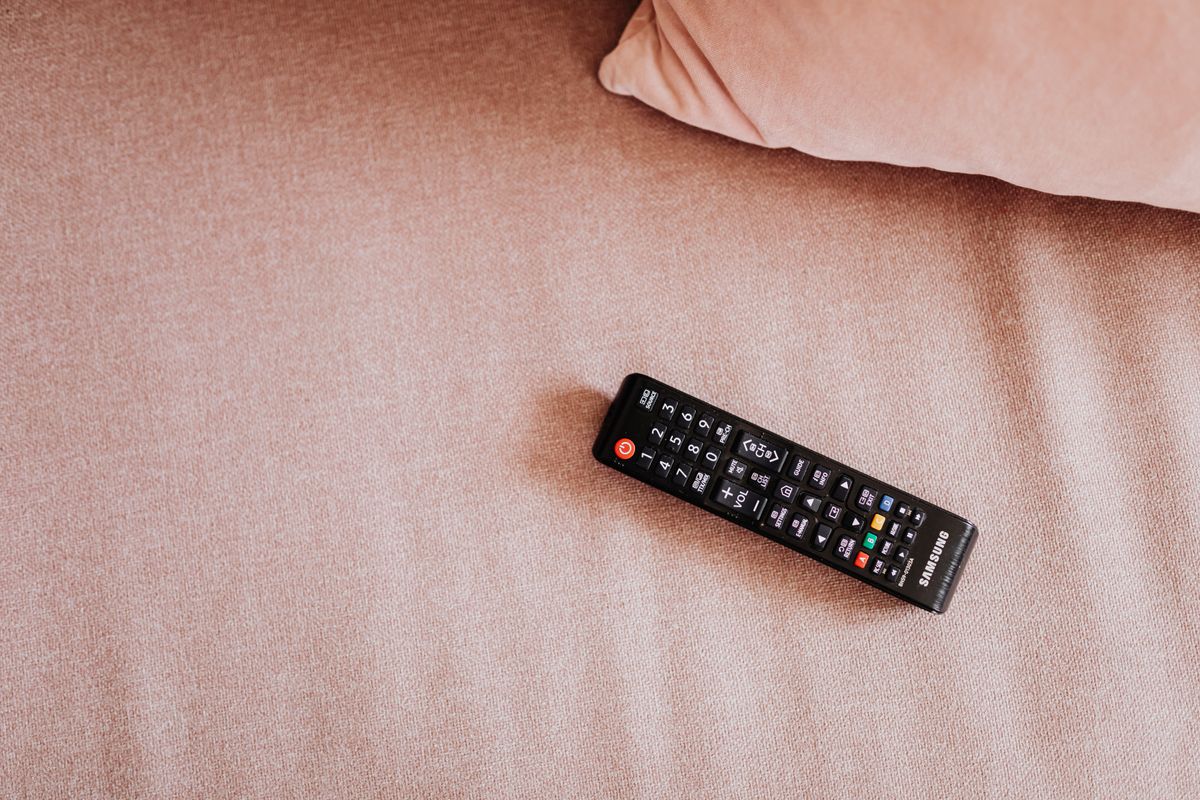
The best storage place is close to where the remote is actually used. A tray on the coffee table, a pocket attached to the sofa arm, or a small basket on the nearest side table can work. A neat drawer across the room often fails because putting the remote away requires an extra trip at exactly the moment someone is done watching.
Choose the location together and make it visible for the first week. If the remote still disappears, the problem may be the location rather than a lack of effort. Move the tray before you start policing each other.
Define when the remote must go back
“Always put it away” sounds clear but leaves room for two interpretations. Does it return after every channel change, when someone leaves the room, or only when the television is turned off?
A practical finish line is: the person who turns off the television returns the remote to its home. If viewing continues while one person leaves, the remote stays with the person still watching. If you pause for a meal or bedtime routine, put it in the tray instead of carrying it around the house.
This is the same principle used in a reliable key routine: the object needs a stable home and a clear moment when it returns there.
Use a backup that lowers the stakes
Many televisions and streaming devices can be controlled through an official phone app. An inexpensive universal remote may also work. Set up the backup before the next disappearance, confirm that it connects, and store any required login details securely.
A backup should reduce frustration, not excuse a one-sided system. If one partner repeatedly leaves the remote anywhere and expects the other to use their phone, the original workload problem remains. Keep the simple return rule even after the app is installed.
Be careful with tracking devices
A small Bluetooth tracker can help if the remote genuinely travels around the home, but discuss it first. Do not use household technology to monitor a partner’s movements or turn a convenience tool into surveillance. The goal is to locate an object, not collect evidence against a person.
Talk about impact without attacking character
Bring up the pattern at a neutral time. Describe what happens, explain the practical effect, and request one observable change.
“We spent ten minutes looking for the remote three evenings this week, and I noticed I took over the search each time. I want us to keep it in the tray and use the app after a two-minute search. Can we try that for a week?”
This is easier to answer than, “Why do you lose everything?” The first statement gives your partner a problem they can help solve. The second asks them to defend their identity.
If small household tasks often create the same manager-and-helper dynamic, review your broader approach to dividing household responsibilities. The remote may be only the most visible example.
Keep misplacing separate from controlling the TV
Sometimes the remote is not really lost. One partner keeps it beside them, changes programs without asking, or decides that their preferences should win every evening. A storage tray will not solve that disagreement.
Separate the two questions:
- Where does the physical remote belong when nobody is using it?
- How do both people get a fair say in shared viewing time?
You might alternate who chooses, keep a shared watchlist, or agree that either person can finish an episode already in progress. If your tastes rarely overlap, some separate viewing is fine. Fairness does not require enjoying every show together.
Do not turn the remote into leverage
Hiding the remote, taking it away to punish someone, switching off a program to provoke them, or physically grabbing it from their hand is different from ordinary forgetfulness. Stop the contest and discuss the behavior away from the television. If intimidation, threats, property damage, or physical force are part of a larger pattern, prioritize safety and seek confidential support. In the United States, the National Domestic Violence Hotline offers 24/7 support; elsewhere, use a trusted local domestic abuse service or emergency service when needed.
Set a boundary around becoming the household finder
You can help with an occasional search without accepting permanent responsibility. If you are regularly expected to drop what you are doing and find the remote, state what you will do instead.
“I will help check the sofa and table once. After that, I am going to use the app or do something else while you keep looking.”
That boundary is about your participation. It is not a threat, and it does not require your partner to admit fault. Follow it calmly. Quietly rescuing the situation every time may keep the evening moving, but it also preserves the arrangement that frustrates you.
Review the system after one week
A week is long enough to test the setup without pretending it must work forever. Ask two plain questions: Was the remote easier to find? Did either person feel nagged or left responsible for every search?
If the tray worked, keep it. If the remote still migrated, try a sofa-arm pocket, a brighter remote cover, or a second device. If the storage habit improved but the arguments continued, talk about the unresolved part: fairness, interruptions, choice of programs, or the way you speak when annoyed.
When a search has already become a fight, return to it after both people have settled. The Gottman Institute’s guidance on the aftermath of an argument recommends describing feelings, hearing both perspectives, and accepting responsibility for your part rather than trying to establish one official version of events.
What if forgetfulness happens with many objects?
Do not diagnose your partner from a remote-control habit. Stress, poor sleep, rushing, medication effects, changes in routine, attention difficulties, or simple clutter can all affect where objects end up. Focus first on observable patterns and practical supports.
If memory changes are new, worsening, or affecting safety, work, medication, driving, finances, or other daily tasks, encourage the person to speak with a qualified health professional. A household system can reduce friction, but it cannot assess a medical concern.
Frequently asked questions
Should we buy a second TV remote?
Yes, if a compatible spare is affordable and both people still agree to return remotes to one place. A spare is useful redundancy. It becomes unhelpful when both devices disappear because there is no storage routine.
What if my partner says the problem is too small to discuss?
Keep the conversation proportional. You are not asking for a major relationship summit. Say that repeated searches waste time and create tension, then suggest one small experiment for a week. A two-minute agreement is enough.
What if I am usually the person who loses it?
Take ownership without shaming yourself. Choose the remote’s home, practice returning it when the television goes off, and set up the backup. If your partner has been doing most of the searching, thank them and tell them they no longer need to manage it for you.
What if we argue more about what to watch than where the remote is?
Then solve the decision problem directly. Alternate choices, plan shared shows in advance, or use separate screens sometimes. Do not keep debating storage when the real issue is whether both preferences count.
A small system is better than another promise
Promises such as “I will be more careful” disappear faster than the remote. A visible home, a clear return moment, a two-minute search, and a working backup are easier to follow because neither partner has to remember a vague intention.
Try the system for seven days. If tension rises during the conversation, pause and return at an agreed time rather than forcing a solution while both people are angry. More guidance on staying with one issue is available in the site’s article on resolving conflict as a couple. The aim is simple: spend less time searching and more time enjoying the evening you meant to have.