

No private space for online couples therapy? Contact the practice before the appointment and explain who might overhear. Ask about a different time, a suitable private location, or an in-person appointment. Headphones protect the audio coming from your device; they do not stop someone nearby from hearing what you say.
A kitchen table can work well for paying bills and badly for discussing a painful relationship argument. If your teenager is doing homework beside you or a roommate can hear through the door, you may spend the session choosing words for the people outside it. You do not have to pretend the room is suitable just because the video link works.
This guide offers general educational information about appointment planning. Your therapist should assess whether the proposed setting is appropriate for your care, including any safety concerns.
Tell the therapist about the space before you join
Describe the actual obstacle rather than apologizing for your home. You might have a shared bedroom, unpredictable visitors, or no way to arrange childcare. Each problem calls for a different conversation. A clinician cannot assess an arrangement they do not know about.
Try: “We want to attend, but our apartment has one room and our child will be home. We cannot speak freely there. What options could we discuss before Tuesday?” If sending that message itself could put you at risk, use a safer contact method and ask the practice how to communicate discreetly.
The U.S. Department of Health and Human Services includes finding a quiet, private place in its telehealth preparation guidance. For couples, both partners need a setting where they can participate. One person’s privacy does not make up for the other’s lack of it.
Check whether either partner can be overheard
Privacy has an outgoing side as well as an incoming one. Wearing earbuds may keep your therapist’s voice out of the room, but your own answers remain audible. A closed door can reduce interruptions without providing reliable sound isolation.
If it is safe to do so, test the room with ordinary, non-sensitive conversation before appointment day. Can someone in the hallway understand the words? Can people enter without knocking? This is a practical check, not a guarantee that a conversation will remain confidential.
Account for children and other household members
Children should not be expected to ignore a conversation about their parents’ relationship. A young child may also need attention halfway through an appointment. Ask whether a trusted adult can supervise elsewhere, or whether a time when childcare is available would work better.
Do not assume that someone sleeping in the next room will stay asleep. Describe that uncertainty to the therapist and agree on what to do if they wake. The aim is to arrange a usable appointment rather than improvise a childcare solution during a sensitive discussion.
Use headphones with realistic expectations
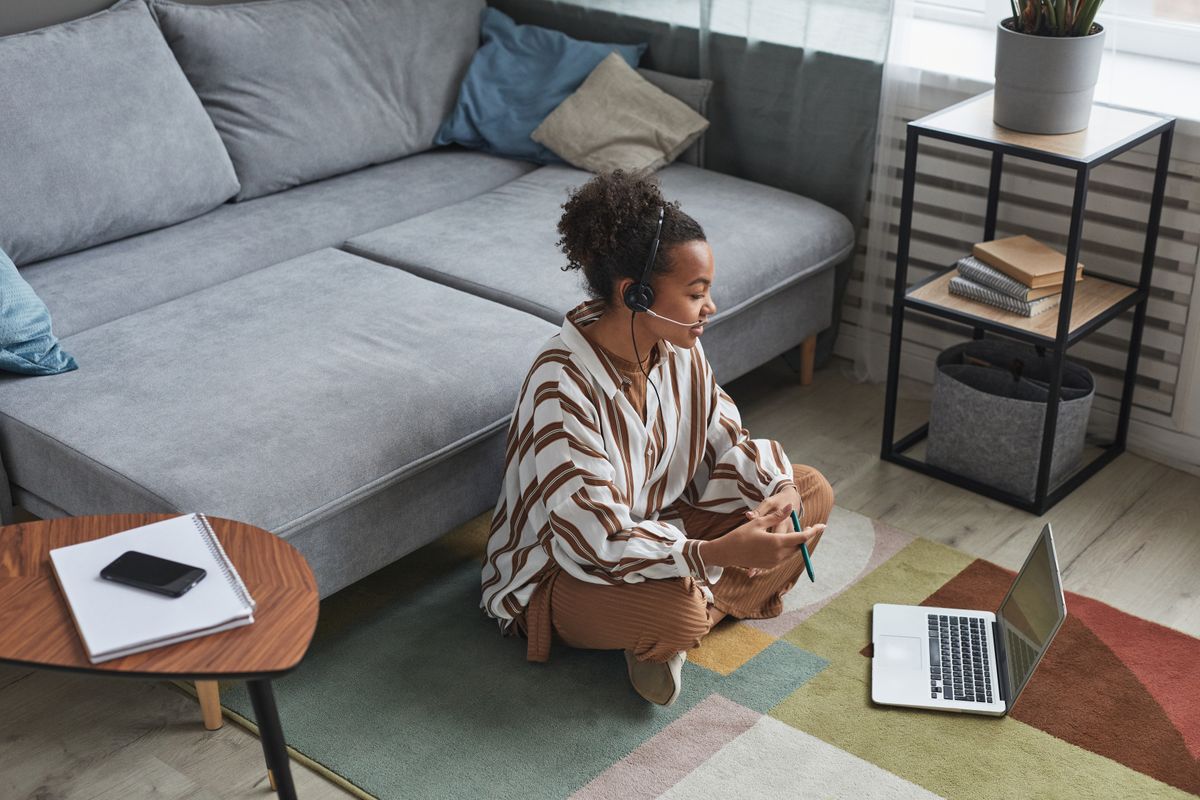
Headphones can reduce the amount of session audio that other people hear. They may also make it easier to hear a clinician quietly. They cannot make a public room private or protect spoken answers from someone standing nearby.
If you share a device with your partner, make sure both of you can hear clearly. One person leaning toward a single earbud while the other misses half the questions is not a workable setup. Ask the therapist about approved audio arrangements before buying equipment.
Compare alternative locations carefully
A different location may help, but “somewhere else” is not automatically confidential. A library booking, workplace meeting room, or borrowed room might have interruptions, glass walls, or rules against personal calls. Check permission and the ability to speak without being overheard before suggesting it.
A borrowed room
Ask who else will be present and whether they might enter. You do not need to disclose the details of your treatment to the person lending the room. You do need a realistic agreement about access for the full appointment, including a few minutes to arrive and leave.
Give the clinician the location information they request through the practice’s approved channel. If you would be joining from a different state, review the questions in our guide to couples therapy across state lines. A private room does not resolve professional licensing requirements.
A parked vehicle
Some people ask about attending from a vehicle because home offers no privacy. Discuss that specific arrangement with the therapist first. Consider whether passersby could hear you, whether the temperature is safe, and whether you can remain stationary for the appointment. Never attend while driving.
A vehicle may be unsuitable because of weather, accessibility, limited connectivity, or the risk of someone approaching it. Do not run an engine in an enclosed space. If the proposed setting is unsafe or uncertain, ask about another arrangement rather than treating the car as the default solution.
Ask whether separate locations are appropriate
Partners sometimes have access to privacy at different places. One may use a room at home while the other attends from a permitted private room elsewhere. Ask whether your therapist’s platform and clinical approach allow this; do not surprise them with a second login at the start.
Each partner needs their own privacy check. Tell the clinician if anyone is within hearing distance, even if they are out of camera view. Also agree on how each person can reach the practice if the connection fails. Our guide to interrupted online couples therapy covers that separate technical problem.
Make a plan for an unexpected interruption
Ask what to say if someone enters or you discover that the conversation can be heard. A plain phrase such as “I no longer have privacy” may be enough in an ordinary interruption. The therapist should guide whether to pause, change the topic, or end the appointment.
You do not need to continue a sensitive disclosure to avoid seeming rude. Stop speaking about the relationship while the clinician helps assess the situation. If the other partner remains online, ask the therapist to explain what happens next rather than assuming the joint conversation will continue without you.
Emergency procedures need a separate discussion. A privacy interruption and an immediate safety emergency are not the same thing, and a therapist’s ordinary messaging inbox may not be monitored for urgent help.
Discuss rescheduling and fees before the appointment
If there is no suitable room, contact the practice as early as you can. Explain that privacy is the obstacle and ask whether a different time or an in-person visit is possible. A telephone appointment is another question for the clinician, not an automatic substitute: it still requires somewhere you can speak safely.
Ask how the practice handles a session that cannot proceed because the setting is unsuitable. Fees depend on the provider’s agreement and circumstances; there is no universal promise that a late change will be free. Our explanation of couples therapy cancellation policies offers questions to raise before a conflict occurs.
Separate housing constraints from monitoring or intimidation
A small apartment is a practical limitation. Someone insisting on listening outside the door, preventing you from contacting a clinician, or threatening consequences for what you say raises a different concern. Better headphones will not solve coercion.
If you are afraid of your partner’s response, seek confidential individual advice from a qualified professional or domestic abuse advocate using a safer device or location when possible. Joint therapy may not be appropriate when there is coercive control or ongoing abuse. Do not disclose a safety plan in a joint appointment if doing so could increase danger.
In the United States, the National Domestic Violence Hotline offers support at 800-799-SAFE (7233). Internet use can be monitored; choose the safest way to make contact. If you are in immediate danger, contact local emergency services when safe.
Questions couples often ask
Can we attend online couples therapy from a cafe?
A cafe generally does not provide reliable privacy for a sensitive conversation. Headphones do not prevent others from hearing your words. Tell the therapist about the proposed setting and ask about alternatives before the session.
Will a virtual background make the appointment private?
No. A virtual background may hide part of the room on screen, but it does not keep people nearby from listening. It also does not show the therapist who else may be present. Describe who is there and what can be overheard.
What if we have no affordable alternative room?
Tell the practice directly. Ask about appointment times that fit periods of privacy, in-person options, or referrals to a service you can access. You do not need to purchase equipment or pay for a rented room before discussing whether it would actually solve the problem.
Agree on one workable arrangement
Before the next appointment, send the practice a short description of where each of you would join and who might overhear. Ask the therapist to help assess that plan. If neither person can speak freely, changing the appointment is more useful than spending it pretending nobody else can hear.